
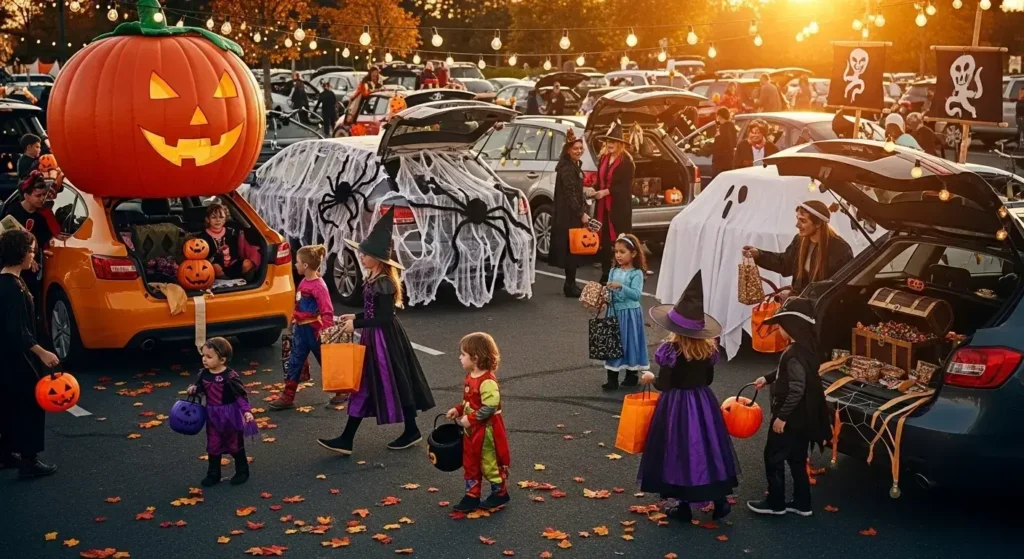
“Trunk or treats” is a popular Halloween activity that is growing fast in schools, churches, and communities. Instead of going house to house for candy, children walk from car to car in a parking lot. Each car trunk is decorated, and people give out sweets.
Many people search this keyword because they are confused about what it means, how it started, and whether it is written as “trunk or treats,” “trunk-or-treat,” or “trunk or treat.” Others want to know if it is only an American event or used in other countries too.
This term also creates spelling confusion because it looks similar to traditional Halloween “trick or treat,” but the setup is different. People also want ideas, rules, and examples for organizing such events.
In this article, you will learn the meaning, origin, spelling differences, correct usage, and real-life examples of “trunk or treats” in a simple and clear way.
Trunk or Treats – Quick Answer
Trunk or treats is a Halloween event where children collect candy from decorated car trunks in a safe parking area instead of going door-to-door.
Examples:
- A school organizes a trunk or treat event in the gym parking lot.
- Churches host trunk-or-treat nights for families.
- Community centers decorate cars for kids to enjoy Halloween safely.
Family or Fiancé: What’s the Difference?
The Origin of Trunk or Treats
The idea of trunk or treats began in the United States in the 1990s. It was created as a safer alternative to traditional trick-or-treating. Families wanted a controlled environment where children could enjoy Halloween without street traffic risks.
The phrase comes from two words:
- “Trunk” → the back storage space of a car
- “Treats” → candy or sweets given to children
Together, the phrase means “treats given from car trunks.” Over time, churches and schools made it popular as a community event.
British English vs American English Spelling
“Trunk or treats” is mostly an American cultural term, but spelling variations exist.
Common Variations:
- trunk or treat
- trunk-or-treat
- trunk or treats (plural usage)
Autism or ADHD: Key Differences, Signs
Comparison Table
| Style | Usage | Example |
| American English | trunk or treat | We attended a trunk or treat event |
| Hyphenated form | trunk-or-treat | Join the trunk-or-treat night |
| Plural form | trunk or treats | The trunk or treats were fun for kids |
👉 In British English, this concept is less common. Similar events may be described as “car boot Halloween party” or “community Halloween event.”
Which Spelling Should You Use?
- USA audience: Use “trunk or treat” or “trunk-or-treat”
- UK/Commonwealth audience: Avoid the term or explain it clearly
- Global audience: Use “trunk or treat (Halloween car event)” for clarity
If you are writing blogs or SEO content, “trunk or treat” is the best keyword form.
Common Mistakes with Trunk or Treats
- ❌ Writing “trunk of treats”
✔ Correct: trunk or treats - ❌ Confusing it with “trick or treat”
✔ They are different activities - ❌ Using it only as plural in all cases
✔ Correct: “trunk or treat event” (singular concept) - ❌ Thinking it is a driving game
✔ It is a Halloween candy event
Trunk or Treats in Everyday Examples
- Email:
“We invite all families to join our trunk or treat event this Friday at 6 PM.” - News:
“Local schools are hosting trunk-or-treat nights for safe Halloween celebrations.” - Social Media:
“Decorated my car for trunk or treat 🎃 Can’t wait for kids to come!” - Formal Writing:
“The community organized a trunk or treat program to ensure child safety during Halloween.”
Trunk or Treats – Google Trends & Usage Data
“Trunk or treat” is highly popular in the United States, especially in October. Search interest increases sharply during Halloween season.
- Top countries: USA, Canada
- Peak time: Mid to late October
- Common users: Schools, churches, family organizers
Outside North America, searches are lower, but interest is growing in urban areas and international schools.
Keyword Variations Comparison Table
| Variation | Correctness | Usage |
| trunk or treat | Best | SEO, official use |
| trunk-or-treat | Acceptable | Informal writing |
| trunk or treats | Common | Casual usage |
| trunk of treats | Incorrect | Grammar mistake |
FAQs about Trunk or Treats
1. What is a trunk or treat?
It is a Halloween event where kids collect candy from decorated car trunks.
2. Is trunk or treat safe?
Yes, it is considered safer than door-to-door trick-or-treating.
3. Who started the trunk or treat?
It began in the United States in the 1990s by community groups and churches.
4. Is it only for kids?
Mostly yes, but families and adults also participate in decoration and hosting.
5. What do people decorate?
Car trunks are decorated with Halloween themes like pumpkins, ghosts, and spiders.
6. Is trunk or treat the same as trick or treat?
No, trick-or-treating is door-to-door; trunk or treat happens in a parking lot.
7. Can schools organize trunk or treat?
Yes, schools are among the most common organizers.
Conclusion
Trunks or treats have become a modern and safe way to celebrate Halloween. Instead of walking from house to house, children enjoy a fun, organized event in a parking lot filled with decorated car trunks and candy. The idea started in the United States and has now become a popular community tradition in schools, churches, and neighborhoods.
The spelling can vary “trunk or treat,” “trunk-or-treat,” or “trunk or treats” but the meaning stays the same. For SEO and clarity, the simplest form “trunk or treat” works best. Understanding the origin, spelling differences, and correct usage helps avoid confusion and improves communication in writing.
Whether you are organizing an event, writing content, or simply learning about Halloween traditions, trunk or treats offer a safe, creative, and family-friendly alternative to traditional trick-or-treating. As the trend grows every year, it continues to bring communities together in a fun and secure way during the Halloween season.

Hi, I’m Henry William, the author of GrammarTribe.com. I’m passionate about the English language and have dedicated my career to helping people master grammar, spelling, and effective writing. Over the years, I’ve guided learners, writers, and professionals in understanding common mistakes, tricky rules, and nuances of English grammar in a simple and easy-to-follow way.
Through GrammarTribe.com, I aim to make grammar approachable and enjoyable for everyone. My work focuses on providing clear explanations, practical tips, and examples that readers can apply in everyday writing, whether it’s emails, essays, social media, or professional documents. I believe that strong grammar skills empower people to communicate confidently and professionally.
When I’m not writing or researching grammar, I enjoy reading, exploring language trends, and creating educational content that simplifies complex concepts. I’m committed to helping my audience write better, understand English deeply, and avoid common pitfalls, all while making learning grammar a fun and rewarding journey.