Many people get confused when they see two different spellings of the same word: vapour or vapor. You might notice “vapour” on British websites and textbooks, while “vapor” appears in American articles, science papers, and tech content. This small difference often creates doubt for writers, students, and even professionals who want to use the correct form in emails, assignments, or SEO content.
The confusion usually comes from English language variations. Both spellings are correct, but they are used in different regions of the world. If you are writing for a global audience or publishing online, choosing the right version can improve clarity, readability, and even search engine performance.
People search this keyword to understand:
- Which spelling is correct
- Why two versions exist
- Which one they should use in writing
This guide will clearly explain everything about vapour or vapor, including origin, usage rules, real examples, and practical advice so you never get confused again.
Vapour or Vapor – Quick Answer
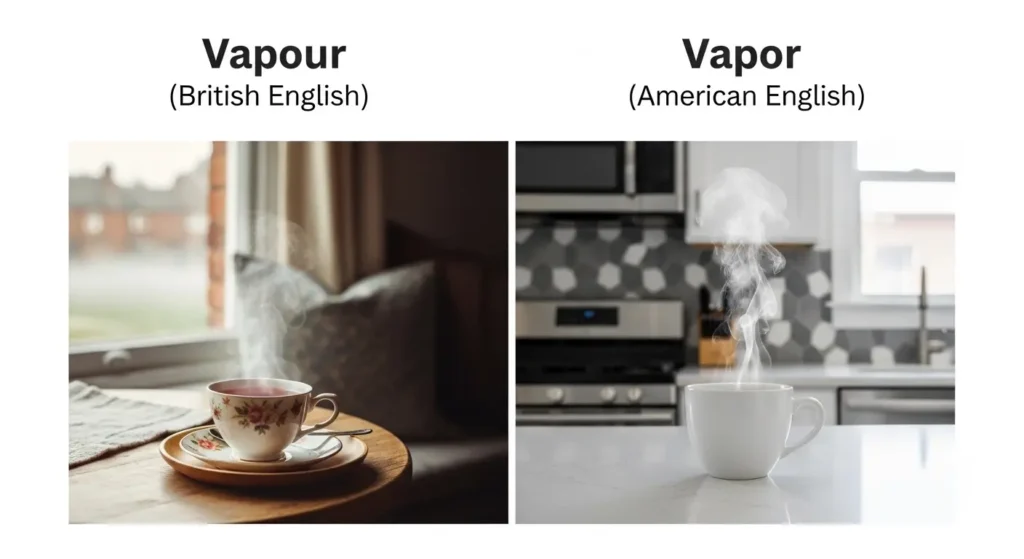
“Vapour” and “vapor” mean the same thing. The only difference is spelling:
- Vapour = British English
- Vapor = American English
Both refer to a gas or mist-like substance formed when a liquid turns into gas.
Examples:
- Water turns into vapor/vapour when heated.
- Steam is a visible form of vapor/vapour.
The Origin of Vapour or Vapor
The word comes from the Latin word “vapor”, meaning heat, steam, or smoke.
Over time, English evolved in different regions:
- British English kept older spellings like vapour
- American English simplified spelling rules and dropped many letters, becoming vapor
This change happened in the 18th–19th century when American English started standardizing spelling to make it simpler and more efficient.
So, the difference is not meaning-basedit is historical and regional.
British English vs American English Spelling
Here’s a simple comparison:
| British English | American English | Meaning |
| vapour | vapor | gas/mist form of liquid |
| colour | color | hue/shade |
| favour | favor | preference/kindness |
| honour | honor | respect |
Both spellings are correct depending on the audience.
Which Spelling Should You Use?
Your choice depends on your audience:
- US audience → Use “vapor”
- UK, India, Pakistan, Australia → Use “vapour”
- Global SEO content → Prefer “vapor” (more searched online)
If you are unsure, check:
- Website style guide
- Publisher requirements
- Target readers
For blogs and SEO, “vapor” often performs slightly better in global search traffic.
Common Mistakes with Vapour or Vapor
Many writers make these errors:
❌ Mixing both spellings in one article
❌ Thinking one spelling is wrong
❌ Using “vapour” in US-based academic papers
❌ Using “vapor” in British formal writing when consistency is required
✔ Correct approach:
- Choose one version
- Stay consistent throughout your content
Vapour or Vapor in Everyday Examples
You will see this word in many real-life situations:
1. Science:
- Water becomes vapor when heated.
2. Weather reports:
- Morning fog is made of water vapor in the air.
3. Emails:
- “The substance turns into vapor at high temperature.”
4. Social media:
- “That coffee is steaming with vapor!”
5. Academic writing:
- “Water vapor plays a key role in climate change.”
Vapour or Vapor – Google Trends & Usage Data
Search trends show:
- “Vapor” is more popular globally online, especially in science, technology, and product-related searches.
- “Vapour” is more common in UK and Commonwealth countries.
- In SEO content, “vapor” often brings higher traffic because American English dominates global web content.
However, both versions are widely understood and accepted.
Comparison Table: Vapour vs Vapor Variations
| Feature | Vapour | Vapor |
| Language type | British English | American English |
| Usage region | UK, India, Pakistan, Australia | USA, global tech/science |
| Meaning | Gas form of liquid | Gas form of liquid |
| SEO usage | Lower global search volume | Higher global search volume |
| Correctness | Correct | Correct |
FAQs about Vapour or Vapor
1. Is vapour or vapor correct?
Both are correct. The difference is only spelling based on region.
2. What is the meaning of vapor?
It is a gas or mist formed when a liquid evaporates.
3. Why does British English use “vapour”?
British English keeps traditional Latin-based spellings.
4. Is vapor used in science?
Yes, “vapor” is widely used in scientific and technical writing.
5. Should I use vapour or vapor for SEO?
Use “vapor” for global SEO and “vapour” for UK-focused content.
6. Can I mix both spellings?
No, it is best to stay consistent in one article.
7. Does spelling affect meaning?
No, both words have the same meaning.
Conclusion
The difference between vapour or vapor is simple but important for clear writing. Both words mean the same thing: a gas formed when a liquid changes into a gaseous state. The only difference lies in regional spelling rules: British English uses “vapour,” while American English prefers “vapor.”
Understanding this difference helps writers avoid confusion, especially when creating content for different audiences. If you are writing for the UK or Commonwealth countries, “vapour” is the right choice. If your audience is global or American, “vapor” is more commonly used and performs better in online searches.
The key is consistency. Mixing both spellings in one article can make your writing look unprofessional. Whether you are writing science content, blogs, emails, or SEO articles, choosing one version and sticking to it improves clarity and trust.
In the end, neither spelling is wrong. They are just two versions of the same word shaped by history and geography. Once you understand this, you can confidently use vapour or vapor in any context without confusion.

Hi, I’m Henry William, the author of GrammarTribe.com. I’m passionate about the English language and have dedicated my career to helping people master grammar, spelling, and effective writing. Over the years, I’ve guided learners, writers, and professionals in understanding common mistakes, tricky rules, and nuances of English grammar in a simple and easy-to-follow way.
Through GrammarTribe.com, I aim to make grammar approachable and enjoyable for everyone. My work focuses on providing clear explanations, practical tips, and examples that readers can apply in everyday writing, whether it’s emails, essays, social media, or professional documents. I believe that strong grammar skills empower people to communicate confidently and professionally.
When I’m not writing or researching grammar, I enjoy reading, exploring language trends, and creating educational content that simplifies complex concepts. I’m committed to helping my audience write better, understand English deeply, and avoid common pitfalls, all while making learning grammar a fun and rewarding journey.