People often get confused when they see the words “doggy” and “doggie.” Are they the same? Is one wrong? Or do they mean different things? This small spelling question shows up in searches because both words appear in books, social media posts, pet names, and even kids’ language. Many learners, writers, and pet lovers want to know which version is correct and when to use each one.
The confusion mainly comes from informal English and playful spelling. Both words are used to describe dogs in a cute or affectionate way, but they can also be used differently depending on tone and region.
Some people think “doggie” is British English and “doggy” is American English, while others believe one is more “correct.” This article clears up all that confusion in a simple way. You’ll learn the meaning, origin, spelling rules, usage examples, and which version you should use in real writing.
Doggy or Doggie – Quick Answer
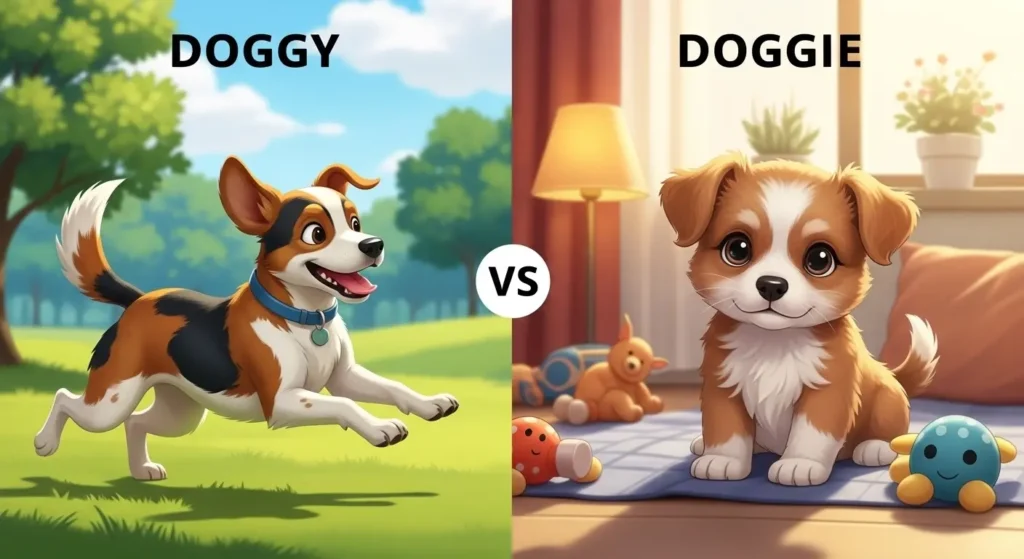
“Doggy” and “doggie” both mean the same thing: a cute or informal word for a dog.
- Doggy → More common in American English
- Doggie → Often used in British English or playful writing
Examples:
- “Come here, doggy!”
- “Good doggie, you did well!”
👉 Both are correct. The difference is style, not meaning.
The Origin of Doggy or Doggie
Both “doggy” and “doggie” come from the word “dog.”
- The suffix “-y” or “-ie” is added to make words sound small, cute, or affectionate.
- This style is common in English nicknames like:
- kitty (from cat)
- piggy (from pig)
- bunny (from bun or rabbit)
Historically, “doggie” appeared earlier in informal British writing, while “doggy” became popular in American English later. Over time, both forms stayed in use because English allows flexible informal spelling.
British English vs American English Spelling
Even though both words are widely understood, there are slight regional preferences.
| Feature | Doggy | Doggie |
| Common Region | American English | British English |
| Tone | Casual, modern | Cute, playful |
| Usage | Social media, speech | Children’s books, speech |
| Formal Writing | Not used | Not used |
👉 Important note: Neither is used in formal academic writing.
Which Spelling Should You Use?
Your choice depends on your audience:
- US audience → Use “doggy”
- UK/Commonwealth audience → Use “doggie”
- Global audience → Either is fine
If you are writing blogs, social media posts, or pet names, choose the one that fits your tone. “Doggy” feels slightly more modern, while “doggie” feels more soft and childlike.
Common Mistakes with Doggy or Doggie
Here are frequent errors people make:
- ❌ Thinking one spelling is incorrect
✔ Both are correct - ❌ Using in formal essays
✔ Avoid both in formal writing - ❌ Mixing spellings in one document
✔ Choose one style and stay consistent - ❌ Using it in serious contexts
✔ It is informal and playful only
Doggy or Doggie in Everyday Examples
Social Media
- “My doggy is the cutest in the world 🐶”
- “Look at this little doggie sleeping!”
Emails (informal)
- “I’ll take my doggy for a walk after work.”
Children’s Books
- “The little doggie ran across the garden.”
Casual Speech
- “Who’s a good doggy?”
Formal Writing (not recommended)
- Instead use: “dog” or “pet dog”
Doggy or Doggie – Google Trends & Usage Data
Search trends show:
- United States: Higher use of “doggy”
- United Kingdom: Slight preference for “doggie”
- Australia & Canada: Mixed usage
- Social Media (global): Both used equally
Why? Because informal language spreads quickly online, and both spellings are seen in memes, captions, and pet content.
Comparison Table: Doggy vs Doggie
| Feature | Doggy | Doggie |
| Meaning | Cute dog | Cute dog |
| Emotion | Friendly, modern | Soft, affectionate |
| Region | US preference | UK preference |
| Formal Use | No | No |
| Popular Use | Social media | Kids content |
FAQs About Doggy or Doggie
1. Is “doggy” correct English?
Yes. It is correct in informal English.
2. Is “doggie” wrong?
No. It is also correct and widely used.
3. What is the difference between doggy and doggie?
Only spelling and style. The meaning is the same.
4. Which is more popular?
“Doggy” is slightly more popular in American English.
5. Can I use these words in formal writing?
No. Use “dog” instead in formal contexts.
6. Are doggy and doggie slang?
Yes, they are informal and affectionate slang terms.
7. Which is better for SEO writing?
Both work, but “doggy” has slightly higher search volume globally.
Conclusion
The words “doggy” and “doggie” both describe a cute or affectionate way to refer to a dog. There is no real difference in meaning, only in spelling and style. “Doggy” is more common in American English, while “doggie” is slightly more popular in British or playful writing. Both are informal, so they should not be used in academic or professional documents.
When choosing between them, think about your audience and tone. If you want a modern, social media-friendly style, “doggy” works well. If you want something softer or more childlike, “doggie” fits better. The good news is that neither is wrong, so you can confidently use either one in casual writing.
Understanding these small spelling differences helps you write more naturally and clearly in English. It also improves communication, especially when writing for global readers or pet-related content.

I am James Wilson, an author at GrammarTribe.com, specializing in English grammar and clear communication.
I create expert, reliable content to help learners write with confidence and accuracy.