
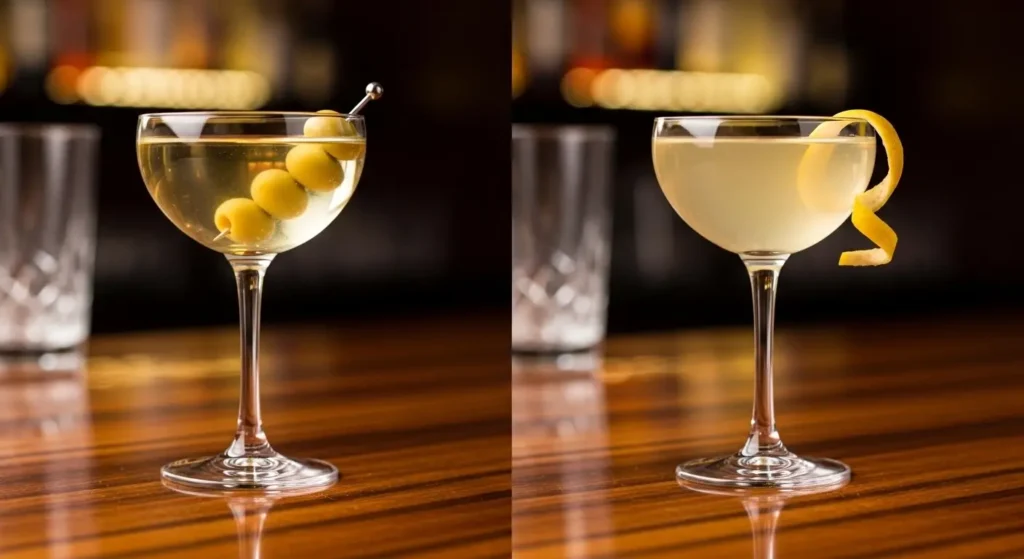
Have you ever heard someone say “olive or twist” and paused, wondering if that’s correct? You’re not alone. Many people search for this phrase because it sounds familiar, yet slightly off. It often comes from hearing “olive or twist” instead of the correct phrase “olive or twist” in a cocktail context or confusing it with “Oliver Twist,” the famous novel by Charles Dickens.
This mix-up happens because English words can sound alike but have very different meanings. People want to know if “olive or twist” is correct, when to use it, and whether it’s tied to food, drinks, or literature. This article clears up that confusion in a simple way. You’ll learn the meaning, origin, correct usage, and common mistakes. By the end, you’ll know exactly when to say it and when not to.
Olive or Twist – Quick Answer
“Olive or twist” is a correct phrase used in cocktails.
It means choosing a garnish for a drink, especially a martini:
- Olive → A small green olive in the drink
- Twist → A piece of lemon peel
Example:
- “Would you like your martini with an olive or twist?”
Posted inGrammar Knowledge
Roll or Die: Meaning and Origin
The Origin of Olive or Twist
The phrase comes from cocktail culture, especially martinis.
- In classic bars, bartenders ask how you want your drink.
- Two common garnishes are olives and lemon twists.
- Over time, “olive or twist” became a standard question.
There is also confusion with “Oliver Twist”, a famous novel by Charles Dickens (1838). Because the words sound similar, people sometimes mix them up.
So, the confusion is not about spelling, it’s about sound and meaning.
British English vs American English Spelling
Good news: there is no spelling difference here.
Both British and American English use the same words:
- Olive
- Twist
The confusion is not spelling, it’s mixing it up with Oliver Twist.
Gross or Net: What’s the Difference and When to Use Each?
Comparison Table
| Phrase | Meaning | Usage Type |
| Olive or twist | Cocktail garnish choice | Food & drink |
| Oliver Twist | A novel by Charles Dickens | Literature |
Which Spelling Should You Use?
Choose based on context:
- Food & Drinks (Global) → Use olive or twist
- Books or School (UK, US, Global) → Use Oliver Twist
- Formal Writing → Be precise to avoid confusion
- Casual Talk → Either may sound similar, but meaning matters
Tip:
If you are talking about a drink, always use olive or twist.
Common Mistakes with Olive or Twist
Here are common errors people make:
❌ Saying “Oliver twist” when ordering a drink
✔ Correct: “olive or twist”
❌ Thinking it’s a spelling variation
✔ It’s a completely different meaning
❌ Using it in writing without context
✔ Always clarify the situation
❌ Mixing literature with food terms
✔ Keep them separate
Olive or Twist in Everyday Examples
“Please confirm if you prefer olive or twist for the event cocktails.”
Social Media
“Martini night! Olive or twist? 🍸”
News/Blog Writing
“The bartender asked guests, ‘olive or twist,’ as drinks were served.”
Formal Writing
“The server offered a choice of garnish: olive or twist.”
Olive or Twist – Google Trends & Usage Data
Search trends show:
- High usage in the US and Europe → Cocktail culture is popular
- Moderate usage globally → Mostly in hospitality and lifestyle content
- Confusion searches → Many users search due to mix-up with “Oliver Twist”
Context of usage:
- Bars and restaurants
- Food blogs
- Social media posts
Keyword Comparison Table
| Keyword Variant | Correct Use Case | Example Sentence |
| Olive or twist | Drinks and cocktails | “Olive or twist for your martini?” |
| Oliver Twist | Literature | “Oliver Twist is a classic novel.” |
| Olive twist | Partial phrase (unclear) | Avoid using alone |
| Twist only | Drink garnish | “Add a lemon twist.” |
FAQs
1. Is “olive or twist” correct?
Yes, it is correct for cocktails.
2. What does “olive or twist” mean?
It means choosing a garnish for a drink.
3. Is it related to Oliver Twist?
No. That is a book, not a drink phrase.
4. Can I use it in formal writing?
Yes, but only in food or drink context.
5. Why do people confuse it?
Because it sounds like “Oliver Twist.”
6. Which is more common?
“Olive or twist” is common in bars. “Oliver Twist” is common in books.
7. Is there a spelling difference between the UK and US?
No, both use the same spelling.
Conclusion
“Olive or twist” is a simple but often misunderstood phrase. It belongs to the world of cocktails, where it refers to choosing a garnish with either an olive or a lemon twist. The confusion comes from its similarity in sound to “Oliver Twist,” the famous novel. However, these two phrases have completely different meanings and should not be mixed.
Understanding the difference helps you avoid awkward mistakes, especially in social or professional settings. Whether you are ordering a drink, writing a blog, or posting on social media, using the correct phrase shows clarity and confidence. Always think about context if it’s about drinks, go with “olive or twist.” If it’s about literature, use “Oliver Twist.”
In short, the phrase is easy once you know it. Use it right, and you’ll never second-guess it again.

Hi, I’m Henry James, the author behind GrammarTribe.com. I’m passionate about the English language and specialize in grammar, helping readers understand complex rules in a simple, clear way. Over the years, I’ve dedicated myself to creating content that makes learning grammar practical, fun, and accessible for everyone. If you’re a student, professional, or language enthusiast.
Through GrammarTribe.com, I share tips, guides, and examples to help people write confidently and correctly. My goal is to make grammar less intimidating and more useful in everyday writing, emails, social media, and professional communication. Writing and teaching grammar isn’t just my profession — it’s my passion.
When I’m not writing, I enjoy reading, exploring language trends, and discovering new ways to make English learning engaging and easy. My mission is to empower readers to communicate clearly and confidently, one grammar tip at a time.