Many English learners and even native speakers get confused between the words “waisted” and “wasted.” At first glance, they look almost similar, but their meanings are completely different. This small spelling difference can change the entire meaning of a sentence, which is why people often search this keyword on Google.
For example, someone might write “I feel waisted after work,” when they actually mean “wasted.” Or they may confuse “high-waisted jeans” with “high-wasted jeans.” These mistakes can lead to misunderstandings in emails, social media posts, and even professional writing.
This article clears that confusion in a simple way. You will learn the correct meaning, origin, spelling differences, usage rules, and real-life examples. Whether you are a student, writer, or English learner, understanding this difference will help you avoid common grammar mistakes and improve your communication skills.
Waisted or Wasted – Quick Answer
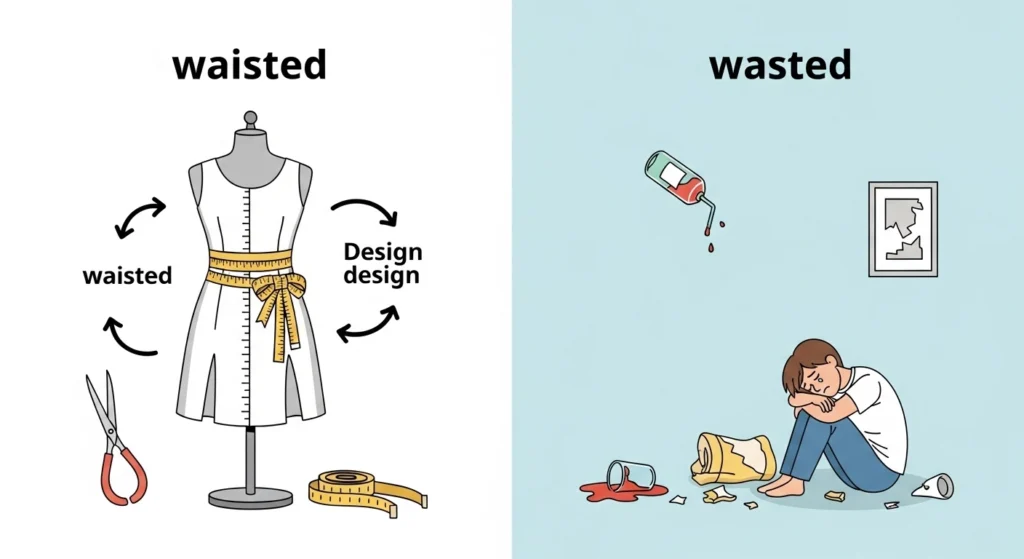
“Wasted” means something is used poorly, lost, or someone is intoxicated.
“Waisted” relates to the waist of clothing or body shape.
Examples:
- I feel wasted after the long journey. (tired or exhausted)
- He wasted his money on useless things. (squandered)
- She wore a high-waisted skirt. (refers to waist design)
👉 Simple rule:
- Wasted = loss / intoxication / exhaustion
- Waisted = clothing or waist-related
Preformed or Performed: Which One Is Correct?
The Origin of Waisted and Wasted
The word “waste” comes from Old French waster, meaning “to destroy or use carelessly.” Over time, it evolved into the modern English verb waste, meaning to misuse or lose something. The past form became wasted.
On the other hand, “waist” comes from Old English wæst, meaning the middle part of the human body. When turned into an adjective, it becomes waisted, used mainly in fashion and clothing descriptions like “high-waisted jeans.”
So, the difference exists because:
- Wasted → action or result (verb-based)
- Waisted → body or clothing (noun-based adjective)
British English vs American English Spelling
There is no spelling difference between British and American English for these words. However, usage frequency can vary slightly.
| Word | Meaning | Usage Type | Example |
| Wasted | Lost, intoxicated, exhausted | Verb/adjective | He wasted time. |
| Waisted | Related to waist area | Adjective | High-waisted pants |
Both English types use the same spellings, but “wasted” is far more common in everyday speech.
Which Spelling Should You Use?
- Global English users: Both are standard, but context matters most.
- Students & writers: Use “wasted” for actions and emotions.
- Fashion writing: Use “waisted” for clothing descriptions.
- Professional communication: Avoid confusion check context carefully.
👉 Tip: If you can replace the word with “lost or drunk,” use wasted. If it relates to clothing or waist, use waisted.
👉 Main mistake: mixing waist (body part) with waste (loss/use poorly).
Waisted or Wasted in Everyday Examples
Emails:
- “We noticed the resources were wasted on unnecessary tasks.”
Social Media:
- “Weekend = completely wasted 😅”
Fashion Blogs:
- “High-waisted jeans are trending this year.”
News Writing:
- “Millions were wasted due to poor planning.”
Formal Writing:
- “Time should not be wasted on unproductive meetings.”
Waisted vs Wasted – Usage Trends
- “Wasted” is widely used in everyday English, social media, and professional writing.
- It is associated with emotions, time, money, and intoxication.
- “Waisted” is much less common and mostly used in fashion or design contexts.
- Google searches for “wasted meaning” are significantly higher than “waisted meaning,” showing most confusion comes from spelling mistakes.
Comparison Table: Waisted vs Wasted
| Feature | Wasted | Waisted |
| Meaning | Lost, drunk, exhausted | Related to waist/body |
| Part of speech | Verb/adjective | Adjective |
| Usage field | General English | Fashion/clothing |
| Example | I wasted time | High-waisted skirt |
| Frequency | Very common | Less common |
FAQs about Waisted or Wasted
1. What is the correct word: waisted or wasted?
Both are correct but have different meanings. “Wasted” is for loss or intoxication, “waisted” is for clothing.
2. Is it “I feel waisted” or “I feel wasted”?
Correct: I feel wasted.
3. What does high-waisted mean?
It refers to clothing that sits above the natural waistline.
4. Can “wasted” mean drunk?
Yes, in informal English, “wasted” often means heavily intoxicated.
5. Is “waisted” used in daily English?
Rarely. It is mostly used in fashion writing.
6. Why do people confuse waisted and wasted?
Because they sound similar and differ by only one letter.
7. Which one is more common?
“Wasted” is far more common in everyday English.
Conclusion
Understanding the difference between waisted and wasted is simple once you know their roots and usage. “Wasted” relates to loss, exhaustion, or intoxication, and it is used widely in daily English conversations, social media, and professional writing. On the other hand, “waisted” is a specific adjective used mainly in fashion to describe clothing designs around the waist.
Most confusion happens because the words look and sound similar, but their meanings belong to completely different contexts. By remembering the simple rule waste = loss, waist = body area you can avoid mistakes easily.
Whether you are writing emails, essays, or social media captions, using the correct word improves clarity and professionalism. Mastering small differences like this helps you become more confident in English communication and prevents embarrassing errors in real-life situations.

Hi, I’m Henry James, the author behind GrammarTribe.com. I’m passionate about the English language and specialize in grammar, helping readers understand complex rules in a simple, clear way. Over the years, I’ve dedicated myself to creating content that makes learning grammar practical, fun, and accessible for everyone. If you’re a student, professional, or language enthusiast.
Through GrammarTribe.com, I share tips, guides, and examples to help people write confidently and correctly. My goal is to make grammar less intimidating and more useful in everyday writing, emails, social media, and professional communication. Writing and teaching grammar isn’t just my profession — it’s my passion.
When I’m not writing, I enjoy reading, exploring language trends, and discovering new ways to make English learning engaging and easy. My mission is to empower readers to communicate clearly and confidently, one grammar tip at a time.