Have you ever seen someone write “I’m feening for coffee” and wondered if it’s correct? Or maybe you’ve come across “fiending” in a movie subtitle or social media post and felt confused. You’re not alone. Many people search for “fiending or feening” because both words look and sound similar but they are not the same.
This confusion often comes from slang, pop culture, and informal writing. While one version is standard English, the other is a casual or slang spelling used in specific contexts. Knowing the difference helps you write clearly and avoid mistakes in school, work, or online posts.
In this guide, we will break down the meaning, origin, spelling rules, and real-life usage of fiending or feening. By the end, you will know exactly which word to use—and when.
Fiending or Feening – Quick Answer
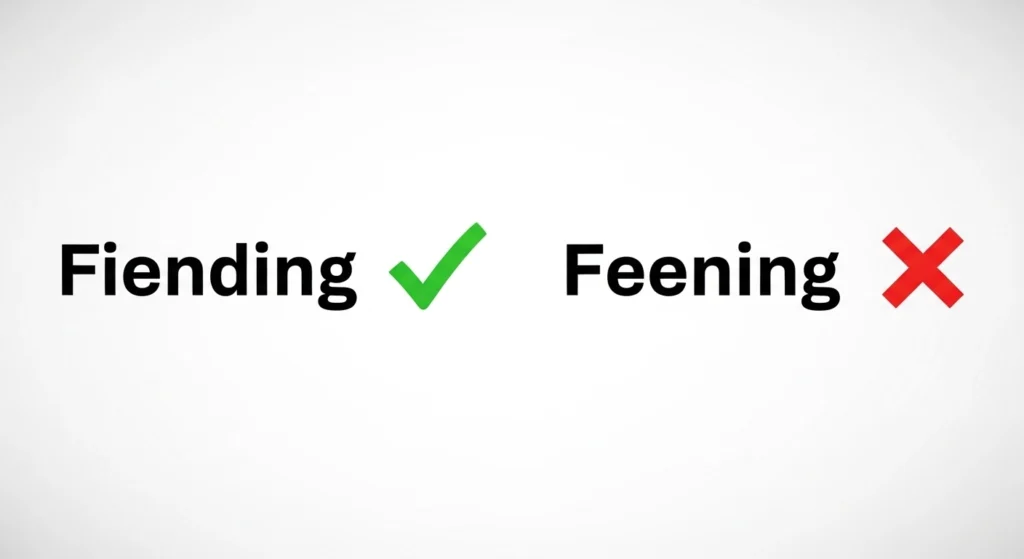
Fiending is the correct standard English spelling.
Feening is a slang or informal variation.
Meaning:
- Fiending = strongly craving or wanting something
- Often used for addiction or intense desire
Examples:
- “He is fiending for a cigarette.” ✅ (correct)
- “She is fiending for chocolate.” ✅ (correct)
- “I’m feening for pizza.” ⚠️ (informal/slang)
👉 Quick tip: Use fiending in formal writing. Use feening only in casual or social media contexts.
Posted inCommon Spelling Mistakes Grammar Knowledge
Wholistic or Holistic: Understanding the Difference / Correct Usage
The Origin of Fiending or Feening
The word fiending comes from the noun “fiend.”
Word history:
- Fiend (Old English) → meant “evil spirit” or “devil”
- Later meaning → someone obsessed or addicted to something
Example:
- “He’s a coffee fiend” = He loves coffee a lot
Over time, fiending developed to mean:
👉 craving something strongly, almost like an addiction
Why does “feening” exist?
Feening is not standard English. It comes from:
- Pronunciation changes in spoken language
- Slang, especially in music, urban speech, and online culture
People spell it as they hear it, which creates “feening.”
British English vs American English Spelling
Unlike many English words, fiending or feening is not a US vs UK spelling difference.
- Fiending → correct in both British and American English
- Feening → informal slang in both regions
Behavior or Behaviour – Which Spelling Is Correct?
Comparison Table
| Feature | Fiending (Correct) | Feening (Slang) |
| Standard English | ✅ Yes | ❌ No |
| Used in UK | ✅ Yes | ⚠️ Rare/slang |
| Used in US | ✅ Yes | ⚠️ Common slang |
| Formal writing | ✅ Yes | ❌ No |
| Social media | ⚠️ Sometimes | ✅ Yes |
Which Spelling Should You Use?
Choosing between fiending or feening depends on your audience.
Use “Fiending” if:
- You are writing essays or reports
- You are sending professional emails
- You want correct grammar
- Your audience is global
Use “Feening” if:
- You are posting on social media
- You are texting friends
- You are using slang or casual tone
Simple rule:
👉 When in doubt, use fiending
Common Mistakes with Fiending or Feening
Here are some common errors and how to fix them:
❌ Mistake 1: Using “feening” in formal writing
- Wrong: “The patient is feening for drugs.”
- Correct: “The patient is fiending for drugs.”
❌ Mistake 2: Thinking both are correct
- Truth: Only fiending is standard English
❌ Mistake 3: Confusing “fiend” with “friend”
- Wrong: “He is my coffee friend.”
- Correct: “He is a coffee fiend.”
❌ Mistake 4: Overusing slang
- Keep slang for casual settings only
Fiending or Feening in Everyday Examples
1. Emails (Formal)
- “I’ve been fiending for a break after this busy week.”
2. News Writing
- “Experts say people are fiending for fast results in modern life.”
3. Social Media
- “I’m feening for biryani right now 😭”
4. Casual Conversation
- “He’s fiending for a new phone.”
5. Academic Writing
- “The subject appeared to be fiending for attention.”
Fiending or Feening – Google Trends & Usage Data
Search data shows clear patterns:
- Fiending
- More common in formal searches
- Used worldwide
- Appears in books, articles, and news
- Feening
- Popular in the US and online culture
- Often seen in tweets, captions, and music lyrics
- Less common in formal contexts
Usage Insight:
👉 “Fiending” dominates in professional and global English
👉 “Feening” trends in informal and youth-driven platforms
Comparison Table: Fiending vs Feening
| Aspect | Fiending | Feening |
| Correct spelling | ✅ Yes | ❌ No |
| Meaning | Strong craving | Same (slang) |
| Tone | Formal/neutral | Informal/slang |
| Usage | Global English | Social media/casual |
| Reliability | High | Low in formal writing |
FAQs
1. Is “feening” a real word?
It is not a standard dictionary word. It is slang.
2. What does “fiending” mean?
It means strongly craving or wanting something.
3. Can I use “feening” in school writing?
No. Always use fiending in academic work.
4. Why do people say “feening”?
Because of pronunciation and slang influence.
5. Is this a UK vs US difference?
No. Both regions use fiending as the correct form.
6. Is “fiending” negative?
Not always. It can be neutral or casual depending on context.
7. Which spelling is better for SEO?
Fiending is better because it is correct and widely searched.
Conclusion
Understanding the difference between fiending or feening is simple once you know the rules. Fiending is the correct spelling and should be used in all formal, academic, and professional writing. It comes from the word fiend and means a strong craving or desire.
On the other hand, feening is a slang variation. It appears often in casual speech, music, and social media. While it may sound natural in informal settings, it is not accepted in standard English.
If your goal is clear communication and credibility, always choose fiending. It works across all regions, including the US, UK, and global audiences. Save feening for relaxed, friendly conversations where grammar rules are less strict.

I am James Wilson, an author at GrammarTribe.com, specializing in English grammar and clear communication.
I create expert, reliable content to help learners write with confidence and accuracy.