
Have you ever seen someone write “I’m feening for coffee” and wondered if it’s correct? Or maybe you’ve typed “fiending” and paused, unsure if it’s the right spelling. You’re not alone. Many people search for “feening or fiending” because both forms appear online, especially on social media, music lyrics, and casual chats.
The confusion comes from how the word sounds versus how it is spelled. “Feening” looks simple and matches pronunciation, but “fiending” has a deeper origin and meaning. This mix often leaves writers unsure which version is correct in formal or informal writing.
In this guide, we’ll clear up the confusion around feening or fiending. You’ll learn the correct spelling, its origin, and how usage changes across regions and contexts. By the end, you’ll know exactly which word to use—and when.
Feening or Fiending – Quick Answer
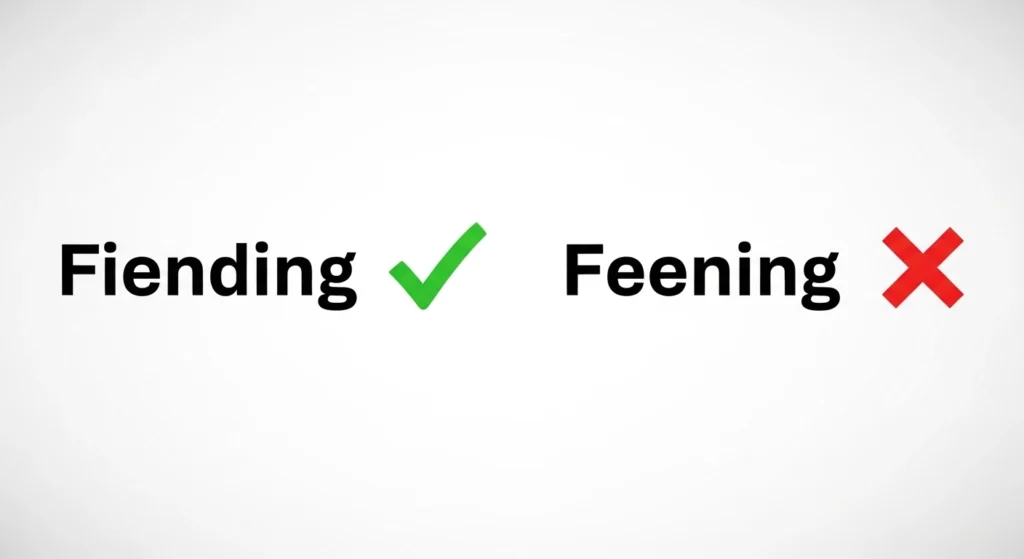
The correct standard spelling is “fiending.”
- Fiending means craving something strongly, often used in slang.
- Feening is an informal or phonetic spelling, mostly used in casual writing or online.
Examples:
- ✅ I’m fiending for some chocolate right now.
- ⚠️ I’m feening for some chocolate (informal/slang).
Use fiending in formal or professional writing. Use feening only in casual or creative contexts.
Fortreen or Fourteen? Correct Spelling, Meaning, Usage, Explained
The Origin of Feening or Fiending
The word fiending comes from the noun “fiend.”
Originally, a fiend meant:
- An evil spirit or demon
- Later, a person obsessed with something
Over time, the meaning softened. Today, calling someone a “coffee fiend” simply means they love coffee a lot.
Fiending developed as a verb form, meaning:
- To crave strongly
- To desire something intensely
So where did feening come from?
It’s a phonetic spelling—people write it the way it sounds. In fast speech, “fiending” can sound like “feening.” This spelling became popular in:
- Social media
- Text messages
- Music and pop culture
But it’s important to note:
- Fiending = standard and correct
- Feening = slang or non-standard
Niece or Neice: Spelling, Usage, and Common Mistakes Explained
British English vs American English Spelling
Unlike many English words, feening or fiending is not a UK vs US spelling difference. Both British and American English use “fiending.”
The variation comes from informal slang, not regional spelling rules.
Comparison Table
| Feature | Fiending (Correct) | Feening (Informal) |
| Spelling Type | Standard English | Slang/Phonetic |
| Used in US | Yes | Yes (informal) |
| Used in UK | Yes | Rare (informal) |
| Formal Writing | ✅ Yes | ❌ No |
| Social Media Usage | Common | Very Common |
Which Spelling Should You Use?
Choosing between feening or fiending depends on your audience.
Use “Fiending” if:
- You are writing for school or work
- You are creating blog posts or articles
- You want correct grammar
Use “Feening” if:
- You are texting friends
- You are posting on social media
- You want a casual or trendy tone
Quick Advice:
- US audience: Use fiending for clarity
- UK/Commonwealth: Always use fiending
- Global audience: Stick with fiending to avoid confusion
Common Mistakes with Feening or Fiending
Here are frequent errors people make:
1. Using “feening” in formal writing
❌ The company is feening for growth
✅ The company is fiending for growth
2. Thinking both are equally correct
- Only fiending is standard English
3. Confusing with “feeling”
❌ I am feeling for coffee
✅ I am fiending for coffee
4. Overusing slang in professional content
Avoid slang like feening in resumes, emails, or reports.
Feening or Fiending in Everyday Examples
Here’s how the word appears in real life:
Emails
- I’ve been fiending for your feedback on this project.
News Writing
- Fans are fiending for updates on the new release.
Social Media
- I’m feening for some late-night snacks 😅
Formal Writing
- The market is fiending for innovation in technology.
Casual Speech
- I’m fiending for coffee right now!
Feening or Fiending – Google Trends & Usage Data
Search data shows that:
- “Fiending” is more common in formal searches
- “Feening” appears more in casual and social searches
Popularity by Context:
- United States: Both terms appear, but fiending dominates
- United Kingdom: Mostly fiending
- Social media worldwide: Feening is trending in slang
Why the Difference?
- People type feening because it matches pronunciation
- But search engines recognize fiending as the correct word
Keyword Comparison Table
| Variation | Meaning | Correctness | Usage Context |
| Fiending | Strong craving or desire | ✅ Correct | Formal + Informal |
| Feening | Same meaning (slang form) | ⚠️ Informal | Social media, chat |
FAQs About Feening or Fiending
1. Is “feening” a real word?
It is used in slang but not accepted in standard English.
2. Which is correct: feening or fiending?
Fiending is the correct spelling.
3. Why do people say “feening”?
Because it sounds like “fiending” when spoken quickly.
4. Can I use “feening” in essays?
No. Always use fiending in formal writing.
5. Does “fiending” mean addiction?
Not always. It can simply mean a strong craving.
6. Is “fiending” negative?
It can be, but often it’s neutral or playful.
7. Is this a UK vs US difference?
No. Both regions use fiending as the correct form.
Conclusion
The confusion between feening or fiending comes down to sound versus spelling. While both words may look familiar, only fiending is correct in standard English. It comes from the word “fiend,” meaning someone with a strong obsession or craving.
On the other hand, feening is a slang version that reflects how people pronounce the word in casual speech. It has gained popularity online, but it should be avoided in formal writing.
If you want to sound clear and professional, always choose fiending. If you are chatting with friends or posting on social media, feening can work for a relaxed tone.