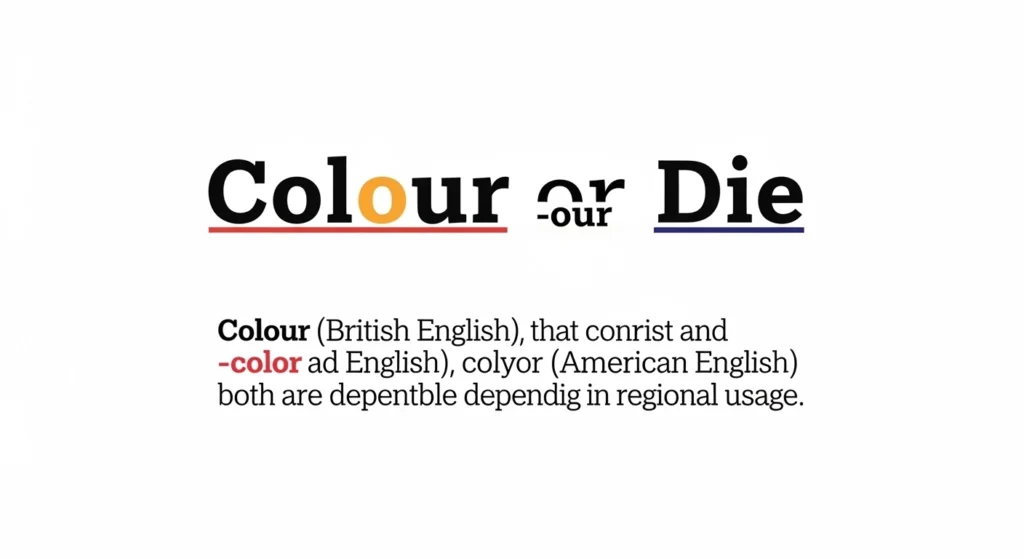
Have you ever seen the phrase “colour or die” and wondered what it means? At first glance, it looks confusing, even dramatic. Many people search for this keyword because they are unsure if it is a spelling issue, a phrase, or simply a mistake. The confusion often comes from mixing up the words “colour” and “color”, or misunderstanding the word “die” in context.
In reality, “colour or die” is not a standard English phrase. It is usually a mix-up, typo, or creative expression. Some people may mean “color or dye”, especially when talking about fabrics or hair. Others may be confused about British and American spelling differences.
This article clears up that confusion. You will learn the correct meanings, spelling rules, and how to use these words properly in everyday writing.
Colour or Die – Quick Answer
“Colour or die” is not a correct or common phrase in English.
Most likely meanings:
- “Colour” = British spelling of “color” (hue, shade)
- “Die” = to stop living OR a machine tool
- Often confused with “dye” = to add color to something
Examples:
- ✅ Correct: I like the colour blue.
- ✅ Correct: She dyed her hair red.
- ❌ Incorrect: She used die to colour her hair.
Curtsy or Curtsey: What’s the Correct Spelling and Meaning?
The Origin of Colour or Die
The confusion comes from mixing different words:
- Colour comes from Latin color, meaning shade or appearance.
- Color is the American spelling.
- Dye comes from Old English deag, meaning to stain or add color.
- Die comes from Old Norse and has many meanings, including death or tools.
Because “dye” and “die” sound the same, people often spell them wrong. This creates phrases like “colour or die,” which are not correct but appear online.
Curtsy or Curtsey: What’s the Correct Spelling and Meaning?
British English vs American English Spelling
The main difference is spelling:
| Concept | British English | American English |
| Colour | Colour | Color |
| Colouring | Colouring | Coloring |
| Favourite | Favourite | Favorite |
Key Rule:
- British English adds “u” (colour, favour)
- American English removes it (color, favor)
Which Spelling Should You Use?
Choose based on your audience:
- United States: Use color
- UK & Commonwealth (Pakistan, UK, Canada): Use colour
- Global audience: Stay consistent (pick one style)
👉 Tip: If you write for SEO, match your target country.
Common Mistakes with Colour or Die
Here are frequent errors:
| Mistake | Correct Form |
| colour or die | colour or dye |
| die your hair | dye your hair |
| color or die | color or dye |
| he will dye tomorrow (wrong meaning) | he will die tomorrow |
Key Difference:
- Dye = color something
- Die = stop living
Colour or Die in Everyday Examples
Emails
- Please choose the colour for the design.
- We will dye the fabric tomorrow.
News
- The company changed its brand color.
- New dye techniques improve fabric quality.
Social Media
I love this bright colour! Thinking to dye my hair the same shade 😍
Formal Writing
- The artist used vibrant colours in the painting.
- The textile industry uses natural dyes.
Colour or Die – Google Trends & Usage Data
- “Colour” is popular in the UK, Pakistan, and Commonwealth countries.
- “Color” dominates in the United States.
- “Dye” is used in fashion, hair, and textile topics.
- “Die” is used in serious contexts (life, machinery).
👉 “Colour or die” has low search accuracy and is often a mistaken query.
Keyword Comparison Table
| Word | Meaning | Example |
| Colour | Shade or hue | The sky has a blue colour |
| Color | Same as colour (US) | The sky has a blue color |
| Dye | Add color | She will dye her dress |
| Die | Stop living / tool | Plants die without water |
FAQs
1. Is “colour or die” correct English?
No, it is not a correct phrase.
2. What is the correct phrase?
Usually, people mean “colour or dye.”
3. What is the difference between dye and die?
- Dye = add color
- Die = death or tool
4. Is colour wrong spelling?
No, it is correct in British English.
5. Which is better: color or colour?
Both are correct. Use based on your audience.
6. Why do people confuse dye and die?
They sound the same but have different meanings.
7. Can “die” ever mean color?
No, “die” never means color.
Conclusion
The phrase “colour or die” is not standard English. It usually comes from confusion between “dye” and “die” or differences between “colour” and “color.” Understanding these small differences can greatly improve your writing.
If you are talking about shades or appearance, use colour (UK) or color (US). If you mean adding color to something, use dye. And if you are referring to death or tools, use die. Mixing them can change the meaning completely.
For clear communication, always choose the correct spelling based on your audience and context. This is especially important for SEO, professional writing, and everyday communication. Small spelling choices can make a big difference in how your message is understood.

Hi, I’m Henry James, the author behind GrammarTribe.com. I’m passionate about the English language and specialize in grammar, helping readers understand complex rules in a simple, clear way. Over the years, I’ve dedicated myself to creating content that makes learning grammar practical, fun, and accessible for everyone. If you’re a student, professional, or language enthusiast.
Through GrammarTribe.com, I share tips, guides, and examples to help people write confidently and correctly. My goal is to make grammar less intimidating and more useful in everyday writing, emails, social media, and professional communication. Writing and teaching grammar isn’t just my profession — it’s my passion.
When I’m not writing, I enjoy reading, exploring language trends, and discovering new ways to make English learning engaging and easy. My mission is to empower readers to communicate clearly and confidently, one grammar tip at a time.