
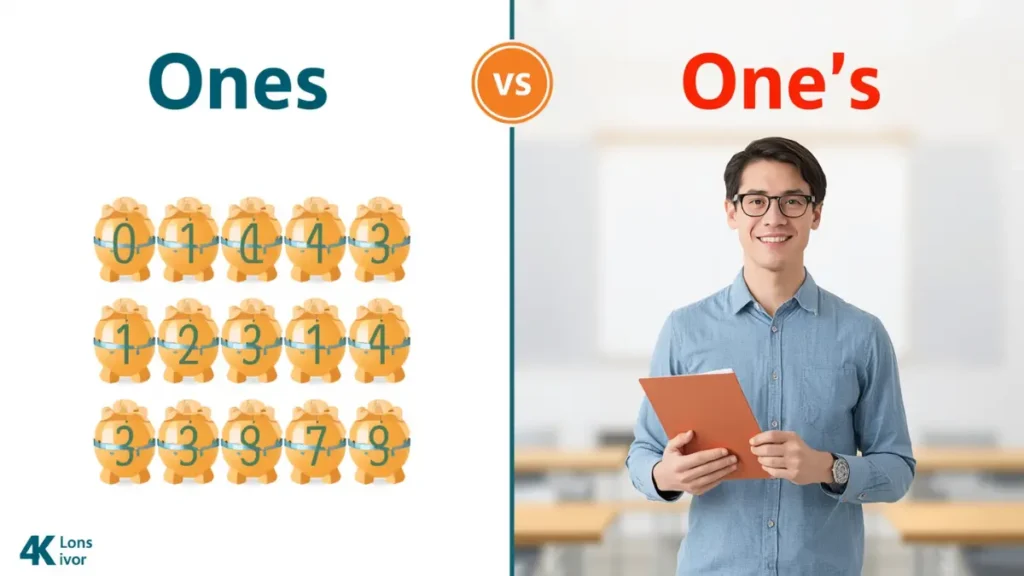
Many English learners get confused between “ones” and “one’s” because they look almost the same but mean very different things. This small apostrophe changes the entire meaning of a sentence.
People often search for this keyword when they are writing essays, emails, social media posts, or exam answers and suddenly feel unsure which form is correct.
The confusion usually happens because English has similar-looking words with different grammar roles. “Ones” is a plural form used to replace repeated nouns, while “one’s” shows possession, meaning something belongs to “one” or a person in general. Without clear understanding, writers can easily make mistakes that change the meaning of their sentence.
This article solves that confusion in a simple way. You will learn the correct meaning, usage rules, spelling differences, examples, and common mistakes so you can confidently use ones or one’s in real writing without hesitation.
Ones or One’s – Quick Answer
“Ones” is a plural substitute for “one” used to avoid repetition.
“One’s” is a possessive form meaning something belongs to a person.
Examples:
- I like the blue ones. (plural items)
- One should do one’s duty. (possession/general ownership)
Read more: Counsel or Council: What’s the Difference?
The Origin of Ones or One’s
The word “one” comes from Old English “ān”, meaning a single unit or person. Over time, English developed two useful forms:
- Ones → plural replacement used in modern English to avoid repeating nouns
- One’s → possessive form created by adding an apostrophe + “s” to show ownership
The apostrophe became important in Middle English to show possession clearly. That is why “one’s” looks different from “ones” even though they come from the same root word.
British English vs American English Spelling
Both British and American English use “ones” and “one’s” in the same way. There is no spelling difference between regions, but usage style can vary slightly in formal writing.
| Feature | British English | American English |
| Ones | Used normally | Used normally |
| One’s | Used normally | Used normally |
| Grammar rule | Same | Same |
| Style preference | Slightly more formal tone | More direct tone |
👉 Key point: The difference is grammatical, not regional.
Which Spelling Should You Use?
- US English: Use both forms correctly in writing, especially in exams and business emails.
- UK/Commonwealth English: Same rules apply, but formal writing often prefers clear possessive structure.
- Global English: Focus on grammar, not region. Meaning matters more than spelling style.
✔ Always choose based on meaning, not location.
Read more:Favour or Favor: What’s the Correct Spelling?
Common Mistakes with Ones or One’s
❌ Using “ones” when showing possession
- Wrong: One should do ones duty
- Correct: One should do one’s duty
❌ Using “one’s” for plural items
- Wrong: I like those one’s
- Correct: I like those ones
❌ Confusing apostrophe placement
- Wrong: ones’ (unless plural possessive in special context)
- Correct: one’s
Ones or One’s in Everyday Examples
Emails:
- Please review the attached files and select the ones you need.
Formal Writing:
- One should always complete one’s responsibilities on time.
Social Media:
- I love these ones more than the others!
News Writing:
- Citizens must protect one’s rights in a democratic society.
Ones or One’s – Google Trends & Usage Data
Search behavior shows that this keyword is commonly searched by students, writers, and ESL learners.
- Highest searches: India, Pakistan, Bangladesh, and UAE
- Medium searches: UK, USA, Canada
- Main reason: Grammar confusion in exams and writing tasks
- Peak usage: During academic exam seasons and assignment deadlines
👉 Insight: “One’s” confusion is more common than “ones” because apostrophes often cause grammar mistakes.
Comparison Table: Ones vs One’s
| Feature | Ones | One’s |
| Type | Plural pronoun | Possessive form |
| Meaning | More than one item | Belonging to one person |
| Apostrophe | No | Yes |
| Example | Choose the red ones | One should do one’s work |
| Usage | Objects/items | Ownership/ responsibility |
FAQs
1. What is the difference between ones and one’s?
“Ones” is plural replacement; “one’s” shows possession.
2. Is ones grammatically correct?
Yes, “ones” is correct when replacing plural nouns.
3. When should I use one’s?
Use “one’s” when showing ownership or responsibility.
4. Can ones and one’s be used in the same sentence?
Yes, if context requires both meanings.
5. Is one’s formal or informal?
It is formal and commonly used in writing and speeches.
6. Why is the apostrophe used in one’s?
It shows possession or belonging.
7. What is the most common mistake?
Using “ones” instead of “one’s” in possessive sentences.
Conclusion
Understanding the difference between ones or one’s is essential for clear and correct English writing. Although they look similar, their meanings are completely different. “Ones” is used for plural replacement, while “one’s” shows possession or responsibility. Many learners confuse them because of the apostrophe, but once you learn the rule, it becomes very easy to apply.
Whether you are writing an essay, email, or social media post, choosing the correct form improves clarity and professionalism. Always check if you are referring to multiple items or ownership before deciding. With practice, this small grammar point becomes simple and automatic.
Mastering ones or one’s helps you avoid common mistakes and write with confidence in both academic and professional contexts.

Hi, I’m Henry William, the author of GrammarTribe.com. I’m passionate about the English language and have dedicated my career to helping people master grammar, spelling, and effective writing. Over the years, I’ve guided learners, writers, and professionals in understanding common mistakes, tricky rules, and nuances of English grammar in a simple and easy-to-follow way.
Through GrammarTribe.com, I aim to make grammar approachable and enjoyable for everyone. My work focuses on providing clear explanations, practical tips, and examples that readers can apply in everyday writing, whether it’s emails, essays, social media, or professional documents. I believe that strong grammar skills empower people to communicate confidently and professionally.
When I’m not writing or researching grammar, I enjoy reading, exploring language trends, and creating educational content that simplifies complex concepts. I’m committed to helping my audience write better, understand English deeply, and avoid common pitfalls, all while making learning grammar a fun and rewarding journey.