
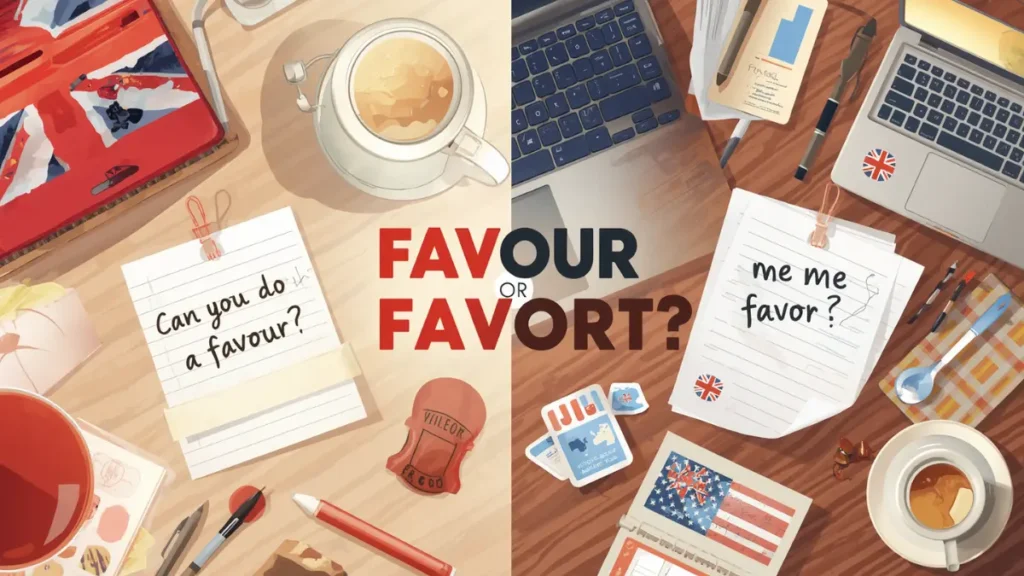
Many English learners and even native speakers get confused between “favour” and “favor.” Both words look almost the same, but the spelling difference can affect how professional or correct your writing appears in different regions. This confusion is very common because English is used globally, but spelling rules are not the same everywhere.
People often search for “favour or favor” when they are writing emails, essays, job applications, or social media posts and want to make sure their English is correct. The main problem is simple: which spelling is right favour or favor? The answer depends on whether you are using British English or American English.
In this article, you will clearly learn the difference between both spellings, where they come from, and how to use them correctly. You will also see real examples, common mistakes, and a simple guide to help you choose the right version every time you write. This will remove all confusion and help you write with confidence.
Favour or Favor – Quick Answer
“Favour” and “favor” mean the same thing. The only difference is spelling.
- Favour → British English
- Favor → American English
Examples:
- Can you do me a favour? (UK/India/Pakistan English)
- Can you do me a favor? (US English)
- She showed kindness and favour to everyone.
- The judge ruled in favor of the company.
Both are correct. You just need to match your audience.
Read more: Edgewater or Deserters: Meaning and Differences?
The Origin of Favour or Favor
The word comes from Latin “favor”, meaning kindness, support, or approval.
It entered Old French as “faveur”, and later moved into Middle English as “favour.”
Over time, English spelling changed in different regions:
- British English kept older French-style spelling: favour
- American English simplified spelling: favor
This simplification was part of spelling reforms in the US during the 18th–19th century, led by people like Noah Webster.
British English vs American English Spelling
English has two major spelling systems. This is why “favour” and “favor” both exist.
Key Difference
- British English keeps “-our”
- American English changes it to “-or”
Read more: Teet or Teat: Meaning and Difference?
Comparison Table
| British English | American English | Meaning |
| favour | favor | kindness or preference |
| colour | color | shade or hue |
| honour | honor | respect |
| flavour | flavor | taste |
| labour | labor | work |
Which Spelling Should You Use?
Your choice depends on your audience:
- USA audience → use “favor”
- UK, India, Pakistan, Australia → use “favour”
- Global websites/blogs → choose one style and stay consistent
Simple rule:
Match the spelling of the country you are writing for. Consistency is more important than choice.
Common Mistakes with Favour or Favor
Many learners make small but important errors:
1. Mixing both spellings
❌ I need your favour in this favor
✔ I need your favour (UK) OR I need your favor (US)
2. Wrong verb usage
❌ Please favour me this task
✔ Please do me a favour / Please favor me
3. Inconsistent writing
❌ Switching between favour and favor in one document
✔ Always stick to one version
Favour or Favor in Everyday Examples
Emails:
- “Could you please do me a favor and send the report?” (US)
- “I would appreciate your favour in this matter.” (UK)
Social Media:
- “Big favor needed, friends!”
- “Can I ask a small favour?”
Formal Writing:
- “The court ruled in favor of the plaintiff.”
- “He gained public favour due to honesty.”
News Style:
- US media uses “favor”
- UK media uses “favour”
Favour or Favor – Google Trends & Usage Data
Search data shows clear regional patterns:
- United States: “favor” is dominant
- United Kingdom: “favour” is standard
- India & Pakistan: both used, but British English is preferred in education
- Canada & Australia: “favour” is more common
Overall:
- “favor” has higher global search volume due to US internet dominance
- “favour” remains strong in Commonwealth countries and formal writing
Comparison Table: Favour vs Favor
| Feature | Favour | Favor |
| Language style | British English | American English |
| Spelling pattern | -our ending | -or ending |
| Usage regions | UK, Pakistan, India, Australia | USA |
| Formality | Formal/standard in UK | Standard in US |
| Meaning | Same | Same |
FAQs about Favour or Favor
1. Is “favour” correct or “favor”?
Both are correct. It depends on British or American English.
2. Which is more formal?
Both are formal. Context matters more than spelling.
3. Can I mix favour and favor in one document?
No. Always use one consistent spelling style.
4. Why does American English drop the “u”?
American English simplified spelling to make it easier and faster to write.
5. Is “favor” wrong in the UK?
Not wrong, but it looks American and less standard in UK writing.
6. What is the plural form?
- Favour → favours
- Favor → favors
7. Which spelling should I use in exams?
Use British English (“favour”) unless your exam board specifies American English.
Conclusion
The difference between “favour” and “favor” is simple but important for clear communication. Both words mean the same thing, but their spelling depends on the English style you choose. British English uses “favour,” while American English uses “favor.” Neither is wrong, but consistency is key in writing.
If you are writing for school, work, or online content, always match your audience’s language style. This makes your writing look professional and easy to understand. Many people get confused because English is global, but spelling rules still follow regional patterns.
Once you understand this small rule, you will never confuse these words again. Just remember: choose one style and stick to it throughout your writing.

Hi, I’m Henry William, the author of GrammarTribe.com. I’m passionate about the English language and have dedicated my career to helping people master grammar, spelling, and effective writing. Over the years, I’ve guided learners, writers, and professionals in understanding common mistakes, tricky rules, and nuances of English grammar in a simple and easy-to-follow way.
Through GrammarTribe.com, I aim to make grammar approachable and enjoyable for everyone. My work focuses on providing clear explanations, practical tips, and examples that readers can apply in everyday writing, whether it’s emails, essays, social media, or professional documents. I believe that strong grammar skills empower people to communicate confidently and professionally.
When I’m not writing or researching grammar, I enjoy reading, exploring language trends, and creating educational content that simplifies complex concepts. I’m committed to helping my audience write better, understand English deeply, and avoid common pitfalls, all while making learning grammar a fun and rewarding journey.