
Have you ever looked at your salary slip, a business report, or even a bill and wondered what “gross” or “net” really means? You’re not alone. Many people search for gross or net because these terms appear everywhere income, profit, weight, and even pricing but they often cause confusion.
The problem is simple: both words relate to amounts, yet they mean very different things. Using the wrong one can lead to misunderstandings, especially in finance, business, or daily life decisions. For example, your gross salary looks higher than what you actually receive, while net income shows the real money in your pocket.
This guide clears up that confusion. You’ll learn the exact meaning of gross or net, where the terms come from, how they differ, and when to use each. By the end, you’ll feel confident using them correctly in both casual and professional settings.
Gross or Net – Quick Answer
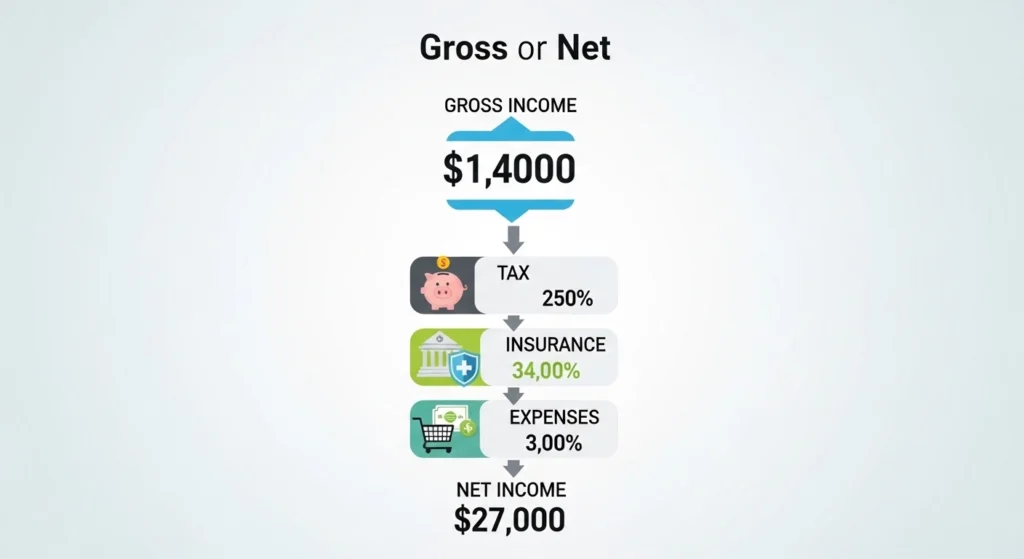
Gross means the total amount before any deductions.
Net means the final amount after deductions.
Example:
- Gross salary = 100,000 PKR
- Taxes and deductions = 20,000 PKR
- Net salary = 80,000 PKR
👉 So, gross is before, and net is after.
Wholistic or Holistic: Understanding the Difference / Correct Usage
The Origin of Gross or Net
The words gross and net come from different language roots:
- Gross comes from Old French “gros”, meaning large or total. It entered English to mean the full amount.
- Net comes from Old English “nett”, meaning clean or final. It refers to what remains after removing extras.
There is no spelling difference between regions. Both words are standard English worldwide.
Wholistic or Holistic: Understanding the Difference / Correct Usage
British English vs American English Spelling
Unlike many English words, gross and net have no spelling differences between British and American English.
Comparison Table:
| Term | British English | American English | Meaning |
| Gross | Gross | Gross | Total amount before deductions |
| Net | Net | Net | Final amount after deductions |
👉 The usage and spelling are identical globally.
Which Spelling Should You Use?
Since there is no spelling difference, your focus should be on context:
- USA audience: Use gross/net in financial and business contexts.
- UK/Commonwealth: Same usage applies.
- Global audience: Safe to use anywhere without changes.
👉 The key is not spelling it’s using the correct term for the situation.
Common Mistakes with Gross or Net
Here are frequent errors people make:
❌ Saying “net salary” when meaning total pay
✔ Correct: “gross salary” is total before deductions
❌ Thinking gross profit equals final profit
✔ Correct: net profit is the final amount
❌ Mixing up in pricing
✔ Gross price includes all costs; net price excludes taxes
❌ Using both terms interchangeably
✔ They are opposites, not synonyms
Gross or Net in Everyday Examples
1. Emails
- “Your gross salary is listed in the contract.”
- “Your net payment will be transferred tomorrow.”
2. News
- “The company reported a gross revenue increase.”
- “Net profit fell due to higher expenses.”
3. Social Media
- “My gross income looks big, but net is what matters 😅”
4. Formal Writing
- “The net weight excludes packaging materials.”
- “Gross margin reflects total sales before costs.”
Gross or Net – Google Trends & Usage Data
The terms gross and net are widely searched worldwide, especially in:
- USA & UK: Salary and tax-related searches
- India & Pakistan: Job income and deductions
- Europe: Business and accounting contexts
👉 “Net salary” is often searched more because people want to know what they actually receive.
👉 “Gross profit” is popular among business users and students.
Comparison Table: Gross vs Net
| Feature | Gross | Net |
| Meaning | Total amount | Final amount |
| Deductions | Not included | Included |
| Use Case | Salary, revenue, weight | Income, profit, final value |
| Example | Gross salary | Net salary |
| Simplicity | Bigger number | Smaller number |
FAQs About Gross or Net
1. What is the difference between gross and net salary?
Gross salary is total pay before deductions. Net salary is what you take home after taxes.
2. Which is higher, gross or net?
Gross is always higher because no deductions are removed.
3. What is gross profit vs net profit?
Gross profit is revenue minus cost of goods. Net profit is final profit after all expenses.
4. Does net include taxes?
Yes, the net amount is after taxes and deductions.
5. Why is net important?
Net shows the real value you receive or keep.
6. Is gross income taxable?
Yes, taxes are usually calculated based on gross income.
7. What is net weight?
Net weight is the weight of the product without packaging.
Conclusion
Understanding gross or net is simple once you know the core idea: gross is the full amount, and net is what remains after deductions. These terms are used in many areas: salary, business, pricing, and even everyday purchases. That’s why knowing the difference is so important.
There are no spelling differences between British and American English, which makes usage easier worldwide. The real challenge is applying the correct term in the right context. Always remember that gross shows the bigger picture, while net shows the real outcome.
Whether you are checking your paycheck, running a business, or reading financial news, using these terms correctly helps you avoid confusion and make better decisions. Focus on the meaning, not just the words, and you’ll always get it right.

Hi, I’m Henry James, the author behind GrammarTribe.com. I’m passionate about the English language and specialize in grammar, helping readers understand complex rules in a simple, clear way. Over the years, I’ve dedicated myself to creating content that makes learning grammar practical, fun, and accessible for everyone. If you’re a student, professional, or language enthusiast.
Through GrammarTribe.com, I share tips, guides, and examples to help people write confidently and correctly. My goal is to make grammar less intimidating and more useful in everyday writing, emails, social media, and professional communication. Writing and teaching grammar isn’t just my profession — it’s my passion.
When I’m not writing, I enjoy reading, exploring language trends, and discovering new ways to make English learning engaging and easy. My mission is to empower readers to communicate clearly and confidently, one grammar tip at a time.