
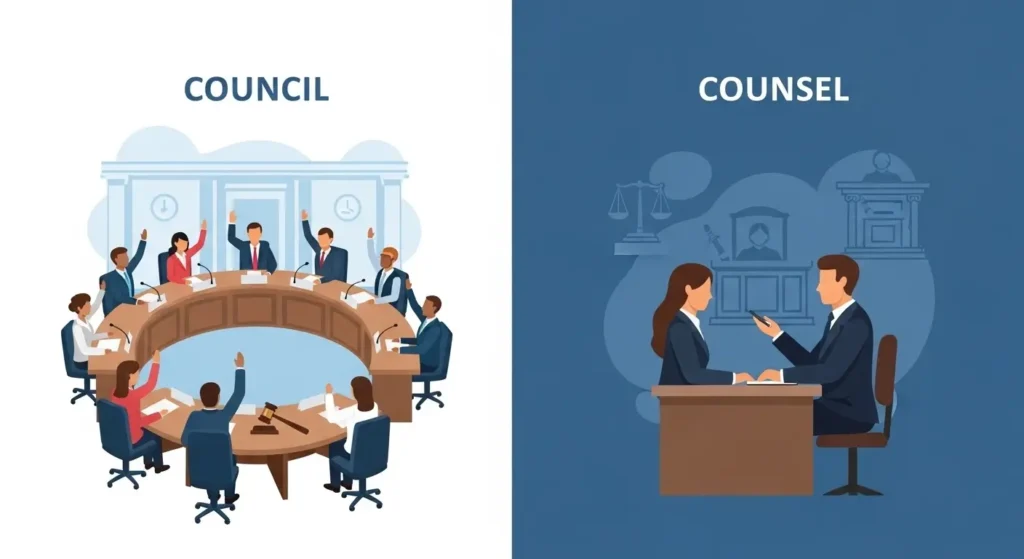
Have you ever paused while writing and wondered whether to use council or counsel? You’re not alone. These two words sound exactly the same, but they mean very different things. That’s why so many people search for “council or counsel” online they want a quick, clear answer without confusion.
This mix-up often happens in emails, legal writing, school work, and even social media posts. Using the wrong word can change the meaning of your sentence completely. For example, talking about a “legal council” instead of “legal counsel” can make your writing look incorrect or unprofessional.
This guide will solve that confusion once and for all. You’ll learn the difference, see simple examples, and know exactly when to use each word. By the end, you’ll feel confident choosing the right spelling every time.
Council or Counsel – Quick Answer
- Council = A group of people who meet to make decisions
- Counsel = Advice or a lawyer
Examples:
- The city council approved the new law.
- She gave me good counsel about my career.
- He hired legal counsel for the case.
👉 Easy trick:
- Council = group
- Counsel = advice or lawyer
Kiss or Slap – Meaning and Usage?
The Origin of Council or Counsel
Both words come from Latin, which is why they sound the same but have different meanings.
- Council comes from “concilium” meaning meeting or assembly. Over time, it became the word for official groups like city councils.
- Counsel comes from “consilium” meaning advice or plan. This evolved into both the idea of giving advice and the role of a lawyer.
The spelling difference happened as English developed and borrowed words from French and Latin. Even though they sound alike, their meanings stayed separate.
British English vs American English Spelling
Good news: there is no spelling difference between British and American English for these words.
Both use:
- Council
- Counsel
Posted inGrammar Knowledge
Truth or Scare: What Does It Mean and Is It Correct?
Comparison Table
| Word | Meaning | British English | American English |
| Council | Group or committee | Council | Council |
| Counsel | Advice or lawyer | Counsel | Counsel |
👉 The confusion is not about region it’s about meaning.
Which Spelling Should You Use?
Choosing the right word depends on what you mean:
- Use council when talking about a group or organization
- Example: local council, student council
- Use counsel when talking about advice or legal help
- Example: legal counsel, wise counsel
Audience Tips:
- US audience → Same rules apply
- UK/Commonwealth → Same usage
- Global writing → Focus on meaning, not region
👉 Always ask: Am I talking about a group or advice?
Common Mistakes with Council or Counsel
Here are mistakes people often make:
❌ The legal council reviewed the case
✔️ The legal counsel reviewed the case
❌ She asked the city counsel for help
✔️ She asked the city council for help
❌ He gave me great council
✔️ He gave me great counsel
Quick Fix Tip:
- If it’s a person or advice → counsel
- If it’s a group → council
Council or Counsel in Everyday Examples
Emails
- Please contact legal counsel before signing.
- The school council will meet tomorrow.
News
- The city council passed a new rule.
- The company hired outside counsel.
Social Media
- “Always seek good counsel before big decisions.”
- “Our local council is improving roads!”
Formal Writing
- The board and council approved the policy.
- The defendant consulted legal counsel.
Council or Counsel – Google Trends & Usage Data
Search data shows that many people confuse these words because they sound identical.
- “Legal counsel” is popular in legal and business contexts
- “City council” is common in news and government topics
Usage by Context:
- Government → Council
- Law → Counsel
- Advice → Counsel
Regional Insight:
- US, UK, Canada, Australia → same usage patterns
- Higher search volume comes from students and professionals writing formal content
Comparison Table: Council vs Counsel
| Feature | Council | Counsel |
| Meaning | Group of people | Advice or lawyer |
| Usage | Government, committees | Legal, personal advice |
| Example | City council | Legal counsel |
| Part of Speech | Noun | Noun & Verb |
| Memory Tip | Council = group | Counsel = advice |
FAQs About Council or Counsel
1. What is the main difference between council and counsel?
A council is a group of people. Counsel means advice or a lawyer.
2. Is “legal council” correct?
No. The correct term is legal counsel.
3. Can counsel be used as a verb?
Yes. Example: She counseled him on his decision.
4. Do council and counsel sound the same?
Yes, they are homophones (same sound, different meaning).
5. Is there a spelling difference in the UK and US?
No. Both countries use the same spellings.
6. How can I remember the difference easily?
Council = group, Counsel = advice.
7. Which word is used in government?
Council is used for government groups.
Conclusion
Understanding the difference between council and counsel is simple once you break it down. Even though they sound the same, their meanings are completely different. Council refers to a group of people who meet and make decisions, while counsel relates to giving advice or working as a lawyer.
This small spelling difference can have a big impact on your writing. Using the wrong word can confuse readers or make your message unclear. That’s why it’s important to focus on the meaning behind the word rather than just how it sounds.
A quick memory trick can help: council equals group, counsel equals advice. With practice, choosing the right word becomes natural. Whether you are writing an email, a report, or a social media post, using the correct term will make your writing more clear and professional.

Hi, I’m Henry James, the author behind GrammarTribe.com. I’m passionate about the English language and specialize in grammar, helping readers understand complex rules in a simple, clear way. Over the years, I’ve dedicated myself to creating content that makes learning grammar practical, fun, and accessible for everyone. If you’re a student, professional, or language enthusiast.
Through GrammarTribe.com, I share tips, guides, and examples to help people write confidently and correctly. My goal is to make grammar less intimidating and more useful in everyday writing, emails, social media, and professional communication. Writing and teaching grammar isn’t just my profession — it’s my passion.
When I’m not writing, I enjoy reading, exploring language trends, and discovering new ways to make English learning engaging and easy. My mission is to empower readers to communicate clearly and confidently, one grammar tip at a time.