Many people search for “miscarriage or period” because the symptoms can feel confusing and even scary. Bleeding, cramps, and fatigue can happen in both cases, making it hard to know what your body is going through. This question often comes up when a period is late, heavier than usual, or more painful than normal.
The confusion matters because a miscarriage may need medical care or emotional support, while a period is a normal monthly cycle. Knowing the difference can help you take the right next step, whether that means resting at home or contacting a doctor.
This guide explains the key signs in simple words. It helps you understand what is happening in your body and what to do next.
Miscarriage or Period – Quick Answer
A period is normal monthly bleeding when no pregnancy occurs.
A miscarriage is the loss of a pregnancy, usually in early weeks.
Simple examples:
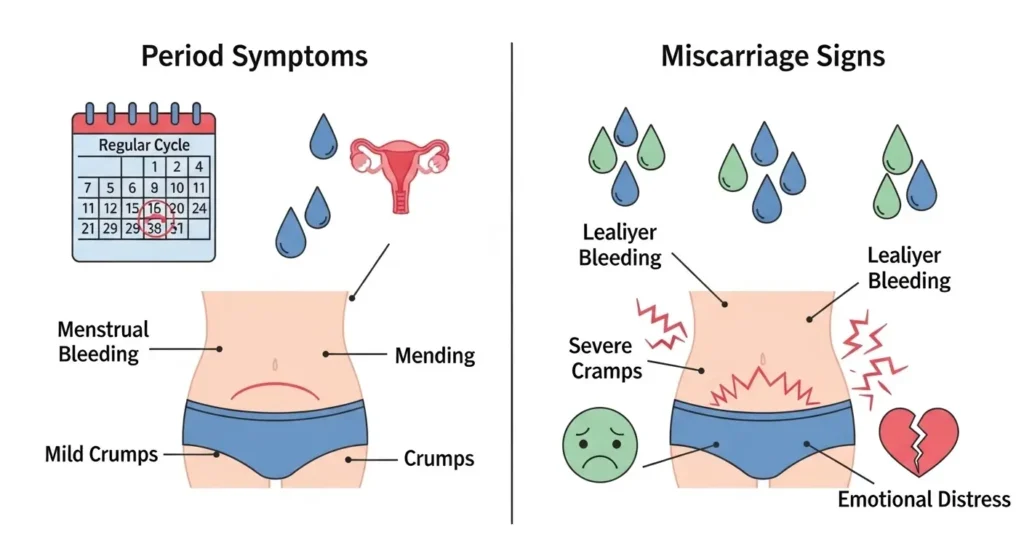
- Light to moderate bleeding with mild cramps → likely a period
- Heavy bleeding with clots and strong pain → could be a miscarriage
Key difference:
A miscarriage often includes pregnancy tissue, stronger pain, and longer bleeding than a period.
Truth or Scare: What Does It Mean and Is It Correct?
The Origin of Miscarriage or Period
The word “miscarriage” comes from old English. “Mis” means wrong, and “carriage” means carrying. It means a pregnancy that could not continue.
The word “period” comes from Latin “periodus,” meaning a cycle or recurring time. It refers to the monthly cycle of the body.
There are no spelling differences for these words. The confusion is not about spelling—it is about meaning and symptoms.
Kiss or Slap – Meaning and Usage?
British English vs American English Spelling
There is no spelling difference between British and American English for “miscarriage” or “period.” Both forms are the same worldwide.
However, related terms may differ slightly in usage.
Comparison Table
| Term | American English | British English | Meaning |
| Miscarriage | Miscarriage | Miscarriage | Loss of pregnancy |
| Period | Period | Period | Monthly bleeding |
| Pregnancy loss | Common | Common | General term |
| Menstruation | Menstruation | Menstruation | Medical term |
Which Spelling Should You Use?
Use the same spelling everywhere:
- USA: miscarriage, period
- UK/Commonwealth: miscarriage, period
- Global audience: same words work everywhere
Focus more on clear meaning, not spelling differences.
Common Mistakes with Miscarriage or Period
Mistake 1: Thinking heavy bleeding is always a period
✔ Correction: Heavy bleeding could be a miscarriage
Mistake 2: Ignoring severe pain
✔ Correction: Strong cramps may need medical advice
Mistake 3: Assuming clots are normal
✔ Correction: Large clots can be a warning sign
Mistake 4: Not checking pregnancy status
✔ Correction: A test can help confirm
Miscarriage or Period in Everyday Examples
Email:
“I had heavy bleeding this week. I am not sure if it was a miscarriage or period.”
News:
“Doctors advise women to understand signs of miscarriage or period differences.”
Social Media:
“Late cycle + heavy cramps. Miscarriage or period? Feeling worried.”
Formal Writing:
“It is important to distinguish between miscarriage and period symptoms for proper care.”
Miscarriage or Period – Google Trends & Usage Data
Searches for “miscarriage or period” are high in:
- United States
- United Kingdom
- India
- Pakistan
People search this term most when:
- Period is late
- Bleeding is unusual
- Early pregnancy is suspected
The topic is common because many early miscarriages happen before people even confirm pregnancy.
Keyword Variations Comparison Table
| Keyword Variation | Meaning | Usage Context |
| Miscarriage or period | General comparison | Most common search |
| Miscarriage vs period | Direct difference | Blogs and guides |
| Early miscarriage symptoms | Pregnancy loss signs | Medical info |
| Heavy period vs miscarriage | Symptom comparison | User concern |
| Period or pregnancy loss | Simple wording | Beginner searches |
FAQs
1. How can I tell if it is a miscarriage or period?
Look at pain, bleeding, and clots. A miscarriage is usually heavier and more painful.
2. Can a miscarriage feel like a normal period?
Yes, early miscarriage can feel similar, especially in very early weeks.
3. Do I need to see a doctor?
Yes, if bleeding is very heavy or pain is severe.
4. Are clots normal in periods?
Small clots can be normal, but large clots may need attention.
5. How long does a miscarriage last?
It can last longer than a period, often several days to weeks.
6. Can I take a pregnancy test after bleeding?
Yes, it may still show positive after a miscarriage for some time.
7. Is miscarriage common?
Yes, many happen early and may go unnoticed.
Conclusion
Understanding the difference between miscarriage or period is important for your health and peace of mind. While both can cause bleeding and cramps, the key differences lie in intensity, duration, and the presence of pregnancy tissue. A period is part of your normal cycle, while a miscarriage is the loss of a pregnancy and may need medical attention.
If you notice heavy bleeding, strong pain, or unusual symptoms, it is always best to speak with a doctor. Even if it turns out to be a period, getting reassurance can help reduce stress.
Clear knowledge helps you act fast and stay safe. Always listen to your body and do not ignore warning signs.

Hi, I’m Henry William, the author of GrammarTribe.com. I’m passionate about the English language and have dedicated my career to helping people master grammar, spelling, and effective writing. Over the years, I’ve guided learners, writers, and professionals in understanding common mistakes, tricky rules, and nuances of English grammar in a simple and easy-to-follow way.
Through GrammarTribe.com, I aim to make grammar approachable and enjoyable for everyone. My work focuses on providing clear explanations, practical tips, and examples that readers can apply in everyday writing, whether it’s emails, essays, social media, or professional documents. I believe that strong grammar skills empower people to communicate confidently and professionally.
When I’m not writing or researching grammar, I enjoy reading, exploring language trends, and creating educational content that simplifies complex concepts. I’m committed to helping my audience write better, understand English deeply, and avoid common pitfalls, all while making learning grammar a fun and rewarding journey.