
Medical words can be confusing, especially when they sound alike or are often misspelled. One common search is “bening or malignant (benign spelling).” Many people want to know whether bening is a correct word, how it relates to benign, and how it differs from malignant.
This confusion often happens after reading medical reports, hearing a doctor’s explanation, or searching online about tumors, cysts, or growths. The truth is simple: bening is usually a misspelling of benign. Meanwhile, malignant is a completely different medical term with an opposite meaning.
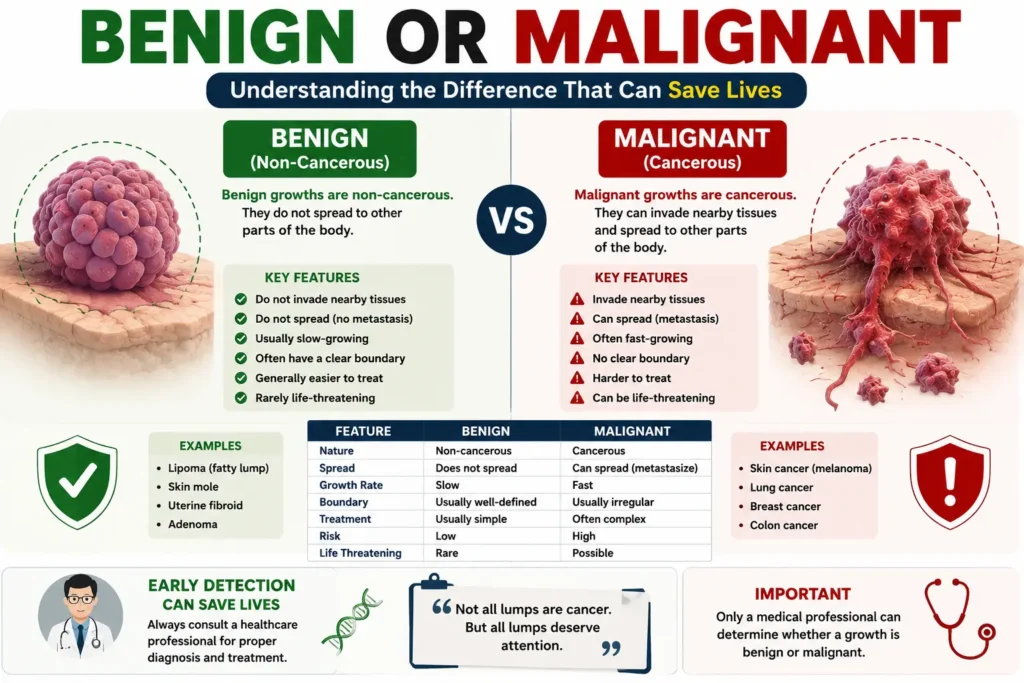
Understanding the difference is important because these words can affect how people interpret health information. A benign growth is generally non-cancerous, while a malignant growth is cancerous and may spread. This guide explains the correct spelling, meaning, origin, usage, and common mistakes surrounding bening or malignant (benign spelling). By the end, you’ll know exactly which word to use and when.
Bening or Malignant (Benign Spelling) – Quick Answer
Bening is not the standard English spelling.
✅ Benign = Correct spelling. Means harmless or non-cancerous.
✅ Malignant = Cancerous, harmful, or likely to spread.
Examples
- The doctor said the tumor was benign.
- The biopsy showed the growth was malignant.
- “Bening” is usually a spelling mistake.
Read more: He or She: Meaning and Grammar Rules
Quick Comparison
| Word | Correct? | Meaning |
| Bening | No | Misspelling of benign |
| Benign | Yes | Harmless, non-cancerous |
| Malignant | Yes | Harmful, cancerous |
The Origin of Bening or Malignant (Benign Spelling)
Origin of Benign
The word benign comes from the Latin word benignus, meaning “kind,” “favorable,” or “gentle.”
Over time, English adopted the word to describe something harmless or not dangerous. In medicine, it refers to a condition that does not invade nearby tissues or spread to other parts of the body.
Read more: Spilled or Spilt: Which Spelling Is Correct?
Origin of Malignant
The word malignant comes from the Latin word malignus, meaning “harmful” or “evil.”
In medicine, it became associated with diseases and tumors that can spread and damage healthy tissues.
Why the Spelling Confusion Exists
Many people spell benign as bening because:
- The pronunciation sounds similar.
- The letter combination “gn” is uncommon in English.
- Autocorrect may not always catch the mistake.
- People often write the word after hearing it spoken.
British English vs American English Spelling
Unlike many spelling differences, benign and malignant are spelled the same in both British and American English.
Comparison Table
| Term | British English | American English |
| Benign | Benign | Benign |
| Malignant | Malignant | Malignant |
| Bening | Incorrect | Incorrect |
Examples
British English
- The scan revealed a benign tumor.
American English
- The scan revealed a benign tumor.
The spelling remains identical across English-speaking countries.
Which Spelling Should You Use?
Use “Benign”
Use benign whenever you are referring to:
- Non-cancerous tumors
- Harmless conditions
- Gentle or favorable situations
Example:
“The specialist confirmed the cyst was benign.”
Use “Malignant”
Use malignant when discussing:
- Cancerous tumors
- Harmful medical conditions
- Aggressive diseases
Example:
“The malignant cells required immediate treatment.”
Audience-Based Advice
| Audience | Recommended Term |
| US Readers | Benign / Malignant |
| UK Readers | Benign / Malignant |
| Australia | Benign / Malignant |
| Canada | Benign / Malignant |
| Global Audience | Benign / Malignant |
Never use bening in professional, medical, academic, or formal writing.
Common Mistakes with Bening or Malignant (Benign Spelling)
Mistake #1: Writing Bening Instead of Benign
❌ The tumor was bening.
✅ The tumor was benign.
Mistake #2: Assuming Benign Means Healthy
❌ Benign means completely healthy.
✅ Benign means non-cancerous, but medical monitoring may still be needed.
Mistake #3: Confusing Benign with Malignant
❌ Benign tumors spread throughout the body.
✅ Malignant tumors may spread throughout the body.
Mistake #4: Using Malignant for Non-Cancerous Growths
❌ The benign cyst was malignant.
✅ The cyst was benign.
Mistake #5: Misspelling Medical Reports
❌ The results show a bening mass.
✅ The results show a benign mass.
Bening or Malignant (Benign Spelling) in Everyday Examples
In Emails
“The doctor confirmed the growth is benign.”
In News Reports
“Researchers developed new treatments for malignant cancers.”
On Social Media
“Thankfully, the biopsy came back benign.”
In Medical Writing
“The pathology report identified benign tissue.”
In Formal Documents
“The malignant tumor requires additional evaluation.”
In Everyday Conversation
“The doctor says it’s benign, so that’s good news.”
Bening or Malignant (Benign Spelling) – Google Trends & Usage Data
Search Interest
People frequently search:
- benign meaning
- benign vs malignant
- benign tumor
- malignant tumor
- bening spelling
Popular Countries
Searches commonly come from:
- United States
- United Kingdom
- Canada
- Australia
- India
Why People Search It
Most users want to know:
- Whether “bening” is correct
- The difference between benign and malignant
- Medical meanings
- Tumor classifications
- Correct spelling for reports and documents
Usage Popularity
| Term | Popularity |
| Benign | Very High |
| Malignant | Very High |
| Bening | Low |
Comparison Table: Bening vs Benign vs Malignant
| Feature | Bening | Benign | Malignant |
| Correct English Word | No | Yes | Yes |
| Medical Term | No | Yes | Yes |
| Cancerous | No | No | Yes |
| Harmful | No | Usually No | Usually Yes |
| Can Spread | No | No | Often Yes |
| Used by Doctors | No | Yes | Yes |
| Formal Writing | No | Yes | Yes |
| Common Misspelling | Yes | No | No |
Frequently Asked Questions (FAQs)
1. Is “bening” a real English word?
No. It is generally considered a misspelling of benign.
2. What does benign mean?
Benign means harmless, non-cancerous, or not likely to spread.
3. What does malignant mean?
Malignant means cancerous, harmful, and potentially able to spread.
4. Is benign the opposite of malignant?
Yes. In medical contexts, benign and malignant are opposites.
5. Can a benign tumor become malignant?
Some benign tumors may change over time, but many remain benign. Medical advice is important.
6. Which spelling is correct: bening or benign?
Benign is the correct spelling.
7. Is benign spelled differently in British English?
No. Both British and American English use benign.
Conclusion
The confusion between bening or malignant (benign spelling) is easy to understand because medical vocabulary often contains unusual spellings. However, the correct spelling is benign, not bening. A benign condition, growth, or tumor is generally harmless and non-cancerous, while a malignant condition is cancerous and may spread to other parts of the body.
There is no British-versus-American spelling difference here. English speakers worldwide use benign and malignant in the same way. Understanding the distinction is important because these terms appear in medical reports, healthcare discussions, news articles, and educational materials.
Whenever you are writing or speaking about non-cancerous growths, choose benign. When referring to cancerous or aggressive conditions, use malignant. Avoid the misspelling bening, especially in professional or medical contexts. Using the correct term helps ensure clear communication and prevents misunderstandings about important health information.

Hi, I’m Henry William, the author of GrammarTribe.com. I’m passionate about the English language and have dedicated my career to helping people master grammar, spelling, and effective writing. Over the years, I’ve guided learners, writers, and professionals in understanding common mistakes, tricky rules, and nuances of English grammar in a simple and easy-to-follow way.
Through GrammarTribe.com, I aim to make grammar approachable and enjoyable for everyone. My work focuses on providing clear explanations, practical tips, and examples that readers can apply in everyday writing, whether it’s emails, essays, social media, or professional documents. I believe that strong grammar skills empower people to communicate confidently and professionally.
When I’m not writing or researching grammar, I enjoy reading, exploring language trends, and creating educational content that simplifies complex concepts. I’m committed to helping my audience write better, understand English deeply, and avoid common pitfalls, all while making learning grammar a fun and rewarding journey.