
Many people get confused between “peel” and “peal.” They sound the same, but they do not mean the same thing. This makes them tricky, especially when writing emails, essays, or social posts.
You may have seen both words and wondered which one is correct. For example, should you write “peel the orange” or “peal the orange”? Only one is right. The confusion happens because English has many homophones that sound alike but have different meanings and spellings.
People search for “peel or peal” to avoid mistakes and write clearly. This guide gives a quick answer, simple rules, and real examples. It will help you choose the right word with confidence.
By the end, you will know the difference, avoid common errors, and use both words correctly in daily writing.
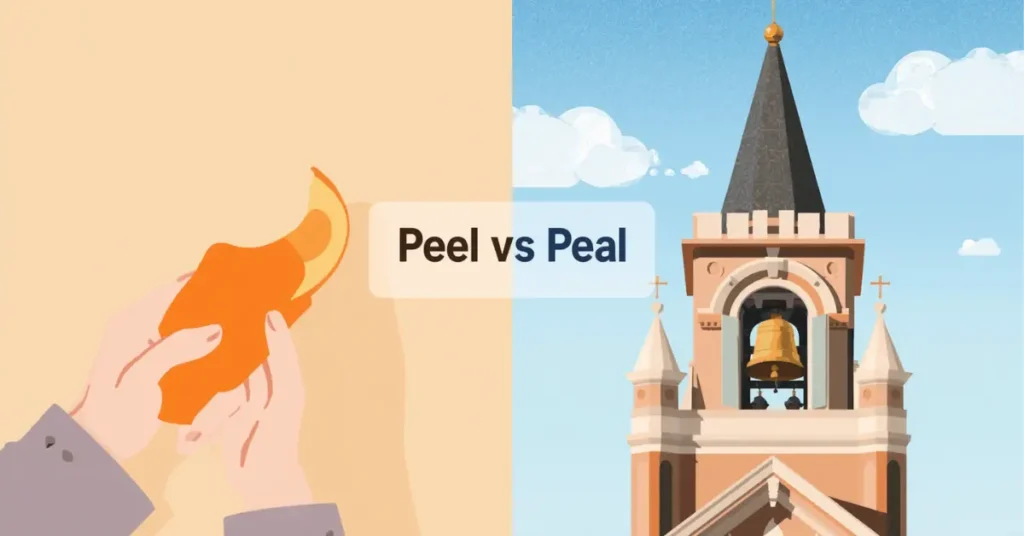
Peel or Peal – Quick Answer
- Peel → to remove skin or outer layer
- Peal → a loud ringing sound (like bells or laughter)
Examples:
- She will peel the apple.
- A peal of bells rang loudly.
✔ Same sound
❌ Different meanings
Posted inGrammar Knowledge
Openning or Opening – Which Spelling Is Correct?
The Origin of Peel or Peal
Both words come from different roots:
- Peel comes from French “peler,” meaning to strip or skin
- Peal comes from Old French “pele,” meaning a loud sound or ringing
Even though they sound the same, they developed separately. That is why they have different meanings today.
British English vs American English Spelling
Unlike many words, “peel” and “peal” do NOT change between British and American English.
Examples Table
| Word | British English | American English |
| peel | peel | peel |
| peal | peal | peal |
✔ Same spelling
✔ Same meaning in both regions
Good or Bad: What’s the Real Difference and When to Use Each?
Which Spelling Should You Use?
Choose based on meaning, not region:
- Use peel → when talking about skin, fruit, or layers
- Use peal → when talking about sound (bells, laughter)
Tip:
If you can remove it → use peel
If you can hear it → use peal
Common Mistakes with Peel or Peal
❌ Peal the banana
✔ Peel the banana
❌ A peel of laughter
✔ A peal of laughter
❌ Mixing both words in writing
✔ Always check the meaning before using
Peel or Peal in Everyday Examples
Emails:
- Please peel and cut the vegetables.
News:
- A peal of bells marked the celebration.
Social Media:
- I just peeled an orange 🍊
Formal Writing:
- The chef will peel the potatoes before cooking.
- A peal of thunder echoed in the sky.
Peel or Peal – Google Trends & Usage Data
- Peel is far more common
- Used in cooking, daily life, and instructions
- Peal is less common
- Mostly used in literature, news, or formal writing
By context:
- “Peel” → global everyday use
- “Peal” → specific use (sound-related writing)
Comparison Table: Peel vs Peal
| Feature | Peel | Peal |
| Meaning | Remove outer layer | Loud ringing sound |
| Usage | Cooking, daily actions | Bells, laughter, thunder |
| Frequency | Very common | Less common |
| English Type | Same in UK & US | Same in UK & US |
FAQs about Peel or Peal
1. Are peel and peal the same?
No. They sound the same but have different meanings.
2. Which one is correct for fruit?
Use peel for fruit.
3. What does peal mean?
It means a loud ringing sound.
4. Is peal commonly used?
No, it is less common than peel.
5. Do British and American English differ here?
No, both use the same spelling.
6. How can I remember the difference?
Peel = remove
Peal = sound
7. Can I use them interchangeably?
No, they have different meanings.
Conclusion
The difference between peel and peal is simple but important. Both words sound the same, but they have very different meanings. Peel is used when talking about removing skin or outer layers, like fruit or vegetables. Peal, on the other hand, is used for loud sounds, especially bells or laughter.
There is no difference between British and American English for these words. The spelling stays the same in all regions. The key is to understand the meaning and use the correct word in the right context.
To avoid mistakes, remember this easy trick: if it is something you can remove, use peel. If it is something you can hear, use peal.
Learning small differences like this can improve your writing, make your message clear, and help you sound more professional in any situation.

Hi, I’m Henry William, the author of GrammarTribe.com. I’m passionate about the English language and have dedicated my career to helping people master grammar, spelling, and effective writing. Over the years, I’ve guided learners, writers, and professionals in understanding common mistakes, tricky rules, and nuances of English grammar in a simple and easy-to-follow way.
Through GrammarTribe.com, I aim to make grammar approachable and enjoyable for everyone. My work focuses on providing clear explanations, practical tips, and examples that readers can apply in everyday writing, whether it’s emails, essays, social media, or professional documents. I believe that strong grammar skills empower people to communicate confidently and professionally.
When I’m not writing or researching grammar, I enjoy reading, exploring language trends, and creating educational content that simplifies complex concepts. I’m committed to helping my audience write better, understand English deeply, and avoid common pitfalls, all while making learning grammar a fun and rewarding journey.