
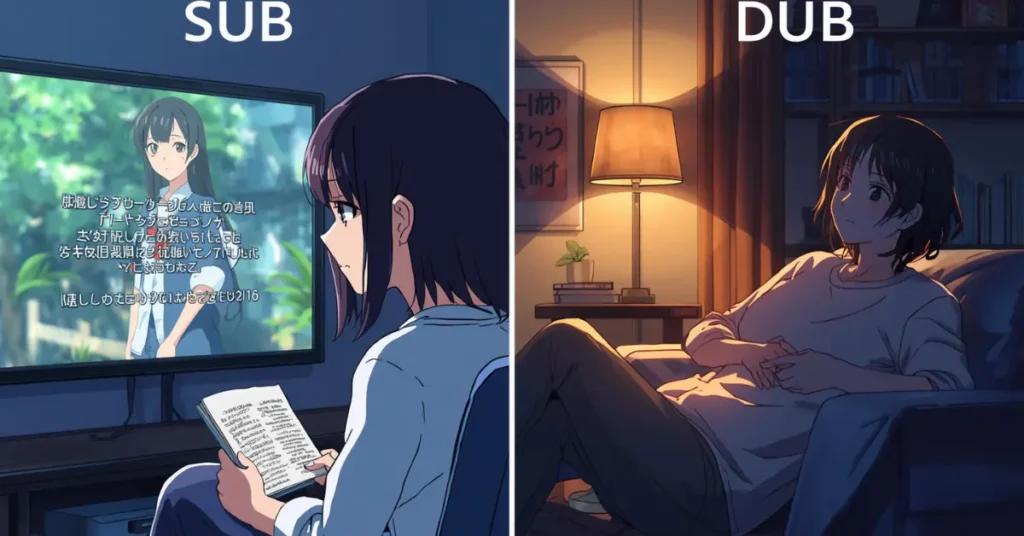
If you watch anime, foreign movies, or international series, you’ve probably seen the terms “sub or dub” everywhere. Many viewers search for this phrase because they are confused about whether to watch content with subtitles or dubbed audio. The debate of sub or dub is especially popular among anime fans, streaming users, and language learners.
The confusion usually comes from not understanding what each option means. Some people prefer reading subtitles, while others enjoy hearing voice acting in their own language. This creates the big question: sub or dub which is better?
In simple terms, “sub” means subtitles, and “dub” means dubbed audio. But the sub or dub choice affects viewing experience, emotions, and even understanding of culture. That’s why people often search for sub or dub comparisons before starting a show.
This article explains everything clearly so you can finally decide the best option for your needs.
Sub or Dub – Quick Answer
Sub or dub refers to two ways of watching foreign content:
- Sub (Subtitles): Original audio with translated text on screen
- Dub (Dubbed): Voice replaced with translated language audio
Examples
- Sub: Watching anime in Japanese with English subtitles
- Dub: Watching anime in English voice acting
Queue or Que: Meaning and Difference?
The Origin of Sub or Dub
The term comes from film and media industry language:
- “Sub” comes from “subtitles,” used since silent film translation in early cinema.
- “Dub” comes from “double” or “dub recording,” used when audio is replaced in post-production.
As global entertainment grew, especially anime and Hollywood dubbing, the phrase “sub or dub” became popular among fans.
British English vs American English Spelling
While “sub or dub” is not a spelling difference, it reflects regional preferences in media consumption.
| Aspect | Sub (Subtitles) | Dub (Dubbed) |
| Meaning | Text translation | Audio translation |
| UK Preference | Sub preferred | Less common |
| US Preference | Mixed usage | Dub more popular |
| Viewing Style | Reading required | Listening only |
| Experience | Original voice | Local language voice |
Which Should You Use?
The choice between sub or dub depends on your goal:
- If you want original emotions and voice acting, choose sub. It is popular among anime fans and language learners.
- If you prefer comfort and easy understanding, choose dub. It is better for multitasking or casual viewing.
- For children or beginners, dub is often easier.
- For cultural accuracy, sub is usually preferred.
There is no “correct” choice, only personal preference.
Ho or Hoe: Meaning, Difference?
Common Mistakes with Sub or Dub
- Thinking dub is always lower quality (not always true)
- Assuming sub is harder to follow (depends on reading speed)
- Believing one is “correct” and the other is “wrong”
- Mixing both terms in wrong context (e.g., calling subtitles “dubbing”)
Sub or Dub in Everyday Examples
- Email: “Do you prefer sub or dub for this anime recommendation?”
- Social media: “Sub or dub? I can’t decide!”
- News article: “Streaming platforms offer sub or dub options for global audiences.”
- Formal discussion: “Viewers can choose between subtitled or dubbed versions.”
Sub or Dub – Google Trends & Usage Data
- Sub is more popular globally, especially in Japan, Europe, and among anime fans.
- Dub is more popular in the United States and Latin America.
- Searches spike during new anime releases and streaming platform launches.
- “Sub vs dub anime” is one of the most searched entertainment comparisons online.
Comparison Table: Sub vs Dub Variations
| Feature | Sub | Dub |
| Language | Original audio + subtitles | Fully translated audio |
| Viewing Effort | High (reading needed) | Low (listen only) |
| Emotion | Original performance | Localized performance |
| Speed Preference | Fast scenes harder | Easier for casual watching |
| Popular Audience | Anime fans, learners | Casual viewers |
FAQs About Sub or Dub
1. What does sub or dub mean?
It means choosing between subtitles (sub) and dubbed audio (dub).
2. Is sub better than dub?
Neither is better; it depends on personal preference.
3. Why do anime fans prefer sub?
They prefer original voice acting and cultural accuracy.
4. Is dub easier to understand?
Yes, because you don’t need to read subtitles.
5. Does dub change the meaning?
Sometimes minor changes happen during translation.
6. Can I switch between sub and dub?
Yes, most streaming platforms allow both options.
7. Which is more popular worldwide?
Sub is more popular globally, but dub dominates in English-speaking regions.
Conclusion
The sub or dub debate is not about right or wrong, it is about comfort, preference, and viewing style. Subtitles give you the original voice, tone, and cultural feel, while dubbing offers convenience and easier understanding. Both options help global audiences enjoy foreign content in different ways.
In today’s streaming world, viewers are lucky to have both choices available. If you choose sub or dub, the goal remains the same: enjoying the story. Anime fans may prefer sub for authenticity, while casual viewers often choose dub for ease. Understanding the difference helps you make better viewing decisions and improves your overall entertainment experience.
Ultimately, the best choice in the sub or dub debate is the one that makes your watching experience enjoyable and stress-free.

I am James Wilson, an author at GrammarTribe.com, specializing in English grammar and clear communication.
I create expert, reliable content to help learners write with confidence and accuracy.