Many English learners and even native speakers get confused between “dying or dieing” when writing. The words look similar, but only one is correct in most contexts. This confusion often appears in emails, social media posts, academic writing, and search queries when people are unsure about spelling rules in English grammar.
The word “die” becomes tricky when turning into its continuous form. Some people incorrectly assume that adding “ing” simply makes it “dieing,” but English spelling rules don’t always work that way. Instead, the correct form is usually “dying.”
People search for this keyword because they want a quick answer, especially when writing about death, decline, or emotional expressions like “a dying trend.” Others are checking if “dieing” is ever correct. This article clears that confusion completely. You will learn the correct spelling, why the mistake happens, and how to use the word properly in real-life writing. By the end, you will confidently know when to use dying and avoid the common error dieing.
Dying or Dieing – Quick Answer
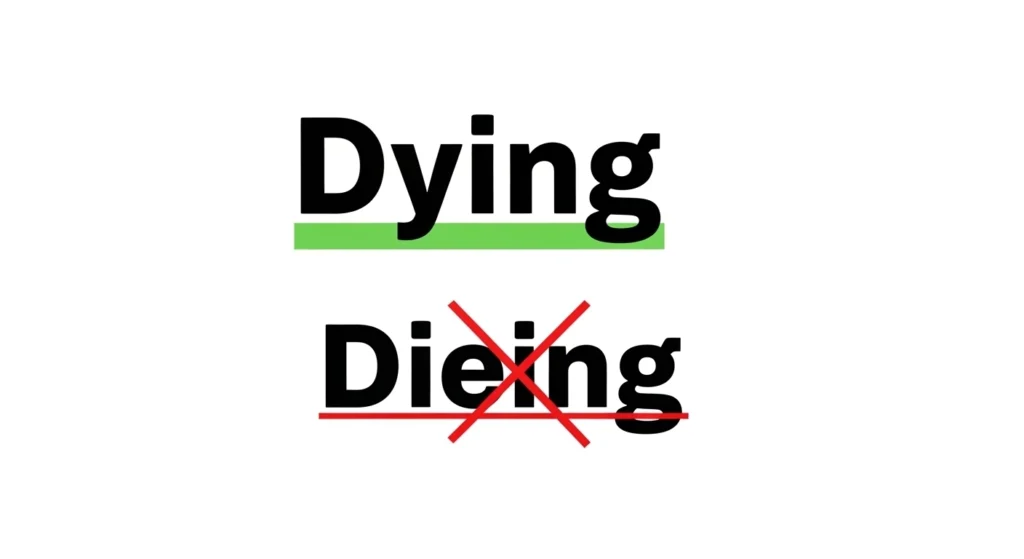
The correct spelling is dying, not dieing.
- Dying → Correct present participle of “die”
- Example: The plant is dying.
- Example: He is dying for help.
- Dieing → Incorrect in most cases
- Often a spelling mistake
- Rarely used in technical contexts related to “dies” (cutting tools), but not standard for “die = to stop living”
👉 Rule: When “die” means death or ending, always use dying.
Kiss or Slap – Meaning and Usage?
The Origin of Dying
The word die comes from Old English “dīegan” and later Middle English “dien”, meaning “to cease living.”
Over time, English spelling rules changed. When forming the present participle (verb + ing), most verbs simply add “-ing.” However, English drops the final “e” in many cases:
- die → dying (not dieing)
- make → making
- come → coming
The confusion comes from pronunciation and visual similarity, but historically, “dying” became the standardized form in modern English.
British English vs American English Spelling
Good news: both British and American English use “dying.” There is no spelling difference here.
| Meaning | Correct Spelling | Example |
| Present participle of die | dying | The tree is dying |
| Incorrect form | dieing | ✘ Not standard usage |
Unlike words such as “colour/color,” this word does NOT change between UK and US English.
Truth or Scare: What Does It Mean and Is It Correct?
Which Spelling Should You Use?
- Global writing (blogs, emails, SEO): Use dying
- US English: dying
- UK/Commonwealth English: dying
- Academic/formal writing: always dying
- Social media or casual typing: still dying (avoid dieing)
👉 Simple rule: If you mean death, decline, or fading, always use dying.
Common Mistakes with Dying or Dieing
Here are frequent errors:
❌ Writing “dieing” instead of “dying”
✔ Correct: The company is dying financially.
❌ Confusing “dieing” with “dyeing”
✔ Dyeing = coloring fabric
✔ Dying = losing life or declining
❌ Overthinking spelling rules
✔ Rule: drop the “e” → die + ing = dying
Dying in Everyday Examples
- Email: We are sorry to hear your system is dying. Please restart it.
- News: Experts warn that small businesses are dying due to inflation.
- Social Media: My phone is dying 😭
- Formal Writing: The ecosystem is slowly dying due to pollution.
Dying or Dieing – Google Trends & Usage Data
Search behavior shows:
- “dying” → Extremely high global usage
- “dieing” → Very low search volume (mostly correction searches)
Top regions searching this confusion:
- India
- Pakistan
- Bangladesh
- Middle East ESL learners
- Students worldwide
👉 Conclusion from usage data: “dying” dominates all formal and informal writing contexts.
Comparison Table: Dying vs Dieing
| Feature | Dying | Dieing |
| Correctness | ✔ Correct | ✘ Incorrect (mostly) |
| Meaning | Losing life / fading | Rare technical usage |
| Usage frequency | Very high | Very low |
| Grammar status | Standard English | Spelling error |
| Example | The fire is dying | ✘ The fire is dieing |
FAQs
1. Is “dieing” ever correct?
Rarely. It may appear in technical contexts related to “dies” (tools), but not for death or decline.
2. What is the correct spelling of die + ing?
The correct spelling is dying.
3. Why do people write dieing?
Because they assume all verbs simply add “-ing,” which is not always true.
4. What is the difference between dying and dyeing?
- Dying = ending life or fading
- Dyeing = coloring fabric
5. Is dying used in both US and UK English?
Yes, both use dying.
6. Can dying be used in emotional expressions?
Yes. Example: I’m dying of laughter.
7. How can I remember the correct spelling?
Think: “die loses the ‘e’ before adding ing → dying.”
Conclusion
Understanding the difference between dying or dieing is simple once you know the rule. The correct spelling is always dying when referring to death, decline, or fading conditions. The mistake “dieing” is mostly a spelling error caused by overgeneralizing English grammar rules.
Unlike many English words, this one does not change between British and American spelling systems, making it easier to remember once learned correctly. Whether you are writing emails, academic papers, blog posts, or social media captions, using “dying” ensures your writing looks professional and accurate.
The key takeaway is simple: drop the “e” and add “ing.” That small rule eliminates confusion forever. With practice, you will naturally avoid the mistake and use dying correctly in every context. Strong spelling builds strong communication, and mastering this word is a small but important step toward clearer English writing.

Hi, I’m Henry James, the author behind GrammarTribe.com. I’m passionate about the English language and specialize in grammar, helping readers understand complex rules in a simple, clear way. Over the years, I’ve dedicated myself to creating content that makes learning grammar practical, fun, and accessible for everyone. If you’re a student, professional, or language enthusiast.
Through GrammarTribe.com, I share tips, guides, and examples to help people write confidently and correctly. My goal is to make grammar less intimidating and more useful in everyday writing, emails, social media, and professional communication. Writing and teaching grammar isn’t just my profession — it’s my passion.
When I’m not writing, I enjoy reading, exploring language trends, and discovering new ways to make English learning engaging and easy. My mission is to empower readers to communicate clearly and confidently, one grammar tip at a time.