Have you ever stopped while writing and wondered whether to use practise or practice? You are not alone. This is one of the most common spelling questions in English, especially for students, writers, teachers, and professionals who work with both British and American English.
The confusion happens because both words are correct, but they are not always used in the same way. In British English, practise and practice have different grammatical functions. In American English, however, practice is used for both the noun and the verb. This difference causes many people to make mistakes in emails, essays, business documents, and online content.
Understanding when to use practise and practice can improve your writing and help you communicate more clearly. In this guide, you will learn the difference between the two spellings, their history, regional usage, common mistakes, and practical examples. By the end, you will know exactly which word belongs in each sentence.
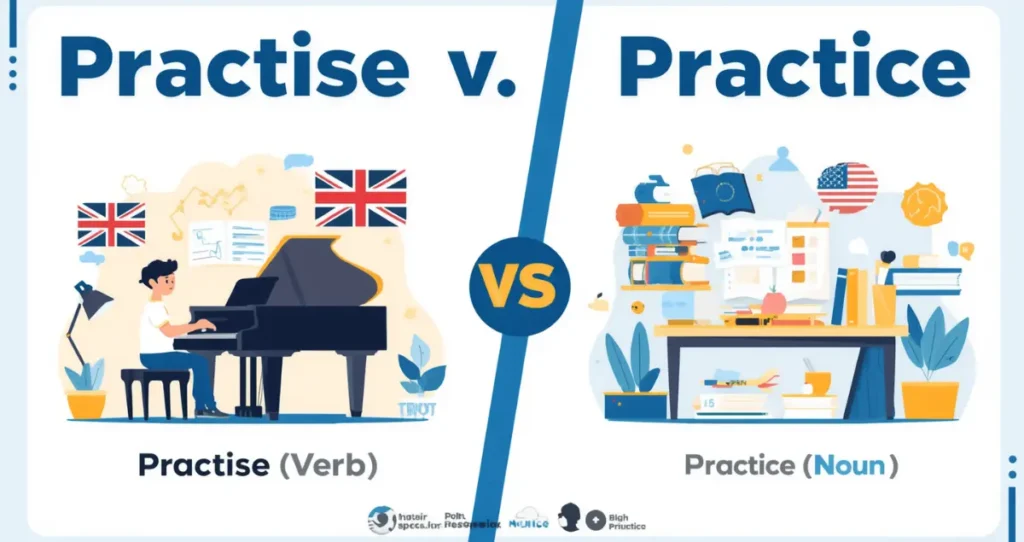
Practise or Practice – Quick Answer
The quick answer is:
British English
- Practice = Noun
- Practise = Verb
American English
- Practice = Noun and Verb
Examples
British English
- Football practice starts at 5 PM. ✅
- I practise football every day. ✅
American English
- Football practice starts at 5 PM. ✅
- I practice football every day. ✅
The key difference is that British English separates the noun and verb forms, while American English uses practice for both.
Read more:
Posted inGrammar Knowledge
Pasktime or Pastime: Which Spelling Is Correct?
The Origin of Practise or Practice
The words come from the Greek word praktikos, meaning “fit for action.” The term passed through Latin and Old French before entering English.
For centuries, English writers used different spellings. Eventually, British English developed a distinction between the noun and verb forms:
- Practice became the noun.
- Practise became the verb.
American English later simplified spelling rules and kept practice for both forms.
This historical change explains why both spellings exist today.
Historical Development
| Period | Usage |
| Old French | Practise-like forms appeared |
| Early English | Multiple spellings existed |
| Modern British English | Practice (noun), Practise (verb) |
| Modern American English | Practice for both noun and verb |
British English vs American English Spelling
The biggest difference involves grammar rather than pronunciation.
British English Rules
Use practice as a noun.
Examples:
- Medical practice
- Daily practice
- Music practice
Use practise as a verb.
Examples:
- I practise yoga.
- She practises piano every day.
Read more;
Posted inGrammar Knowledge
He or She: Meaning and Grammar Rules
American English Rules
Use practice as both noun and verb.
Examples:
- I practice yoga.
- Daily practice improves skills.
Comparison Table
| Function | British English | American English |
| Noun | Practice | Practice |
| Verb | Practise | Practice |
| Example Noun | Soccer practice | Soccer practice |
| Example Verb | I practise daily | I practice daily |
| Preferred Regions | UK, Australia, NZ | USA |
Which Spelling Should You Use?
The correct choice depends on your audience.
Use “Practise” If:
- You are writing in British English.
- Your audience is in the UK.
- Your readers are in Australia or New Zealand.
- Your organization follows British style guides.
Example
- I practise meditation every morning.
Use “Practice” If:
- You are writing in American English.
- Your audience is in the United States.
- You follow American style guides.
Example
- I practice meditation every morning.
For Global Audiences
Choose one style and remain consistent throughout your content.
Consistency is more important than the specific variant you choose.
Common Mistakes with Practise or Practice
Many writers accidentally mix the two forms.
Mistake 1: Using Practice as a Verb in British English
❌ I practice football every weekend.
✅ I practise football every weekend.
Mistake 2: Using Practise as a Noun
❌ Piano practise starts at noon.
✅ Piano practice starts at noon.
Mistake 3: Mixing British and American Styles
❌ I practise tennis after soccer practice. (Mixed style)
✅ Use one style consistently.
Common Corrections Table
| Incorrect | Correct |
| Soccer practise begins now. | Soccer practice begins now. |
| I practice guitar. (British) | I practise guitar. |
| Daily practise helps. | Daily practice helps. |
| I practise daily. (American style guide) | I practice daily. |
Practise or Practice in Everyday Examples
Emails
British English
- I practise presentations before meetings.
American English
- I practice presentations before meetings.
News Articles
British Style
- The athlete practises for several hours each day.
American Style
- The athlete practices for several hours each day.
Social Media
- Practice makes progress.
- I practise guitar every evening.
Formal Writing
- Medical practice requires extensive training.
- Doctors practise medicine responsibly.
Education
- Students practise spelling every day.
- Daily practice improves performance.
Practise or Practice – Google Trends & Usage Data
Search trends show that usage depends largely on geography.
Practice
Most common in:
- United States
- Canada
- International websites
Practise
Most common in:
- United Kingdom
- Australia
- New Zealand
- Ireland
Usage Context
| Word | Common Use |
| Practice | Noun worldwide; verb in US English |
| Practise | Verb in British English |
| Practice | Business, education, sports |
| Practise | British schools and publications |
The noun practice remains common everywhere, while practise appears mainly in British English writing.
Practise vs Practice Comparison Table
| Feature | Practise | Practice |
| Part of Speech | Verb | Noun (and verb in US English) |
| British English | Yes | Yes |
| American English | Rare | Yes |
| Example | I practise daily. | Daily practice helps. |
| Main Usage | Action | Thing or activity |
FAQs
1. Which is correct, practise or practice?
Both are correct. The correct choice depends on whether you are using British or American English.
2. Is practise a verb?
Yes. In British English, practise is the verb form.
3. Is practice a noun?
Yes. In both British and American English, practice is the noun form.
4. Do Americans use practise?
No. American English generally uses practice as both the noun and the verb.
5. How do I remember the difference?
In British English:
- Practice ends with “ce” and is a noun.
- Practise ends with “se” and is a verb.
6. Is practice correct in the UK?
Yes, but only as a noun. British English uses practise as the verb.
7. Which spelling should I use online?
Use the spelling that matches your audience and remain consistent throughout your content.
Conclusion
The difference between practise or practice depends mainly on the type of English you are using. In British English, practice is the noun and practise is the verb. In American English, practice serves both purposes.
If your audience is in the United Kingdom, Australia, or New Zealand, follow the British rule and separate the noun from the verb. If your audience is in the United States, use practice for both forms. For international writing, consistency is essential.
A simple memory trick is this: in British English, practice refers to the activity, while practise refers to doing the activity. Once you understand this distinction, choosing the correct spelling becomes easy.
Whether you are writing emails, articles, academic papers, or business documents, knowing the difference between practise and practice helps your writing appear more professional and accurate.

Hi, I’m Henry William, the author of GrammarTribe.com. I’m passionate about the English language and have dedicated my career to helping people master grammar, spelling, and effective writing. Over the years, I’ve guided learners, writers, and professionals in understanding common mistakes, tricky rules, and nuances of English grammar in a simple and easy-to-follow way.
Through GrammarTribe.com, I aim to make grammar approachable and enjoyable for everyone. My work focuses on providing clear explanations, practical tips, and examples that readers can apply in everyday writing, whether it’s emails, essays, social media, or professional documents. I believe that strong grammar skills empower people to communicate confidently and professionally.
When I’m not writing or researching grammar, I enjoy reading, exploring language trends, and creating educational content that simplifies complex concepts. I’m committed to helping my audience write better, understand English deeply, and avoid common pitfalls, all while making learning grammar a fun and rewarding journey.