
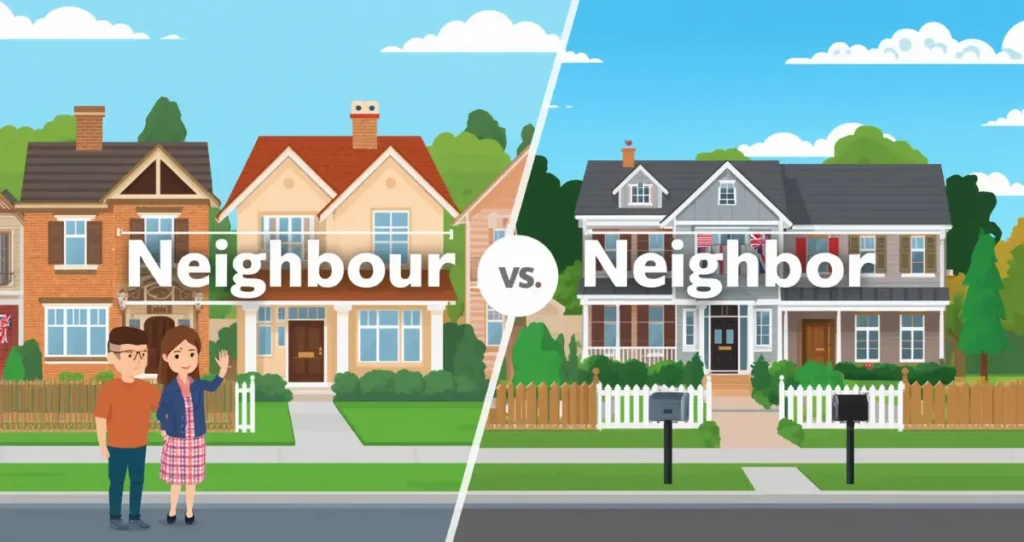
Have you ever typed “neighbour” and seen a spell checker suggest “neighbor” instead? Or perhaps you noticed both spellings in books, websites, and social media posts and wondered which one is correct. This is a common question for English learners, writers, students, and professionals.
The good news is that both neighbour and neighbor are correct. The difference is not about meaning. It is about the version of English you are using. British English prefers neighbour, while American English uses neighbor. Because English is spoken around the world, many people encounter both spellings and become unsure about which one to choose.
In this guide, you will learn the difference between neighbour or neighbor, their history, spelling rules, common mistakes, and when to use each version. Whether you write for a UK audience, a US audience, or an international audience, this article will help you choose the correct spelling with confidence.
Neighbour or Neighbor – Quick Answer
The quick answer is simple:
- Neighbour is the preferred spelling in British English.
- Neighbor is the preferred spelling in American English.
Both words mean:
A person who lives near another person.
Examples
British English
- My neighbour helped me carry my groceries.
American English
- My neighbor helped me carry my groceries.
The meaning is exactly the same. Only the spelling changes.
Read more: Ones or One’s: Meaning and Difference?
The Origin of Neighbour or Neighbor
The word comes from the Old English word neahgebur.
- Neah meant “near.”
- Gebur meant “dweller” or “farmer.”
Over time, the word evolved into neighbor and neighbour.
The spelling difference appeared after language reforms. British English kept the -our ending found in many traditional spellings, while American English simplified many words by removing the u.
This is why today we see:
- Neighbour (British English)
- Neighbor (American English)
Read more: Sink or Sank / Sank or Sunk: Correct Usage ?
The same pattern appears in other words such as:
| British English | American English |
| Colour | Color |
| Favourite | Favorite |
| Honour | Honor |
| Labour | Labor |
| Neighbour | Neighbor |
British English vs American English Spelling
The difference between the two spellings follows a common rule.
British English
British English usually keeps the -our ending.
Examples
- Neighbour
- Colour
- Humour
- Favourite
American English
American English often removes the letter u.
Examples
- Neighbor
- Color
- Humor
- Favorite
Comparison Table
| Feature | British English | American English |
| Correct Spelling | Neighbour | Neighbor |
| Pronunciation | Same | Same |
| Meaning | Same | Same |
| Common Regions | UK, Australia, New Zealand | United States |
| Formal Usage | Preferred in UK writing | Preferred in US writing |
The pronunciation remains the same in both versions.
Which Spelling Should You Use?
The best spelling depends on your audience.
Use “Neighbour” If:
- You write for readers in the UK.
- Your audience is in Australia.
- Your audience is in New Zealand.
- You follow British English style guides.
Example
- Our neighbour has a beautiful garden.
Use “Neighbor” If:
- You write for readers in the United States.
- Your organization follows American English.
- You publish content for US businesses.
Example
- Our neighbor has a beautiful garden.
For Global Audiences
Choose one spelling style and use it consistently throughout your content.
Consistency looks professional and avoids confusion.
Common Mistakes with Neighbour or Neighbor
Many writers make simple spelling mistakes.
Mistake 1: Mixing Styles
❌ My neighbour is friendly, and my neighbor is helpful.
✅ Choose one style consistently.
Mistake 2: Using American Spelling in British Documents
❌ The neighbor next door helped us. (UK publication)
✅ The neighbour next door helped us.
Mistake 3: Using British Spelling in US Documents
❌ My neighbour owns a bakery. (US publication)
✅ My neighbor owns a bakery.
Common Corrections Table
| Incorrect Usage | Correct Usage |
| Neighbor in British document | Neighbour |
| Neighbour in American document | Neighbor |
| Mixing both spellings | Use one style only |
| Changing pronunciation | Pronunciation stays the same |
Neighbour or Neighbor in Everyday Examples
Here are common examples from daily life.
Emails
British English
- Our neighbour reported the issue yesterday.
American English
- Our neighbor reported the issue yesterday.
News Articles
British Style
- A neighbour rescued the family from the fire.
American Style
- A neighbor rescued the family from the fire.
Social Media
- My neighbor just baked cookies for everyone.
- My neighbour just baked cookies for everyone.
Formal Writing
- The neighbour submitted a formal complaint.
- The neighbor submitted a formal complaint.
School Writing
- My neighbour owns a dog.
- My neighbor owns a dog.
Neighbour or Neighbor – Google Trends & Usage Data
Search trends show that spelling preferences depend heavily on location.
Neighbour
Most common in:
- United Kingdom
- Australia
- New Zealand
- Ireland
Neighbor
Most common in:
- United States
Usage by Context
| Word | Common Locations |
| Neighbour | UK and Commonwealth countries |
| Neighbor | United States |
| Both | International communication |
People search for both spellings because they often read content from different English-speaking countries.
Neighbour vs Neighbor Comparison Table
| Feature | Neighbour | Neighbor |
| Meaning | Person living nearby | Person living nearby |
| English Style | British | American |
| Pronunciation | Same | Same |
| Spelling Pattern | -our | -or |
| Example | My neighbour is kind. | My neighbor is kind. |
| Main Regions | UK, Australia, New Zealand | USA |
FAQs
1. Is neighbour or neighbor correct?
Both are correct. The choice depends on whether you use British or American English.
2. Is neighbour British English?
Yes. Neighbour is the standard British English spelling.
3. Is neighbor American English?
Yes. Neighbor is the standard American English spelling.
4. Do neighbour and neighbor mean the same thing?
Yes. Both words refer to a person who lives nearby.
5. Why does neighbour have a “u”?
British English keeps the traditional -our spelling, while American English removes the u.
6. Which spelling should I use online?
Use the spelling that matches your target audience and remain consistent.
7. Is one spelling more correct than the other?
No. Both spellings are equally correct within their respective language standards.
Conclusion
The difference between neighbour or neighbor is a matter of regional spelling, not meaning. British English uses neighbour, while American English uses neighbor. Both words refer to someone who lives nearby and are pronounced the same way.
When writing for a UK, Australian, or New Zealand audience, use neighbour. When writing for readers in the United States, use neighbor. If your audience is global, choose one style and stick with it throughout your content.
Remember the simple rule: British English often uses -our, while American English prefers -or. This pattern appears in many words, including colour/color, favourite/favorite, and neighbour/neighbor.
Understanding this difference helps you write more clearly and professionally. Once you know your audience, choosing the correct spelling becomes easy and natural.

Hi, I’m Henry William, the author of GrammarTribe.com. I’m passionate about the English language and have dedicated my career to helping people master grammar, spelling, and effective writing. Over the years, I’ve guided learners, writers, and professionals in understanding common mistakes, tricky rules, and nuances of English grammar in a simple and easy-to-follow way.
Through GrammarTribe.com, I aim to make grammar approachable and enjoyable for everyone. My work focuses on providing clear explanations, practical tips, and examples that readers can apply in everyday writing, whether it’s emails, essays, social media, or professional documents. I believe that strong grammar skills empower people to communicate confidently and professionally.
When I’m not writing or researching grammar, I enjoy reading, exploring language trends, and creating educational content that simplifies complex concepts. I’m committed to helping my audience write better, understand English deeply, and avoid common pitfalls, all while making learning grammar a fun and rewarding journey.