
Have you ever paused while writing a sentence and wondered, “Should I use may or might?” You’re not alone. Many learners search for “may or might” because both words seem similar and often appear in the same situations. The confusion usually comes from their use in possibility, permission, and polite speech.
In everyday conversations, emails, and even exams, choosing between may or might can feel tricky. Some people think they are interchangeable, while others believe one is more correct than the other. Understanding may or might help you speak clearly and write professionally. This guide solves the confusion around may or might with simple explanations, real examples, and practical tips you can use right away.
May or Might – Quick Answer
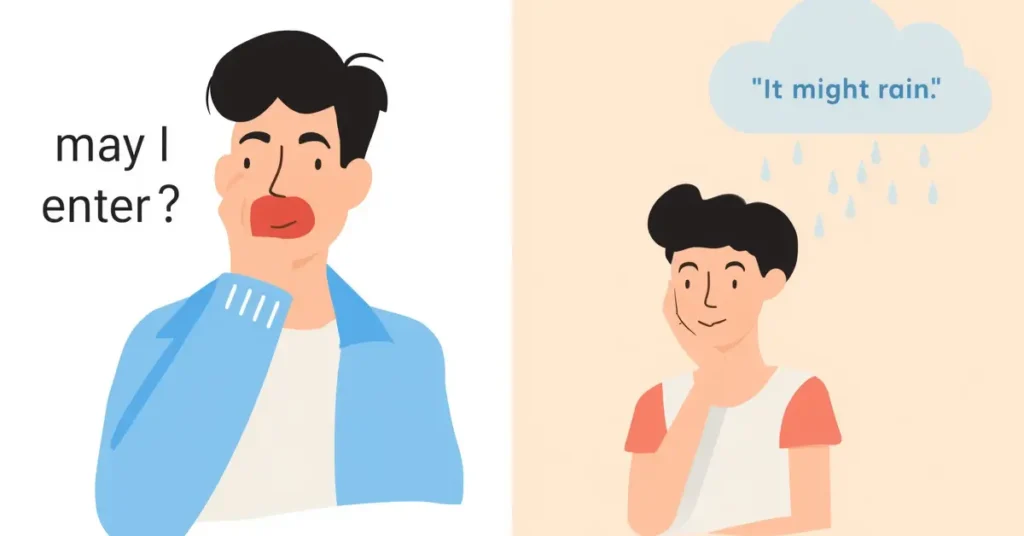
May and might both show possibility, but they are used slightly differently.
- May → More likely or formal
- Example: It may rain today.
- Might → Less certain or more polite
- Example: It might rain later.
Quick Tip:
Use may for higher chance or permission. Use might for lower chance or softer tone.
The Origin of May or Might
Both words come from Old English.
- May comes from “mæg”, meaning “to be able to” or “to have power.”
- Might is the past form of may, from “mihte.”
Over time, might stopped being just a past tense and began showing weaker possibilities. That’s why today, may or might both relate to chance, but with slightly different strength.
British English vs American English Usage
There is no spelling difference between may or might in British and American English. However, usage can vary slightly.
- British English often uses might more for polite or uncertain tone.
- American English often uses may in formal writing and permission.
Comparison Table
| Usage | British English | American English |
| Possibility | Might is common | May is common |
| Permission | May (formal) | May (formal) |
| Politeness | Might preferred | Both used |
Which Should You Use?
- Use may if you are writing formally or asking permission.
- Example: May I leave early?
- Use might if you want to sound less certain or more polite.
- Example: I might join you later.
Global Tip:
If unsure, both are usually correct, but may sound more formal.
Common Mistakes with May or Might
1. Using both together incorrectly
❌ It may might rain.
✅ It may rain. / It might rain.
2. Using “may” for very unlikely events
❌ I may win the lottery tomorrow.
✅ I might win the lottery tomorrow.
3. Confusing permission and possibility
❌ Might I go to the bathroom? (too formal/rare)
✅ May I go to the bathroom?
4. Overusing “might” in formal writing
❌ The results might show improvement.
✅ The results may show improvement.
May or Might in Everyday Examples
Emails
- I may send the report today.
- I might need more time.
News
- The government may announce new policies.
- The storm might hit the coast tonight.
Social Media
- I might go out tonight.
- This may be my favorite movie!
Formal Writing
- This study may explain the results.
- The findings might suggest a trend.
May or Might – Google Trends & Usage Data
Search data shows that people worldwide frequently search “may or might” because of grammar confusion.
- High usage countries: India, Pakistan, UK, USA
- Common context: Students, exams, writing skills
- Trend insight: “May” is searched more for formal writing; “might” for grammar clarity
Comparison Table: May vs Might
| Feature | May | Might |
| Meaning | Possibility/permission | Possibility |
| Certainty | Higher | Lower |
| Formality | More formal | Less formal |
| Permission | Yes | Rare |
| Tone | Direct | Polite/soft |
FAQs
1. Are “may” and “might” the same?
No, both show possibility, but may is stronger and more formal.
2. Can I use them interchangeably?
Sometimes yes, but not always. Context matters.
3. Which is more polite?
Might is usually more polite and softer.
4. Is “might” the past tense of “may”?
Originally yes, but now it shows a weaker possibility.
5. Which should I use in exams?
Use may for formal answers unless context suggests uncertainty.
6. Can “might” be used for permission?
It is rare and sounds very formal.
7. Which is more common in daily speech?
Both are common, but might is often used casually.
Conclusion
Understanding may or might is simple once you know the key difference. Both words express possibility, but may show a higher chance and is more formal, while might suggest a lower chance or a softer tone. In professional writing, may is usually the safer choice. In casual speech, it might feel more natural and polite.
There is no spelling difference between British and American English, but usage can vary slightly. By learning when to use may or might, you can improve your grammar, sound more confident, and avoid common mistakes. Keep practicing with real-life examples, and soon choosing between may or might will feel easy and natural.

Hi, I’m Henry William, the author of GrammarTribe.com. I’m passionate about the English language and have dedicated my career to helping people master grammar, spelling, and effective writing. Over the years, I’ve guided learners, writers, and professionals in understanding common mistakes, tricky rules, and nuances of English grammar in a simple and easy-to-follow way.
Through GrammarTribe.com, I aim to make grammar approachable and enjoyable for everyone. My work focuses on providing clear explanations, practical tips, and examples that readers can apply in everyday writing, whether it’s emails, essays, social media, or professional documents. I believe that strong grammar skills empower people to communicate confidently and professionally.
When I’m not writing or researching grammar, I enjoy reading, exploring language trends, and creating educational content that simplifies complex concepts. I’m committed to helping my audience write better, understand English deeply, and avoid common pitfalls, all while making learning grammar a fun and rewarding journey.