Have you ever written a sentence and paused at “elses or else’s”? You are not alone. Many people feel unsure about where to place the apostrophe or if they even need one. This small detail can change the meaning of your sentence. That’s why people often search for this keyword: they want a quick, clear answer without confusing grammar rules.
The confusion usually comes from how English uses apostrophes. Sometimes they show possession, and sometimes they are not needed at all. Words like “someone else,” “anyone else,” or “nobody else” make things even trickier. Should it be elses, else’s, or something else entirely?
This guide solves that problem. You will learn the correct form, why it works, and how to use it in real life. By the end, you will feel confident using the right version every time.
Elses or Else’s – Quick Answer
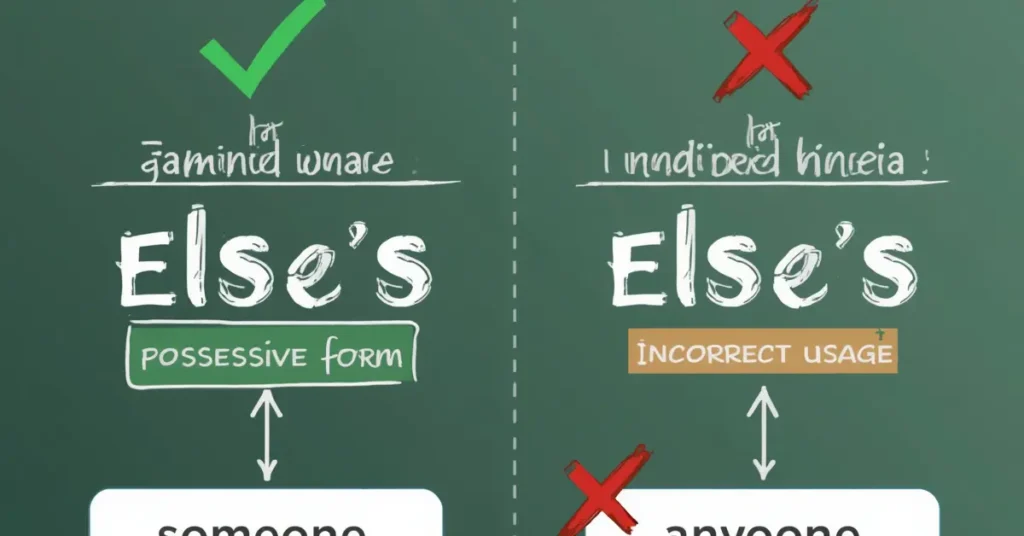
- ✅ Else’s = correct (possessive form)
- ❌ Elses = incorrect (not a standard word)
Examples:
- This is someone else’s bag. ✔️
- That is nobody else’s problem. ✔️
- This is someone elses bag. ❌
👉 Use else’s when you want to show ownership.
Posted inGrammar Knowledge
Miscarriage or Period: in (2026)
The Origin of Elses or Else’s
The word “else” comes from Old English “elles,” meaning “other” or “different.” Over time, it became a common word in phrases like:
- someone else
- anyone else
- nothing else
When showing possession, English adds ’s to the end of the phrase. So instead of changing “else,” we simply add an apostrophe:
- someone else → someone else’s
This is why “elses” never became correct. English keeps the base word and adds ’s for ownership.
British English vs American English Spelling
Good news: there is no difference between British and American English here. Both follow the same rule.
| Usage Type | Correct Form | Example |
| Possessive | else’s | someone else’s phone |
| Incorrect plural | elses | ❌ not used |
👉 Both US and UK English agree: else’s is correct.
Which Spelling Should You Use?
- 🇺🇸 United States: Use else’s
- 🇬🇧 UK & Commonwealth: Use else’s
- 🌍 Global English: Use else’s
There is no regional variation. If you use else’s, you are correct everywhere.
Common Mistakes with Elses or Else’s
❌ Mistake 1: Using “elses”
- Wrong: This is someone elses idea.
- Right: This is someone else’s idea.
❌ Mistake 2: Missing apostrophe
- Wrong: That is someone else’s car.
- Right: That is someone else’s car.
❌ Mistake 3: Wrong placement
- Wrong: Someone’s else car
- Right: Someone else’s car
👉 Always attach ’s to else, not the first word.
Elses or Else’s in Everyday Examples
- Please check someone else’s report before sending.
📰 News
- The minister blamed someone else’s actions.
📱 Social Media
- Stop using someone else’s content without credit!c
📄 Formal Writing
- The error was due to someone else’s oversight.
Elses or Else’s – Google Trends & Usage Data
Search data shows that “elses or else’s” is a common grammar query. Many users type “elses” by mistake, especially in:
- quick typing
- informal writing
- non-native English use
However, in correct writing (books, news, academic work), “else’s” dominates almost 100%. Countries like the US, UK, India, and Pakistan all follow the same rule.
👉 Conclusion: “elses” appears in searches, but “else’s” is the correct real-world usage.
Comparison Table: Elses vs Else’s
| Feature | Elses ❌ | Else’s ✅ |
| Meaning | No meaning | Shows possession |
| Grammar Status | Incorrect | Correct |
| Usage | Not used | Widely used |
| Example | elses idea ❌ | else’s idea ✔️ |
FAQs
1. Is “elses” ever correct?
No, “elses” is not a correct English word.
2. Why do we use “else’s”?
Because the apostrophe shows possession.
3. Can “else” be plural?
No. “Else” does not have a plural form like that.
4. Where does the apostrophe go?
After “else” → else’s
5. Is this rule the same worldwide?
Yes, all English versions use else’s.
6. Can I say “someone else’s”?
Yes, this is the most common correct phrase.
7. What is the easiest way to remember?
Think: ownership = add ’s → else’s
Conclusion
Understanding “elses or else’s” is simple once you know the rule. The correct form is always “else’s” when showing possession. The word “elses” is not used in standard English, even though many people type it by mistake. This confusion often comes from how apostrophes work, but the solution is clear: always add ’s to “else” when something belongs to someone.
This rule works the same in American, British, and global English. Whether you are writing an email, a social media post, or a formal document, using “else’s” will keep your writing correct and professional. Avoid common mistakes like missing the apostrophe or placing it in the wrong spot.
In short, remember one simple tip: if it shows ownership, use else’s. This small change can make a big difference in clear and correct communication.

I am James Wilson, an author at GrammarTribe.com, specializing in English grammar and clear communication.
I create expert, reliable content to help learners write with confidence and accuracy.