
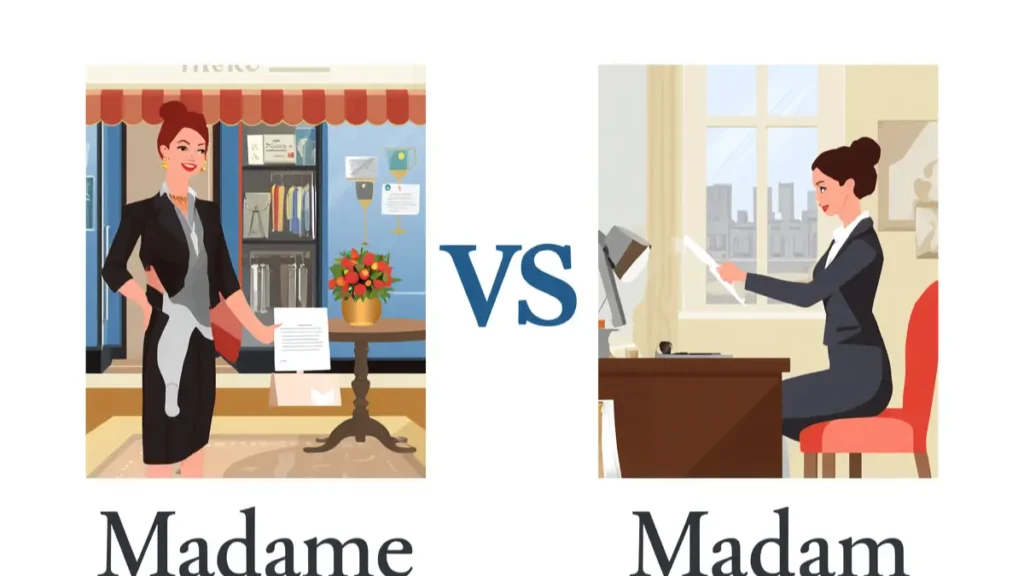
Have you ever written an email and paused before typing “Madam” or “Madame”? Many people are unsure which word is correct because both look similar and are used to address women respectfully.
The confusion often appears in business emails, formal letters, customer service messages, and everyday conversations. Some people think the words are interchangeable, while others believe one spelling is wrong. In reality, both words are correct, but they are used in different contexts.
Understanding the difference between madame or madam can help you write more professionally and avoid mistakes in formal communication. Whether you are writing to a government official, addressing a customer, or learning English grammar, knowing when to use each term matters.
This guide explains the meaning, history, spelling differences, usage rules, and common mistakes. By the end, you will know exactly which word to choose and why.
Madame or Madam – Quick Answer
Madam is the standard English form used to address a woman politely.
Madame is the French form and is often used in French-speaking contexts, titles, or names.
Examples
✅ Dear Madam,
✅ Yes, Madam, I understand.
✅ Madame Curie was a famous scientist.
✅ Madame President addressed the audience.
Quick Rule
- Use Madam in English letters and formal communication.
- Use Madame when referring to French titles, names, or French-speaking settings.
The Origin of Madame or Madam
Both words come from the Old French phrase “ma dame,” which means “my lady.”
Over time, English adopted the term and simplified it into madam. The French spelling madame remained in use in France and other French-speaking regions.
Historical Development
| Period | Form | Meaning |
| Old French | Ma Dame | My Lady |
| Middle English | Madam | Respectful title for women |
| Modern French | Madame | Formal title for women |
| Modern English | Madam | Polite form of address |
The spelling difference exists because English simplified many French words after borrowing them.
British English vs American English Spelling
Unlike many spelling differences between British and American English, madam is the preferred English spelling in both regions.
Madame remains the French spelling and is generally reserved for French names and titles.
Examples
| Context | British English | American English |
| Formal letter | Dear Madam | Dear Madam |
| Customer service | Madam | Madam |
| French title | Madame Curie | Madame Curie |
| French honorific | Madame Dupont | Madame Dupont |
Comparison Table
| Feature | Madam | Madame |
| Language | English | French |
| Formal address | Yes | Rarely |
| Business letters | Yes | No |
| French names | Sometimes | Yes |
| Common in English writing | Very common | Limited |
The key point is that English writers usually choose madam, while madame appears in French-related contexts.
Which Spelling Should You Use?
The correct choice depends on your audience and purpose.
Use “Madam” If:
- Writing in English
- Sending formal emails
- Writing business letters
- Addressing a customer
- Speaking respectfully to a woman
Example:
“Dear Madam, thank you for contacting our company.”
Use “Madame” If:
- Referring to a French woman formally
- Mentioning French culture
- Using a person’s official French title
- Referring to historical figures like Madame Curie
Example:
“Madame Curie won two Nobel Prizes.”
Audience Guide
| Audience | Recommended Form |
| United States | Madam |
| United Kingdom | Madam |
| Canada (English) | Madam |
| Australia | Madam |
| International English | Madam |
| French-speaking audience | Madame |
Common Mistakes with Madame or Madam
Many writers mix these words because they sound similar.
Mistake #1: Using Madame in English Business Emails
❌ Dear Madame,
✅ Dear Madam,
Mistake #2: Writing Madam Curie
❌ Madam Curie
✅ Madame Curie
Mistake #3: Assuming One Is Wrong
❌ Only “Madam” is correct.
✅ Both are correct in different contexts.
Mistake #4: Using Them Interchangeably
The words are related but not always interchangeable.
Mistake #5: Incorrect Capitalization
When used as a title, capitalize it.
✅ Madam Chair
✅ Madame Curie
Madame or Madam in Everyday Examples
Here is how these words appear in real-life situations.
Emails
Correct:
“Dear Madam,”
News Articles
“The minister thanked Madam Speaker.”
Social Media
“Thank you, Madam President.”
Formal Writing
“The committee was led by Madam Chair.”
Historical References
“Madame Curie changed the world of science.”
Customer Service
“Excuse me, Madam, may I help you?”
Madame or Madam – Google Trends & Usage Data
Search interest for madame or madam remains steady because people often need help with formal writing.
Popular Usage by Context
| Context | More Common Form |
| Business letters | Madam |
| Customer service | Madam |
| Government titles | Madam |
| French culture | Madame |
| Historical references | Madame |
| Academic writing | Both |
Popularity by Country
| Country | Preferred Form |
| United States | Madam |
| United Kingdom | Madam |
| Australia | Madam |
| New Zealand | Madam |
| France | Madame |
| Belgium | Madame |
| Switzerland (French-speaking) | Madame |
Overall, madam dominates English-language communication, while madame remains important in French contexts.
Madame vs Madam Comparison Table
| Feature | Madam | Madame |
| Language Origin | English adaptation | French original |
| Used in English letters | Yes | No |
| Used in French names | Rarely | Yes |
| Formal address | Yes | Yes |
| Common in business writing | Yes | Limited |
| Example | Dear Madam | Madame Curie |
Frequently Asked Questions
Is Madam or Madame correct?
Both are correct. Use Madam in English communication and Madame in French-related contexts.
Should I write Dear Madam or Dear Madame?
In English, write Dear Madam.
Why is Madame Curie not called Madam Curie?
Because Madame is part of the French title used with her name.
Is Madam old-fashioned?
It is formal but still widely used in business and official communication.
Do Americans use Madam?
Yes. Americans commonly use Madam in formal situations.
Is Madame used in English?
Yes, but mainly for French names, titles, and cultural references.
Which spelling is more common?
Madam is far more common in English writing.
Conclusion
The debate over madame or madam is easy to solve once you understand the context. Both words come from the same French roots and both show respect when addressing a woman. However, they serve different purposes in modern language.
In everyday English communication, madam is the preferred spelling. It appears in formal letters, professional emails, customer service interactions, government settings, and business writing. If you are writing to an English-speaking audience, madam is almost always the correct choice.
The spelling madame remains important because it is the traditional French form. It is commonly used with French names, historical figures, and cultural references. Famous examples include Madame Curie and Madame Tussauds.
When deciding which form to use, think about your audience and context. If you are writing standard English, choose madam. If you are referring to a French title or French-speaking setting, choose madame. Following this simple rule will help your writing look polished, professional, and accurate every time.

Hi, I’m Henry James, the author behind GrammarTribe.com. I’m passionate about the English language and specialize in grammar, helping readers understand complex rules in a simple, clear way. Over the years, I’ve dedicated myself to creating content that makes learning grammar practical, fun, and accessible for everyone. If you’re a student, professional, or language enthusiast.
Through GrammarTribe.com, I share tips, guides, and examples to help people write confidently and correctly. My goal is to make grammar less intimidating and more useful in everyday writing, emails, social media, and professional communication. Writing and teaching grammar isn’t just my profession — it’s my passion.
When I’m not writing, I enjoy reading, exploring language trends, and discovering new ways to make English learning engaging and easy. My mission is to empower readers to communicate clearly and confidently, one grammar tip at a time.