
Many English learners, writers, and even professionals get confused when choosing between “analysed” or “analyzed.” Both words look almost identical, but the spelling changes depending on whether you are using British English or American English. This small difference often creates doubt in academic writing, professional emails, SEO content, and exams like IELTS or TOEFL.
People usually search for this keyword when they are unsure which form is correct, or when they want to avoid spelling mistakes in formal writing. The confusion is completely normal because English has two major spelling systems that both are correct in their own regions.
Understanding the difference is important because using the wrong spelling in the wrong context can make your writing look inconsistent. For example, a UK university expects “analysed,” while a US company prefers “analyzed.” In this article, you will learn the exact difference, origin, usage rules, examples, and expert advice so you never get confused again.
Analysed or Analyzed – Quick Answer
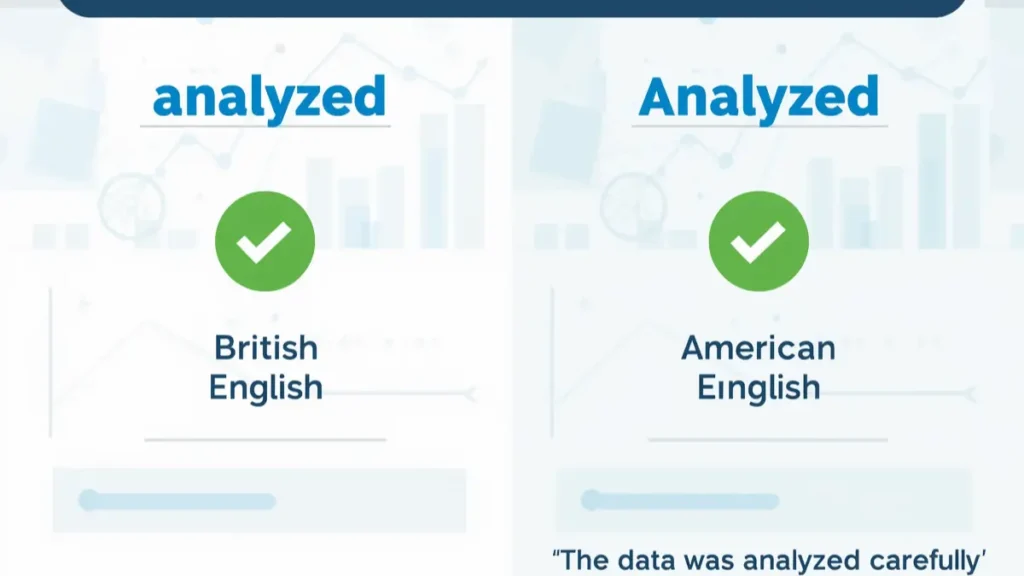
Both “analysed” and “analyzed” are correct spellings of the same word meaning to examine something in detail.
- Analysed → British English
- Analyzed → American English
Examples
- UK: The scientist analysed the data carefully.
- US: The scientist analyzed the data carefully.
Meaning stays the same. Only spelling changes.
The Origin of Analysed or Analyzed
The word comes from the Greek word “analysis,” meaning a breaking up or examination of something. It entered English through Latin and French influences.
Over time, English spelling split into two main systems:
- British English kept older Latin-style endings like -ise / -yse
- American English simplified spellings to sound more direct, changing -ise/-yse → -ize/-yze
That is why:
- British: analyse → analysed
- American: analyze → analyzed
The difference is not grammar, it is historical spelling evolution.
Tought or Taught: Meaning and Difference?
British English vs American English Spelling
| Feature | British English | American English |
| Verb | analyse | analyze |
| Past tense | analysed | analyzed |
| Style | Traditional spelling | Simplified spelling |
| Common in | UK, India, Australia, Pakistan | USA, Canada |
| Preference in exams | IELTS, Cambridge | TOEFL, SAT |
Key Rule
- British English → “s” sound spelling
- American English → “z” sound spelling
Which Spelling Should You Use?
Your choice depends on your audience:
- UK / Commonwealth countries (UK, India, Pakistan, Australia): Use analysed
- USA audience or clients: Use analyzed
- Global content (blogs, SEO, social media): Choose ONE style and stay consistent
SEO Tip
If your website targets US traffic → use analyzed
If your website targets UK traffic → use analysed
Common Mistakes with Analysed or Analyzed
- Mixing both spellings in one article
❌ The report was analysed and then analyzed again
✔ The report was analyzed again (US style) - Confusing noun and verb forms
✔ Analysis (noun)
✔ Analyze / Analyse (verb) - Wrong regional usage
❌ Using “analysed” for American audience - Overcorrecting spelling in informal writing
Keep it consistent, not mixed
Analysed or Analyzed in Everyday Examples
Emails
- UK: I have analysed the report and attached feedback.
- US: I have analyzed the report and attached feedback.
News Writing
- Scientists analysed the climate data (UK style news)
- Scientists analyzed the climate data (US media)
Social Media
- “Just analyzed my workout results 💪”
- “Just analysed my study plan 📚”
Formal Writing
- The results were thoroughly analysed before publication.
Analysed vs Analyzed – Google Trends & Usage Data
- Analyzed dominates globally due to US internet influence
- Analysed is highly used in UK, India, Australia, and Pakistan
- Academic writing often depends on institution style guide
- SEO content in US markets strongly prefers “analyzed”
Insight
American spelling has higher search volume worldwide, but British spelling is dominant in Commonwealth education systems.
Comparison Table: Analysed vs Analyzed
| Word Form | Region | Example Sentence |
| Analysed | UK English | The data was analysed carefully. |
| Analyzed | US English | The data was analyzed carefully. |
| Meaning | Same | To examine in detail |
FAQs
1. Is analysed or analyzed correct?
Both are correct. It depends on British or American English.
2. What is the difference between analysed and analyzed?
Only spelling differs; meaning is the same.
3. Which is used in IELTS writing?
IELTS prefers British English → analysed
4. Which is more common globally?
“Analyzed” is more common online due to US content dominance.
5. Can I mix both spellings?
No. Keep one style consistent in a single document.
6. Is it British or American?
“Analyse” is British English.
7. Why does English have two spellings?
Because of historical spelling reforms between UK and US English.
Conclusion
The confusion between analysed or analyzed is very common, but the answer is simple. Both are correct spellings of the same word. The only difference is regional usage: British English uses analysed, while American English uses analyzed.
If you are writing for exams, follow the required style guide. For UK-based education or clients, choose British spelling. For US audiences or global tech content, American spelling is more widely accepted. The most important rule is consistency: never mix both in the same document.
Once you understand this pattern, you can apply it to many similar words like organise/organize, realise/realize, and analyse/analyze. Mastering these differences improves your writing clarity, professionalism, and SEO performance.

Hi, I’m Henry William, the author of GrammarTribe.com. I’m passionate about the English language and have dedicated my career to helping people master grammar, spelling, and effective writing. Over the years, I’ve guided learners, writers, and professionals in understanding common mistakes, tricky rules, and nuances of English grammar in a simple and easy-to-follow way.
Through GrammarTribe.com, I aim to make grammar approachable and enjoyable for everyone. My work focuses on providing clear explanations, practical tips, and examples that readers can apply in everyday writing, whether it’s emails, essays, social media, or professional documents. I believe that strong grammar skills empower people to communicate confidently and professionally.
When I’m not writing or researching grammar, I enjoy reading, exploring language trends, and creating educational content that simplifies complex concepts. I’m committed to helping my audience write better, understand English deeply, and avoid common pitfalls, all while making learning grammar a fun and rewarding journey.