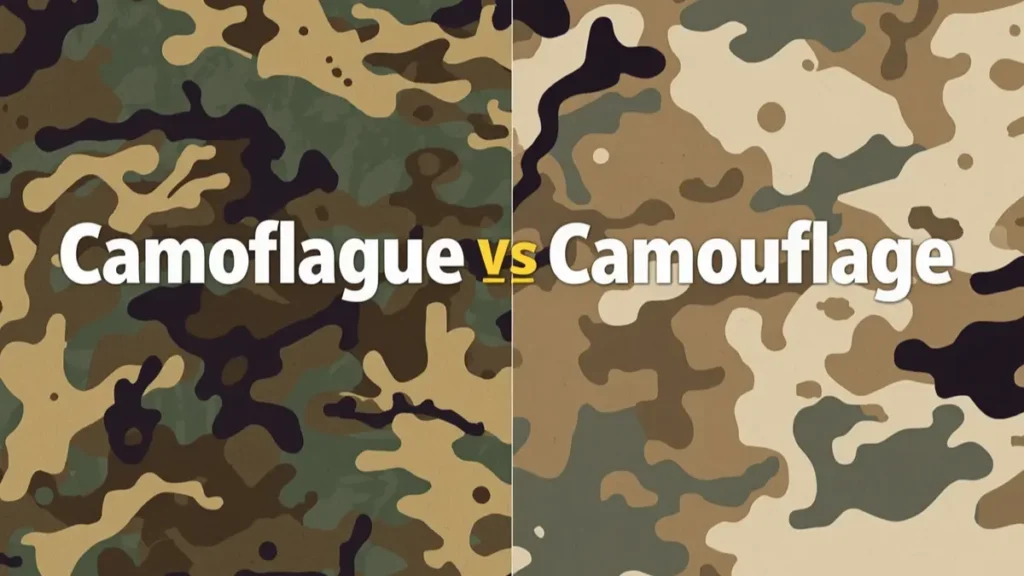
Have you ever typed “camoflauge” and wondered if it was correct? You are not alone. Thousands of people search for camoflauge or camouflage because the word is often misspelled. The letters in the middle can be confusing, especially when writing quickly.
This spelling question appears in school assignments, work emails, social media posts, military discussions, hunting blogs, and fashion articles. Since both spellings look similar, many people assume they are interchangeable. However, only one spelling is accepted in standard English.
Understanding the correct spelling helps you write more clearly and professionally. It also prevents mistakes in academic, business, and online content. In this guide, you’ll learn which spelling is correct, where the word came from, how it is used in British and American English, common mistakes to avoid, and practical examples for everyday writing.
If you’ve been wondering If to write camoflauge or camouflage, this article will give you a clear answer.
Camoflauge or Camouflage – Quick Answer
The correct spelling is camouflage.
Camoflauge is a misspelling and is not recognized in standard English dictionaries.
Correct Examples
✅ The soldiers used camouflage to blend into the forest.
✅ The jacket features a camouflage pattern.
✅ Animals use camouflage to hide from predators.
Read more:
Posted inGrammar Knowledge
Man or Gun : Which Word Should You Use ?
Incorrect Examples
❌ The soldiers used camoflauge to blend into the forest.
❌ I bought a camoflauge backpack.
Whenever you write this word, use camouflage.
The Origin of Camoflauge or Camouflage
The word camouflage comes from the French word camoufler, which means “to disguise” or “to conceal.”
It entered English during the early 20th century, especially during World War I. Military forces used camouflage techniques to hide soldiers, equipment, and vehicles from enemies.
Because the word came from French, its spelling includes the unusual letter combination -flage. Many English speakers accidentally rearrange the letters and write camoflauge, creating a common spelling mistake.
The confusion happens because:
- The pronunciation sounds complex.
- The letter sequence is uncommon.
- People often type the word quickly.
- Spell-checkers may not always catch the error immediately.
Read more:
Posted inGrammar Knowledge
Racquet or Racket: Which Spelling Is Correct?
Despite the confusion, the official spelling has always been camouflage.
British English vs American English Spelling
Unlike many English words, camouflage has the same spelling in both British and American English.
Words such as “colour/color” and “theatre/theater” change between regions, but camouflage remains unchanged.
Comparison Table
| Language Version | Correct Spelling |
| British English | Camouflage |
| American English | Camouflage |
| Canadian English | Camouflage |
| Australian English | Camouflage |
| New Zealand English | Camouflage |
Example Sentences
| Region | Example |
| UK | The army used camouflage nets. |
| USA | Hunters wear camouflage clothing. |
| Canada | The bird’s camouflage protects it. |
| Australia | Camouflage patterns are popular in fashion. |
No matter where your audience is located, camouflage is the correct spelling.
Which Spelling Should You Use?
The answer is simple: use camouflage in every situation.
If Your Audience Is in the United States
Use camouflage.
If Your Audience Is in the United Kingdom
Use camouflage.
If Your Audience Is in Canada, Australia, or New Zealand
Use camouflage.
If Your Audience Is Global
Use camouflage.
Since there is no accepted regional variation, the correct choice is always the same.
Common Mistakes with Camoflauge or Camouflage
Many writers make spelling errors when using this word.
Common Errors
| Incorrect | Correct |
| Camoflauge | Camouflage |
| Camoflage | Camouflage |
| Camaflage | Camouflage |
| Camaflauge | Camouflage |
| Camoflouge | Camouflage |
Why These Mistakes Happen
- Letters are placed in the wrong order.
- The French origin creates an unusual spelling pattern.
- Pronunciation does not clearly reveal the spelling.
- Fast typing increases mistakes.
Easy Memory Trick
Think of the ending:
“camou + flage”
Remember that the word ends with -flage, not -flauge.
Camoflauge or Camouflage in Everyday Examples
Here is how the correct spelling appears in real-world writing.
Email Example
“The new uniforms feature a camouflage design for field operations.”
News Example
“The military introduced advanced camouflage technology.”
Social Media Example
“Just bought a new camouflage jacket for hiking.”
Formal Writing Example
“Many species rely on camouflage to avoid predators.”
Educational Example
“Camouflage helps animals survive in their natural habitats.”
In every context, the correct spelling remains camouflage.
Camoflauge or Camouflage – Google Trends & Usage Data
Search data shows that camouflage is overwhelmingly more common than camoflauge.
General Usage Trends
| Term | Usage Level |
| Camouflage | Very High |
| Camoflauge | Low (Misspelling) |
Countries Where “Camouflage” Is Commonly Used
| Country | Usage Context |
| United States | Military, hunting, fashion |
| United Kingdom | Military, wildlife |
| Canada | Outdoor activities |
| Australia | Nature, fashion |
| New Zealand | Outdoor recreation |
Most searches for camoflauge occur because users are checking the correct spelling. Search engines typically redirect users toward camouflage results.
Comparison Table: Camoflauge vs Camouflage
| Feature | Camoflauge | Camouflage |
| Dictionary Approved | No | Yes |
| Correct English Spelling | No | Yes |
| Used in Professional Writing | No | Yes |
| Accepted Internationally | No | Yes |
| Recommended for SEO | No | Yes |
The clear winner is camouflage.
Frequently Asked Questions
1. Is camoflauge a real word?
No. It is a misspelling of camouflage.
2. Which spelling is correct: camoflauge or camouflage?
Camouflage is the correct spelling.
3. Does British English use camoflauge?
No. British English uses camouflage.
4. Does American English spell it differently?
No. American English also uses camouflage.
5. Why do people misspell camouflage?
The unusual arrangement of letters causes confusion and typing errors.
6. Is camoflauge accepted in dictionaries?
No major English dictionary accepts camoflauge.
7. Can I use camouflage in formal writing?
Yes. It is the correct and professional spelling for all forms of writing.
Conclusion
The debate over camoflauge or camouflage has a simple answer. Camouflage is the only correct spelling recognized in English. The alternative spelling, camoflauge, is a common mistake caused by the word’s unusual French-derived structure and letter arrangement.
One helpful fact is that there is no difference between British English and American English in this case. Writers in the United States, United Kingdom, Canada, Australia, and other English-speaking countries all use the same spelling: camouflage. This makes the choice easy regardless of your audience.
Whether you are writing a school paper, professional document, blog post, social media update, military article, or wildlife report, always choose camouflage. Using the correct spelling improves clarity, credibility, and professionalism. If you remember that the word ends in -flage, not -flauge, you can avoid this common error and write with confidence every time.

Hi, I’m Henry James, the author behind GrammarTribe.com. I’m passionate about the English language and specialize in grammar, helping readers understand complex rules in a simple, clear way. Over the years, I’ve dedicated myself to creating content that makes learning grammar practical, fun, and accessible for everyone. If you’re a student, professional, or language enthusiast.
Through GrammarTribe.com, I share tips, guides, and examples to help people write confidently and correctly. My goal is to make grammar less intimidating and more useful in everyday writing, emails, social media, and professional communication. Writing and teaching grammar isn’t just my profession — it’s my passion.
When I’m not writing, I enjoy reading, exploring language trends, and discovering new ways to make English learning engaging and easy. My mission is to empower readers to communicate clearly and confidently, one grammar tip at a time.