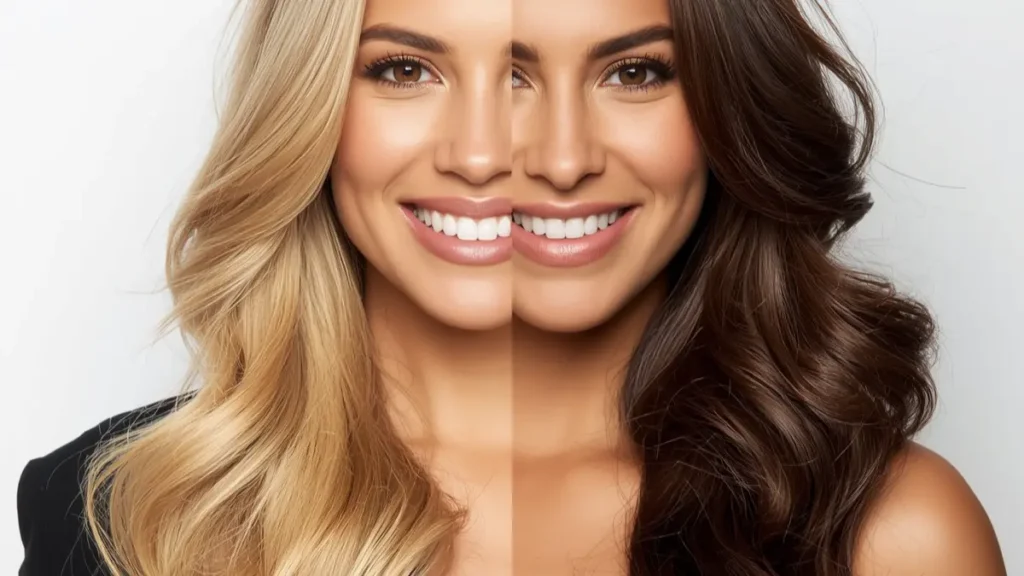
Have you ever wondered whether to use blonder or brunette when describing someone’s hair? Many people search for this question because the two words are often used together in beauty discussions, social media posts, and hair color comparisons. The confusion usually comes from understanding what each term means and when it should be used.
The simple answer is that blonder and brunette are not interchangeable words. They describe different hair colors. Blonder is the comparative form of blonde, meaning a lighter blonde shade. Brunette refers to a person with brown hair. Since they describe different hair colors, choosing between them depends on the hair color you want to describe.
In this guide, you’ll learn the meaning of each word, their origins, usage examples, common mistakes, spelling differences, and how they are used around the world. By the end, you’ll know exactly when to use blonder and when to use brunette.
Blonder or Brunette – Quick Answer
Blonder means “more blonde” or “lighter blonde.”
Brunette refers to a person, usually a woman, with brown hair.
Examples
✅ Her hair became blonder after spending time in the sun.
✅ The actress is a natural brunette.
✅ She dyed her hair from brunette to blonde.
❌ She is blonder than her brunette sister. (Only correct if comparing a blonde person with a brunette person.)
Read more: Sirloin or Ribeye: Which Steak Is Better for Flavor?
Quick Comparison
| Term | Meaning | Hair Color |
| Blonder | More blonde | Blonde |
| Brunette | Person with brown hair | Brown |
The Origin of Blonder or Brunette
Both words come from French.
Origin of Blonde
The word blonde entered English from Old French. It originally described light-colored hair and later became one of the most common hair-color terms in English.
The comparative form blonder simply means “more blonde.”
Origin of Brunette
The word brunette comes from the French word brun, meaning brown. It became popular in English during the 18th century to describe women with brown hair.
Read more: Staid or Stayed: Meaning and Difference?
Why the Difference Exists
The words are different because they describe different hair colors:
- Blonde = light yellow hair
- Brunette = brown hair
As a result, they are not alternative spellings of the same word.
British English vs American English Spelling
Unlike many English words, blonder and brunette have nearly identical usage in British and American English.
The main variation comes from blonde and blond.
Comparison Table
| Usage | American English | British English |
| Male with blonde hair | Blond | Blond |
| Female with blonde hair | Blonde | Blonde |
| Comparative form | Blonder | Blonder |
| Brown-haired person | Brunette | Brunette |
Examples
American English
- She became blonder after summer.
- The brunette actress won an award.
British English
- Her hair looks blonder this year.
- The brunette presenter hosted the event.
The meanings remain the same in both regions.
Which Spelling Should You Use?
The correct choice depends on the hair color being described.
Use “Blonder” When:
- Comparing blonde shades
- Describing lighter blonde hair
- Talking about hair-lightening treatments
Example:
“Her hair is blonder than it was last year.”
Use “Brunette” When:
- Referring to someone with brown hair
- Describing brown-haired individuals
- Comparing hair-color categories
Example:
“The brunette model appeared on the magazine cover.”
Audience-Based Advice
| Audience | Recommended Usage |
| United States | Blonder for blonde comparisons; brunette for brown-haired people |
| United Kingdom | Same usage |
| Australia | Same usage |
| Canada | Same usage |
| Global Audience | Use according to hair color meaning |
Common Mistakes with Blonder or Brunette
Many writers confuse these terms because they often appear together in beauty articles.
Mistake 1: Using Them as Synonyms
❌ She is a brunette, meaning she has blonde hair.
✅ She is a brunette, meaning she has brown hair.
Mistake 2: Using Blonder as a Noun
❌ She is a blonder.
✅ She is blonde.
Mistake 3: Comparing Different Meanings Incorrectly
❌ Brunette means more blonde.
✅ Blonder means more blonde.
Mistake 4: Confusing Hair Color Categories
❌ Brunette and blonder mean the same thing.
✅ They describe different hair colors.
Blonder or Brunette in Everyday Examples
In Emails
“After the color treatment, my hair looks much blonder.”
In News Articles
“The brunette actress revealed her new blonde hairstyle.”
On Social Media
“Should I stay brunette or go blonder this summer?”
In Formal Writing
“The participant’s hair appeared blonder under the bright lighting.”
In Beauty Blogs
“Many brunettes choose highlights to achieve a blonder appearance.”
Blonder or Brunette – Google Trends & Usage Data
Search interest for blonder and brunette often comes from beauty, fashion, and hair-care topics.
Countries Where These Terms Are Popular
- United States
- United Kingdom
- Canada
- Australia
- New Zealand
Common Search Contexts
- Hair color comparisons
- Hair dye advice
- Celebrity hairstyles
- Beauty trends
- Fashion discussions
Usage Trends
| Term | Common Context |
| Blonder | Hair lightening, highlights, dye treatments |
| Brunette | Natural hair color, beauty descriptions |
| Blonde vs Brunette | Hair-color comparisons |
| Going Blonder | Salon and hair-care topics |
Overall, brunette appears more often in descriptions of people, while blonder is commonly used when discussing changes in hair color.
Comparison Table: Blonder vs Brunette
| Feature | Blonder | Brunette |
| Part of Speech | Adjective | Noun/Adjective |
| Meaning | More blonde | Person with brown hair |
| Hair Color | Blonde | Brown |
| Comparative Form | Yes | No |
| Used for Hair Changes | Yes | Rarely |
| Used for People | Usually No | Yes |
| Common in Beauty Articles | Yes | Yes |
FAQs
1. Is blonder the same as brunette?
No. Blonder means more blonde, while brunette refers to someone with brown hair.
2. Can a brunette become blonder?
Yes. A person with brown hair can lighten their hair and become blonder through coloring or highlights.
3. Is brunette only used for women?
Traditionally yes, but modern English sometimes uses it more broadly. For men, “brown-haired” is also common.
4. What is the opposite of a brunette?
The most common opposite is blonde.
5. Is blonder a real word?
Yes. It is the comparative form of blonde.
6. Which word is more common?
Brunette is generally more common because it is often used to describe people directly.
7. Can I use brunette as an adjective?
Yes.
Example:
“The brunette actress attended the event.”
Conclusion
Understanding the difference between blonder or brunette is quite simple once you know what each word means. Blonder is the comparative form of blonde and describes hair that is lighter or more blonde than before. Brunette, on the other hand, refers to a person with brown hair. Because these words describe different hair colors, they are not interchangeable.
In both British and American English, the meanings remain the same. The only small variation involves the use of blond and blonde, but blonder and brunette are widely understood across English-speaking countries. When discussing hair-color changes, use blonder. When describing someone with brown hair, use brunette.
If you’re writing for a global audience, following these definitions will ensure your message is clear and professional. Whether you’re creating beauty content, writing a social media post, or discussing hairstyles, choosing the correct term will make your writing more accurate and easier to understand.
Hi, I’m Henry William, the author of GrammarTribe.com. I’m passionate about the English language and have dedicated my career to helping people master grammar, spelling, and effective writing. Over the years, I’ve guided learners, writers, and professionals in understanding common mistakes, tricky rules, and nuances of English grammar in a simple and easy-to-follow way.
Through GrammarTribe.com, I aim to make grammar approachable and enjoyable for everyone. My work focuses on providing clear explanations, practical tips, and examples that readers can apply in everyday writing, whether it’s emails, essays, social media, or professional documents. I believe that strong grammar skills empower people to communicate confidently and professionally.
When I’m not writing or researching grammar, I enjoy reading, exploring language trends, and creating educational content that simplifies complex concepts. I’m committed to helping my audience write better, understand English deeply, and avoid common pitfalls, all while making learning grammar a fun and rewarding journey.