When mental health concerns arise, many people get confused between a psychiatrist or psychologist. Both are trained professionals, but their roles, training, and treatments differ. Searching online for this keyword often comes from people seeking therapy, medical advice, or understanding mental health support.
Are you struggling with stress, anxiety, or depression? Or do you need medication guidance? Knowing the difference can save time, prevent misunderstandings, and ensure proper care. This article will explain the key distinctions, origin, spelling differences, and practical usage examples, helping you confidently choose the right professional.
Psychiatrist or Psychologist – Quick Answer
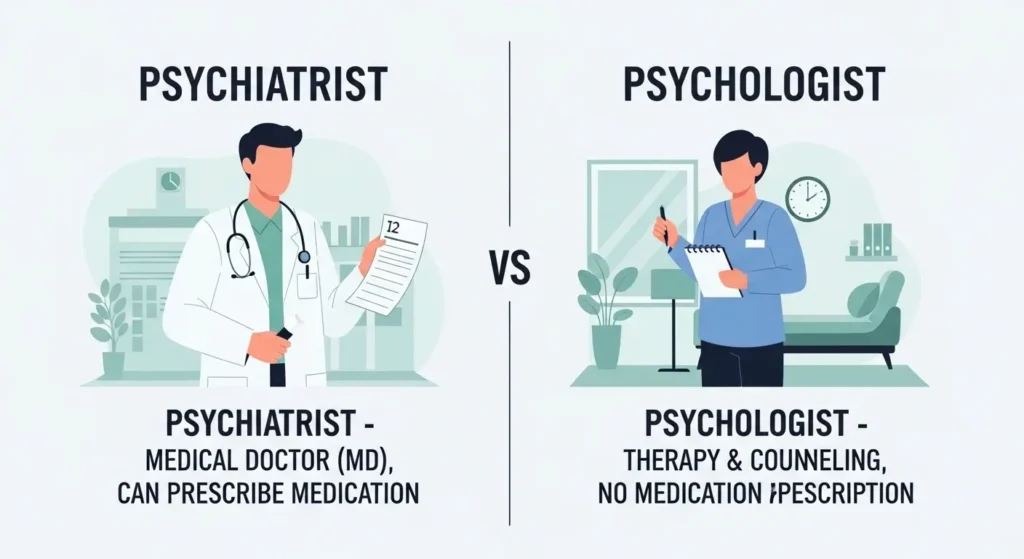
A psychiatrist is a medical doctor (MD) who can prescribe medication and treat mental illnesses. A psychologist typically holds a doctoral degree (PhD or PsyD) and focuses on therapy, counseling, and behavioral interventions.
Example:
- If you need medication for depression → psychiatrist
- If you want talk therapy for anxiety → psychologist
The Origin of Psychiatrist and Psychologist
The word psychiatrist comes from the Greek psyche (mind) + iatros (healer), meaning “healer of the mind.”
The word psychologist comes from psyche (mind) + logos (study), meaning “one who studies the mind.”
Both words entered English in the 19th century as mental health became a professional field. Their slightly different endings reflect their distinct functions: healing vs. studying.
British English vs American English Spelling
Both terms are spelled the same in British English (UK) and American English (US). However, some users confuse related words like psychiatry vs psychiatre (French influence) or psychology vs psychologe (typos).
| Term | British English | American English | Notes |
| Psychiatrist | Psychiatrist | Psychiatrist | Same spelling |
| Psychologist | Psychologist | Psychologist | Same spelling |
| Psychiatry | Psychiatry | Psychiatry | Same spelling |
| Psychology | Psychology | Psychology | Same spelling |
Good news: You don’t need to worry about spelling differences for these terms in English.
Which Spelling Should You Use?
Since the spelling is the same in both US and UK English, use psychiatrist or psychologist as is. The focus should be on audience context:
- US audience: Familiar with medical and therapy distinctions.
- UK/Commonwealth: Same understanding applies.
- Global audience: The terms are universally recognized in English-language content.
Common Mistakes with Psychiatrist or Psychologist
- Wrong: psychitarist → Correct: psychiatrist
- Wrong: psycologist → Correct: psychologist
- Confusing roles: Thinking all psychologists can prescribe medication (only psychiatrists can).
- Misusing in professional writing: Always capitalize when used as a title (Dr. Jane Smith, Psychiatrist).
Psychiatrist or Psychologist in Everyday Examples
Emails: “I’ve scheduled a session with a psychologist for next Monday.”
News: “Local hospitals are hiring more psychiatrists to meet mental health demand.”
Social media: “Has anyone seen a psychologist for stress relief?”
Formal writing: “The psychiatrist recommended cognitive behavioral therapy alongside medication.”
Psychiatrist or Psychologist – Google Trends & Usage Data
- US: Higher search volume for “psychologist near me” and “psychiatrist appointments.”
- UK: Similar trends; people also search “child psychologist” frequently.
- Global: The terms are popular in English-speaking countries; interest spikes around Mental Health Awareness Month.
| Keyword | Popularity (US) | Popularity (UK) |
| Psychiatrist | High | Medium |
| Psychologist | Very High | High |
FAQs
- Can a psychologist prescribe medication?
No, only psychiatrists can prescribe medications. - Do psychiatrists provide therapy?
Yes, but they often focus on medical management, while psychologists focus on therapy. - Which one should I see for anxiety?
Either, depending on whether you want therapy (psychologist) or medication (psychiatrist). - How much does a psychiatrist cost vs psychologist?
Psychiatrist visits are usually more expensive due to medical training and prescription authority. - Can a psychologist diagnose mental illness?
Yes, psychologists can diagnose and assess mental health conditions but cannot prescribe medication. - Are online sessions effective?
Both psychiatrists and psychologists offer telehealth options, which are effective for therapy and consultations. - Do psychiatrists and psychologists work together?
Often. A psychiatrist may handle medication while a psychologist provides therapy.
Conclusion
Understanding the difference between a psychiatrist or psychologist ensures you get the right care. Psychiatrists focus on medical treatments, while psychologists specialize in therapy and behavioral interventions. Both are essential in the mental health ecosystem, and sometimes collaboration between the two is ideal.
Remember, spelling is consistent across English, but roles differ. When searching for help, consider your needs, location, and professional qualifications. Choosing the right expert can improve your mental health journey, save time, and enhance recovery outcomes. Whether you need counseling, therapy, or medication, knowing the difference makes a significant impact.

Hi, I’m Henry James, the author behind GrammarTribe.com. I’m passionate about the English language and specialize in grammar, helping readers understand complex rules in a simple, clear way. Over the years, I’ve dedicated myself to creating content that makes learning grammar practical, fun, and accessible for everyone. If you’re a student, professional, or language enthusiast.
Through GrammarTribe.com, I share tips, guides, and examples to help people write confidently and correctly. My goal is to make grammar less intimidating and more useful in everyday writing, emails, social media, and professional communication. Writing and teaching grammar isn’t just my profession — it’s my passion.
When I’m not writing, I enjoy reading, exploring language trends, and discovering new ways to make English learning engaging and easy. My mission is to empower readers to communicate clearly and confidently, one grammar tip at a time.