
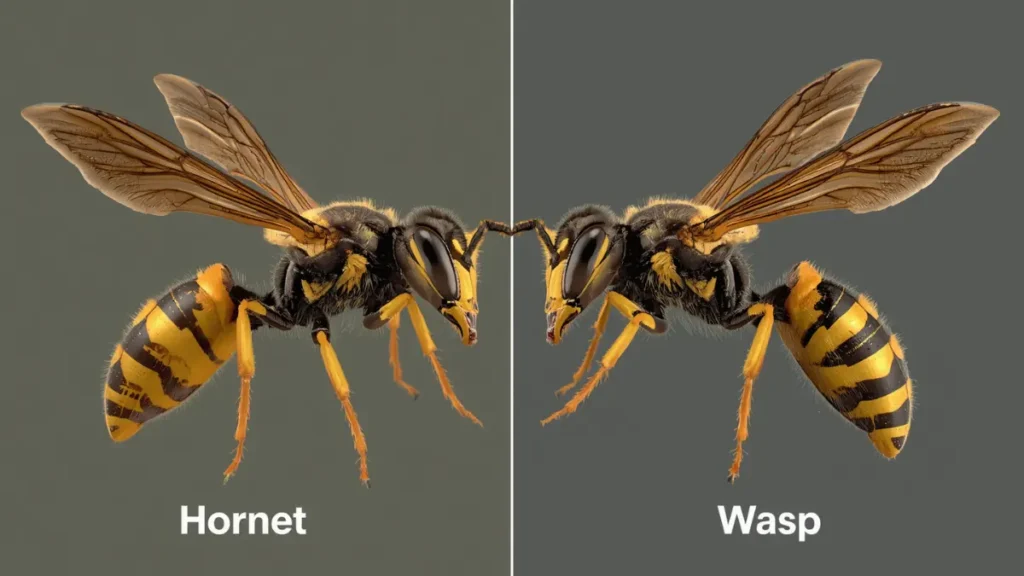
Have you ever spotted a large flying insect in your garden and wondered whether it was a hornet or a wasp? Many people search for hornet or wasp because these insects look similar at first glance. Their yellow-and-black bodies, buzzing flight, and painful stings often make them difficult to tell apart.
The confusion becomes even greater when people try to identify a nest near their home or decide whether an insect poses a danger. While all hornets are technically a type of wasp, not all wasps are hornets. Understanding the difference can help you identify species correctly, stay safe, and appreciate their role in nature.
Whether you are a student, gardener, homeowner, or nature enthusiast, knowing the distinction between hornet or wasp is useful. This guide explains their meanings, origins, characteristics, common mistakes, usage examples, and frequently asked questions in simple language. By the end, you will know exactly how to distinguish a hornet from a wasp and use the terms correctly.
Hornet or Wasp – Quick Answer
Simple Rule
- Hornet = A large type of wasp.
- Wasp = A broader category of insects that includes hornets.
Examples
✅ The large insect near the tree nest was a hornet.
✅ A paper wasp built a nest under the roof.
Easy Memory Trick
- Hornet = Bigger and heavier
- Wasp = General group
Read more: Wonder or Wander: What’s the Difference
The Origin of Hornet or Wasp
Origin of “Hornet”
The word hornet comes from Old English hyrnetu. It has been used for centuries to describe large social wasps.
Origin of “Wasp”
The word wasp comes from Old English wæps. It refers to a wide range of stinging insects belonging to the order Hymenoptera.
Why Confusion Exists
People often confuse the two because:
- Hornets are a type of wasp.
- Both have similar body shapes.
- Both can sting.
- Media and casual speech often use the terms interchangeably.
Read more:
Posted inGrammar Knowledge
Can or Could: Simple Grammar Guide for Clear English Writing
British English vs American English Spelling
There is no spelling difference between British and American English.
Comparison Table
| Insect | British English | American English |
| Hornet | Hornet | Hornet |
| Wasp | Wasp | Wasp |
| Plural | Hornets | Hornets |
| Plural | Wasps | Wasps |
Examples
British English
- A hornet nest was found in the garden.
American English
- A wasp flew into the garage.
The spelling remains the same worldwide.
Which Spelling Should You Use?
The correct term depends on the insect you are describing.
Use “Hornet” When:
- Referring to large social wasps.
- Talking about species in the genus Vespa.
- Describing larger nests and insects.
Examples
- European hornets are larger than most wasps.
- A hornet nest was hanging from the tree.
Use “Wasp” When:
- Talking about the general insect category.
- Referring to paper wasps or yellowjackets.
- Describing unidentified stinging insects.
Examples
- A wasp landed on my drink.
- Wasps help control pests.
Global Advice
If you know it is a hornet, use hornet. If not, wasp is usually the safer general term.
Common Mistakes with Hornet or Wasp
Mistake 1
❌ Every wasp is a hornet.
✅ Every hornet is a wasp, but not every wasp is a hornet.
Mistake 2
❌ Hornets and wasps are completely different insects.
✅ Hornets belong to the wasp family.
Mistake 3
❌ All large stinging insects are hornets.
✅ Some large insects may be wasps, bees, or hornets.
Mistake 4
❌ Hornets are always more aggressive.
✅ Behavior depends on species and situation.
Hornet or Wasp in Everyday Examples
In Emails
- A hornet nest has been spotted near the entrance.
- Please contact pest control regarding the wasps.
In News Writing
- Residents reported a large hornet nest.
- Wasp activity increases during summer.
On Social Media
- Just saw a giant hornet in my garden!
- A wasp stole my picnic lunch.
In Formal Writing
- Hornets play a role in controlling insect populations.
- Wasps contribute to ecological balance.
Hornet or Wasp – Google Trends & Usage Data
Searches for hornet or wasp increase during warmer months when insect activity rises.
Popular Countries
| Country | Search Interest |
| United States | Very High |
| United Kingdom | High |
| Canada | High |
| Australia | High |
| New Zealand | Moderate |
Why People Search This Keyword
People search when:
- Identifying insects.
- Finding nest removal advice.
- Learning about stings.
- Studying biology.
- Comparing hornets and wasps.
Common Contexts
| Context | Common Search |
| Gardening | Hornet or wasp |
| Pest control | Wasp nest |
| Biology | Hornet species |
| Safety | Hornet sting |
Comparison Table: Hornet vs Wasp
| Feature | Hornet | Wasp |
| Category | Type of wasp | General insect group |
| Size | Usually larger | Usually smaller |
| Body | Thicker | Slimmer |
| Nest | Large paper nests | Various nest types |
| Species | Fewer | Thousands |
| Example | European Hornet | Paper Wasp |
FAQs About Hornet or Wasp
Is a hornet a type of wasp?
Yes. Hornets belong to the wasp family.
Which is bigger, a hornet or a wasp?
Hornets are generally larger.
Are hornets more dangerous than wasps?
Not always. Both can sting and defend their nests.
Do hornets and wasps make the same nests?
No. Nest size and structure vary by species.
Can hornets sting more than once?
Yes. Like many wasps, they can sting multiple times.
Are hornets useful?
Yes. They help control pest insects.
How can I tell them apart?
Hornets are usually larger, thicker-bodied, and have larger nests.
Conclusion
Understanding hornet or wasp helps you identify these insects more accurately and avoid common misunderstandings. While the terms are often used interchangeably, they are not exactly the same. A hornet is a specific type of wasp, while wasp is the broader category that includes many species.
The easiest way to remember the difference is that hornets are generally larger and belong to a smaller group within the wasp family. Both insects play important roles in ecosystems by controlling pests and supporting natural balance.
Whether you are dealing with a nest near your home, studying insects, or simply satisfying your curiosity, using the correct term improves communication and understanding. By learning the differences, similarities, and common characteristics of hornets or wasps, you can identify them with greater confidence and accuracy in everyday situations.

I am James Wilson, an author at GrammarTribe.com, specializing in English grammar and clear communication.
I create expert, reliable content to help learners write with confidence and accuracy.