When people search for “girth or length,” they usually want to understand the difference between these two measurements and why each one matters. The terms are often used when discussing size, dimensions, shipping, construction, fitness equipment, and many other everyday topics.
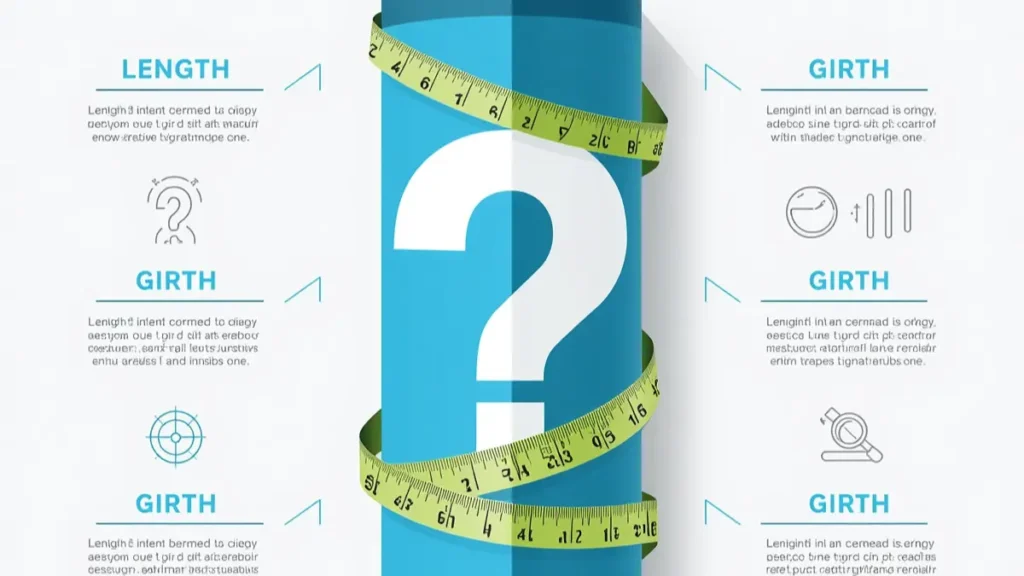
The confusion comes from the fact that both words describe measurements, but they measure different things. Length tells you how long something is from one end to the other. Girth measures the distance around an object, similar to a circumference.
Understanding the difference between girth and length is important when measuring packages, pipes, trees, cables, luggage, and other objects. Using the wrong measurement can lead to shipping problems, incorrect product specifications, or misunderstandings.
This guide explains girth or length in simple language. You’ll learn what each term means, where the words come from, how they are used, common mistakes to avoid, and which measurement you should use in different situations.
Girth or Length – Quick Answer
Length is the measurement from one end of an object to the other.
Girth is the measurement around the widest part of an object.
Examples
- A rope can be 10 feet in length.
- A tree trunk can have a girth of 3 feet.
- A package may have both a length and a girth measurement for shipping.
Read more:
Posted inGrammar Knowledge
Latter or Former :Meaning and Correct Usage Explained
Quick Comparison
| Measurement | Meaning | Example |
| Length | Distance from end to end | A table is 6 feet long |
| Girth | Distance around an object | A tree trunk has a girth of 4 feet |
The Origin of Girth or Length
Origin of Girth
The word girth comes from Old Norse and Old English words related to belts, bands, and things that go around an object. Over time, the meaning expanded to describe the measurement around something.
Origin of Length
The word length comes from Old English lengþu, meaning the extent of something from one end to another.
Why Confusion Exists
People often compare girth and length because both are measurements. However, they describe completely different dimensions.
- Length = end-to-end distance
- Girth = around-the-object distance
Unlike spelling pairs such as “color” and “colour,” these words are not spelling variants. They have different meanings.
Read more: Wonder or Wander: What’s the Difference
British English vs American English Spelling
The terms girth and length are spelled the same in both British and American English.
Comparison Table
| Term | British English | American English |
| Girth | Girth | Girth |
| Length | Length | Length |
Example Sentences
| British English | American English |
| The tree has a large girth. | The tree has a large girth. |
| Measure the length carefully. | Measure the length carefully. |
There are no spelling differences between the two forms.
Which Spelling Should You Use?
Since girth and length are different measurements rather than spelling variants, you should choose the word based on what you are measuring.
Use Girth When:
- Measuring around an object
- Measuring tree trunks
- Measuring pipes
- Measuring cylindrical items
- Calculating shipping dimensions
Use Length When:
- Measuring distance from end to end
- Measuring furniture
- Measuring cables
- Measuring roads
- Measuring rooms
Audience-Based Advice
| Audience | Recommended Term |
| US Audience | Use the correct measurement: girth or length |
| UK Audience | Use the correct measurement: girth or length |
| Global Audience | Clearly explain which dimension you mean |
Common Mistakes with Girth or Length
Many people mix up these measurements.
Incorrect
❌ The girth of the road is 10 miles.
Correct
✅ The length of the road is 10 miles.
Incorrect
❌ Measure the length around the tree trunk.
Correct
✅ Measure the girth around the tree trunk.
Incorrect
❌ The package length includes the measurement around the box.
Correct
✅ The package girth includes the measurement around the box.
Girth or Length in Everyday Examples
In Emails
Girth Example
“The shipping company requires the package girth before delivery.”
Length Example
“Please confirm the length of the conference table.”
In News Articles
“The tree’s girth has increased over the last decade.”
“The bridge length is nearly two miles.”
On Social Media
“The package exceeded the maximum girth limit.”
“The length of this hiking trail is amazing.”
In Formal Writing
“The girth measurement was recorded at the widest section.”
“The length was measured using a calibrated ruler.”
Girth or Length – Google Trends & Usage Data
Search interest in girth or length often comes from people comparing measurements or trying to understand shipping requirements.
Common Countries Searching the Terms
| Country | Popular Usage |
| United States | Shipping, packaging, dimensions |
| United Kingdom | Construction, forestry, measurements |
| Canada | Logistics and package sizing |
| Australia | Tree measurements and shipping |
| India | Educational and technical measurements |
Common Contexts
- Shipping and logistics
- Forestry
- Construction
- Manufacturing
- Product dimensions
- Engineering
Usage Comparison
| Term | Main Purpose |
| Girth | Measurement around an object |
| Length | Measurement from end to end |
Girth vs Length Comparison Table
| Feature | Girth | Length |
| Definition | Distance around an object | Distance from one end to another |
| Shape Measured | Circular or cylindrical objects | Any object with two ends |
| Common Uses | Trees, pipes, packages | Roads, tables, ropes |
| Direction | Around | Straight line |
| Shipping Use | Package circumference | Longest side measurement |
| Same in the UK & US? | Yes | Yes |
Frequently Asked Questions (FAQs)
1. What is the difference between girth and length?
Length measures from one end to the other, while girth measures around an object.
2. Is girth the same as circumference?
They are very similar. Girth generally refers to the measurement around an object, while circumference is often used for circles.
3. How do shipping companies use girth?
Shipping companies often combine length and girth to determine package size limits.
4. Can an object have both girth and length?
Yes. A pipe, tree trunk, or package can have both measurements.
5. Which measurement is more important?
It depends on the purpose. Shipping may require both. Construction projects often focus on length.
6. Are girth and length spelled differently in the UK and US?
No. Both words have identical spelling in British and American English.
7. How do I measure girth?
Wrap a measuring tape around the widest part of the object and record the distance.
Conclusion
Understanding girth or length is simple once you know what each term measures. Length refers to the distance from one end of an object to the other, while girth refers to the distance around an object. Although people sometimes compare these measurements, they are not interchangeable because they describe different dimensions.
There is also no British or American spelling difference. Both countries use the same spellings: girth and length. The correct choice depends entirely on what you are measuring. If you need the distance around something, use girth. If you need the distance from one end to another, use length.
Whether you’re measuring a package, a tree, a pipe, a piece of furniture, or a construction project, using the correct term helps avoid mistakes and improves communication. Remember: length goes along an object, while girth goes around it. Keeping this simple rule in mind will help you choose the right measurement every time.

Hi, I’m Henry James, the author behind GrammarTribe.com. I’m passionate about the English language and specialize in grammar, helping readers understand complex rules in a simple, clear way. Over the years, I’ve dedicated myself to creating content that makes learning grammar practical, fun, and accessible for everyone. If you’re a student, professional, or language enthusiast.
Through GrammarTribe.com, I share tips, guides, and examples to help people write confidently and correctly. My goal is to make grammar less intimidating and more useful in everyday writing, emails, social media, and professional communication. Writing and teaching grammar isn’t just my profession — it’s my passion.
When I’m not writing, I enjoy reading, exploring language trends, and discovering new ways to make English learning engaging and easy. My mission is to empower readers to communicate clearly and confidently, one grammar tip at a time.