
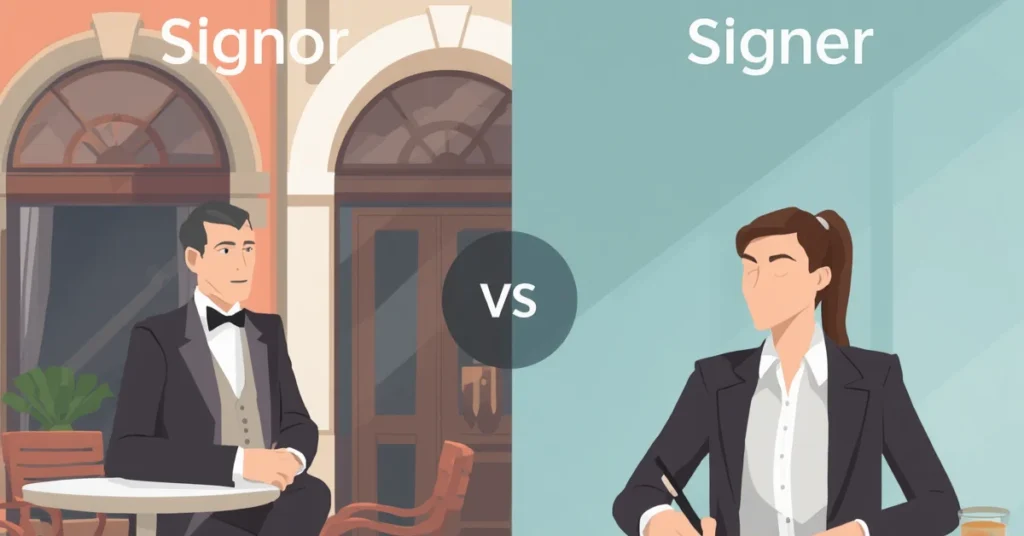
Have you ever seen the words signor and signer and wondered if they mean the same thing? You’re not alone. Many people search for “signor or signer” because the words look similar but are used in very different ways. This confusion often happens in emails, legal documents, and even social media posts. Understanding signor or signer can help you avoid mistakes and sound more professional.
The keyword signor or signer is especially tricky because one word comes from Italian, while the other is English. If you mix them up, your message may feel incorrect or unclear. In this guide, we will explain signor or signer in a simple way. You will learn their meanings, origins, and correct usage with clear examples. By the end, you will never confuse signor or signer again.
Signor or Signer – Quick Answer
- Signor: An Italian word meaning Mr. (used before a man’s name)
- Example: Signor Rossi is here.
- Signer: An English word meaning a person who signs a document
- Example: The signer approved the contract.
👉 Quick tip:
If you are talking about a title, use signor.
If you are talking about a person signing something, use signer.
The Origin of Signor or Signer
- Signor comes from Italy. It is derived from the Latin word senior, meaning “older” or “sir.” It is used as a respectful title in Italy.
- Signer comes from the English verb sign, which means to write your name on a document. Adding “-er” makes it a noun (a person who signs).
👉 The spelling difference exists because these words come from different languages and purposes.
British English vs American English Spelling
Good news: there is no spelling difference between British and American English for these words.
| Word | British English | American English | Meaning |
| Signor | Signor | Signor | Italian title (Mr.) |
| Signer | Signer | Signer | Person who signs |
👉 Both forms are used the same way in the UK, US, and other countries.
Which Spelling Should You Use?
- Use signor when speaking about an Italian man respectfully, especially in cultural or formal contexts.
- Use signer when referring to someone who signs documents, contracts, or agreements.
👉 For global audiences:
- In business or legal writing → use signer
- In cultural or Italian contexts → use signor
Common Mistakes with Signor or Signer
❌ The signor signed the agreement.
✔️ The signer signed the agreement.
❌ Hello signer Rossi.
✔️ Hello Signor Rossi.
❌ Each signor must fill the form.
✔ ️ Each signer must fill the form.
👉 Mistake happens when people confuse title vs action.
Signor or Signer in Everyday Examples
- Dear Signor Bianchi, (correct title)
- The signer must return the document.
News
- The signer of the treaty confirmed the decision.
Social Media
- Met Signor Luca today in Rome!
Formal Writing
- Each signer is responsible for their signature.
Signor or Signer – Google Trends & Usage Data
- Signer is widely used in English-speaking countries like the US, UK, Canada, and Australia.
- Signor is mostly used in Italy or when referring to Italian culture.
- Online searches for signor or signer increase when people write formal emails or legal documents.
👉 In simple terms:
- Signer = global English usage
- Signor = cultural or regional usage
Comparison Table: Signor vs Signer
| Feature | Signor | Signer |
| Language | Italian | English |
| Meaning | Mr. (title) | Person who signs |
| Usage | Names, greetings | Documents, contracts |
| Context | Cultural/formal | Legal/business |
| Example | Signor Marco | Contract signer |
FAQs
1. Is signor the same as signer?
No. Signor is a title, while signer is a person who signs.
2. Can I use signor in English writing?
Yes, but only when referring to an Italian man.
3. Which word is used in legal documents?
Use a signer.
4. Is signer a common word?
Yes, it is widely used in business and legal contexts.
5. Is signor used outside Italy?
Rarely, except in cultural references.
6. How do I remember the difference?
- Signor = Sir
- Signer = Sign
7. Can both words appear in one sentence?
Yes.
Signor Rossi was the signer of the agreement.
Conclusion
Understanding signor or signer is simple once you know their roles. Signor is a respectful Italian title, while signer is an English word for someone who signs documents. They may look alike, but they serve very different purposes. This is why many people confuse signor or signer, especially in formal writing.
To avoid mistakes, always check the context. If you are addressing someone, use signor. If you are talking about signing, use signer. This small difference can make your writing clearer and more professional. Whether you are writing emails, contracts, or social posts, knowing a signor or signer will help you communicate correctly and confidently.

Hi, I’m Henry William, the author of GrammarTribe.com. I’m passionate about the English language and have dedicated my career to helping people master grammar, spelling, and effective writing. Over the years, I’ve guided learners, writers, and professionals in understanding common mistakes, tricky rules, and nuances of English grammar in a simple and easy-to-follow way.
Through GrammarTribe.com, I aim to make grammar approachable and enjoyable for everyone. My work focuses on providing clear explanations, practical tips, and examples that readers can apply in everyday writing, whether it’s emails, essays, social media, or professional documents. I believe that strong grammar skills empower people to communicate confidently and professionally.
When I’m not writing or researching grammar, I enjoy reading, exploring language trends, and creating educational content that simplifies complex concepts. I’m committed to helping my audience write better, understand English deeply, and avoid common pitfalls, all while making learning grammar a fun and rewarding journey.