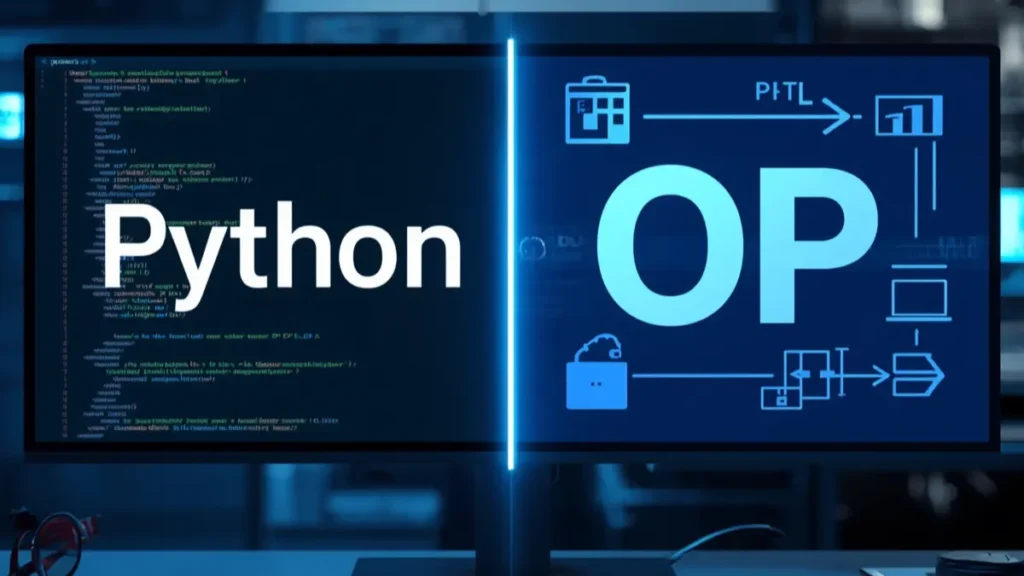
Have you seen someone write “Python” in a programming discussion while another person keeps mentioning “OP”? Many people search for “python or op” because they are unsure whether the two terms are related, interchangeable, or used in the same context.
The confusion often appears on forums, social media, coding websites, and online communities. New programmers may think OP is a programming language like Python, while others wonder whether OP refers to a coding concept inside Python.
The truth is that Python and OP mean completely different things. Python is a popular programming language used for software development, automation, data science, and artificial intelligence. OP usually stands for Original Poster, meaning the person who started a discussion thread online.
This guide explains the difference between Python and OP, where each term comes from, when to use them, and common mistakes people make. By the end, you’ll know exactly which term fits your situation.
Python or OP – Quick Answer
Python is a programming language.
OP usually means Original Poster, the person who created a forum post, discussion thread, or social media topic.
Examples
Python:
- I am learning Python programming.
- Python is popular for data analysis.
OP:
- The OP asked a good question.
- I agree with the OP’s solution.
Quick Rule:
- Use Python when talking about programming.
- Use OP when referring to the author of an online discussion.
Read more: Girth or Length: What’s the Difference?
The Origin of Python or OP
Origin of Python
Python was created by Guido van Rossum and released in 1991.
The name came from the British comedy show Monty Python’s Flying Circus. Contrary to popular belief, Python was not named after the snake.
Origin of OP
OP stands for Original Poster.
The term became popular on internet forums, message boards, and discussion websites. It allows users to refer to the person who started a conversation without repeating their username.
Read more: Till or Until: Which Word Is Correct and When Should You Use It?
Why the Difference Exists
The terms developed in completely different fields:
| Term | Origin |
| Python | Programming language named after a comedy show |
| OP | Internet forum abbreviation for Original Poster |
Because both terms are common online, some beginners mistakenly think they are related.
British English vs American English Spelling
Unlike many English words, Python and OP do not have separate British and American spellings.
The spelling remains the same worldwide.
Examples
| Term | American English | British English |
| Python | Python | Python |
| OP | OP | OP |
| Original Poster | Original Poster | Original Poster |
Spelling Rule
Since these are proper technical terms and internet abbreviations, no regional spelling differences exist.
Which Spelling Should You Use?
Since there are no spelling variations, your choice depends on the context.
Use Python When:
- Discussing coding
- Learning programming
- Building software
- Working with data science
- Creating automation scripts
Use OP When:
- Referring to a forum author
- Discussing Reddit threads
- Talking about online communities
- Mentioning the person who started a conversation
Audience Guide
| Audience | Recommended Term |
| Programmers | Python |
| Software developers | Python |
| Reddit users | OP |
| Forum members | OP |
| General internet users | Depends on context |
For global audiences, use the term that matches the discussion topic.
Common Mistakes with Python or OP
Many users confuse these terms because both appear frequently online.
Mistake 1
❌ OP is a programming language.
✅ Python is a programming language.
Mistake 2
❌ I learned OP last year.
✅ I learned Python last year.
Mistake 3
❌ Python asked an interesting question.
✅ The OP asked an interesting question.
Mistake 4
❌ OP is used for data science.
✅ Python is widely used for data science.
Mistake 5
❌ Python means Original Poster.
✅ OP means Original Poster.
Python or OP in Everyday Examples
In Emails
Python
- Our team uses Python for automation.
OP
- The OP provided useful feedback in the forum discussion.
In News Articles
Python
- Python remains one of the world’s most popular programming languages.
OP
- The OP later updated the online post with more information.
On Social Media
Python
- I just finished my first Python project!
OP
- I agree with the OP’s opinion.
In Formal Writing
Python
- Python was selected due to its simplicity and flexibility.
OP
- The original poster clarified the issue in a later comment.
Python or OP – Google Trends & Usage Data
Python Usage
Python is one of the most searched programming languages worldwide.
Popular regions include:
- United States
- India
- United Kingdom
- Germany
- Canada
- Australia
Common search topics include:
- Python tutorial
- Python coding
- Python for beginners
- Python data science
OP Usage
OP is most common on:
- Discussion forums
- Gaming communities
- Social media groups
- Question-and-answer websites
The term is used more in conversations than in formal web searches.
Popularity Comparison
| Term | Main Context | Global Popularity |
| Python | Programming | Very High |
| OP | Online discussions | High |
| Original Poster | Forums and communities | Moderate |
Comparison Table: Python vs OP
| Feature | Python | OP |
| Meaning | Programming language | Original Poster |
| Field | Technology | Online communication |
| Type | Software language | Internet abbreviation |
| Used For | Coding and development | Referring to discussion creators |
| Global Recognition | Very High | High |
| Formal Usage | Yes | Limited |
| Common Online | Yes | Yes |
FAQs
1. Is Python the same as OP?
No. Python is a programming language, while OP means Original Poster.
2. What does OP mean online?
OP usually stands for Original Poster, the person who started a discussion thread.
3. Why is Python called Python?
The creator named it after the comedy show Monty Python’s Flying Circus.
4. Can OP mean something else?
Yes. In some contexts, OP can mean Overpowered, Original Post, or Operating Procedure. However, Original Poster is the most common online meaning.
5. Is Python still popular?
Yes. Python remains one of the most widely used programming languages in the world.
6. Should I learn Python as a beginner?
Yes. Python is often recommended because its syntax is simple and easy to understand.
7. Is OP used in professional writing?
Usually no. Professional documents often use “original poster” instead of the abbreviation OP.
Conclusion
The difference between Python and OP is simple once you understand the context. Python is a powerful programming language used for software development, automation, artificial intelligence, machine learning, and data science. OP, on the other hand, is an internet abbreviation that usually means Original Poster, referring to the person who started an online discussion.
Because both terms appear frequently online, beginners sometimes assume they are connected. In reality, they belong to different areas of communication. If you’re discussing coding, software projects, or programming languages, Python is the correct term. If you’re talking about forum conversations, Reddit discussions, or message boards, OP is the appropriate choice.
Understanding this distinction helps avoid confusion and improves communication online. Whenever you encounter either term, simply consider the context. Programming discussions usually point to Python, while community conversations typically refer to the OP. Using the right term ensures your message is clear and professional.

Hi, I’m Henry James, the author behind GrammarTribe.com. I’m passionate about the English language and specialize in grammar, helping readers understand complex rules in a simple, clear way. Over the years, I’ve dedicated myself to creating content that makes learning grammar practical, fun, and accessible for everyone. If you’re a student, professional, or language enthusiast.
Through GrammarTribe.com, I share tips, guides, and examples to help people write confidently and correctly. My goal is to make grammar less intimidating and more useful in everyday writing, emails, social media, and professional communication. Writing and teaching grammar isn’t just my profession — it’s my passion.
When I’m not writing, I enjoy reading, exploring language trends, and discovering new ways to make English learning engaging and easy. My mission is to empower readers to communicate clearly and confidently, one grammar tip at a time.