
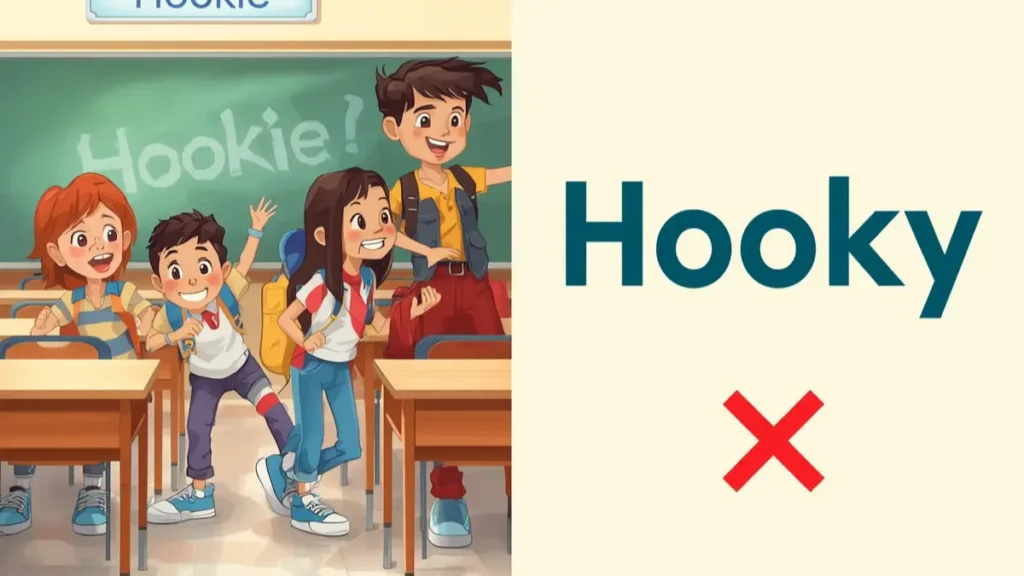
Have you ever seen someone write “playing hookie” while another person writes “playing hooky”? Many English learners and even native speakers get confused by these two spellings. They sound the same, but only one is widely accepted in standard English.
People search for “hookie or hooky” because they want to know the correct spelling for school writing, emails, blogs, social media posts, and everyday conversations. The confusion happens because English often has words with multiple spellings, especially slang terms and informal expressions.
The phrase “play hooky” is very common in American English. It means to skip school, work, or another duty without permission. Some people mistakenly spell it as “hookie” because it matches the way the word sounds when spoken aloud.
This guide explains the difference between “hookie” and “hooky,” where the word came from, which spelling you should use, and how it appears in real-life writing. By the end, you will know the correct form with confidence.
Hookie or Hooky – Quick Answer
The correct spelling is “hooky.”
“Hooky” is the accepted English spelling used in dictionaries and formal writing. The phrase is usually:
- play hooky
- playing hooky
It means to skip school, work, or responsibilities without permission.
Examples
- Jake played hooky from school yesterday.
- Two workers were caught playing hooky during office hours.
- She stayed home sick, but her friends thought she was playing hooky.
“Hookie” is considered a misspelling in most cases.
Semicolon or Colon: Meaning and Difference ?
The Origin of Hookie or Hooky
The word “hooky” comes from older American slang. Linguists believe it appeared in the 1800s in the United States. The exact source is unclear, but many experts connect it to Dutch immigrant expressions used in New York.
The phrase became popular among schoolchildren who skipped classes. Over time, “play hooky” became a common informal expression across America.
Why the Spelling Difference Exists
The confusion happens because English speakers hear the ending sound “ee.” Many words with that sound end in:
- ie
- ey
- y
For example:
- cookie
- rookie
- funny
Because of this, some writers wrongly assume “hookie” is correct. However, dictionaries and style guides list only “hooky.”
Trunk or Treats: Meaning and Origin?
British English vs American English Spelling
Unlike many English words, “hooky” does not really have a separate British spelling. The phrase is mainly American slang.
In British English, people often use different expressions instead, such as:
- bunk off
- skive off
- wag school
Comparison Table
| American English | British English Equivalent | Meaning |
| play hooky | bunk off | Skip school or work |
| playing hooky | skiving off | Avoid duties |
| hooky | wagging school | Missing classes intentionally |
Spelling Comparison
| Spelling | Correct? | Common Region |
| hooky | Yes | United States |
| hookie | No | Informal misspelling |
Which Spelling Should You Use?
You should almost always use “hooky.”
Use “hooky” if:
- You are writing for an American audience
- You are creating blog content
- You are writing school papers
- You want grammatically correct English
- You are publishing professional content
Avoid “hookie” because:
- It is not recognized by most dictionaries
- It may look unprofessional
- Search engines prefer standard spelling
- Readers may think it is an error
Audience-Based Advice
| Audience | Best Choice |
| US readers | hooky |
| UK readers | use “bunk off” or “skive off” |
| Global audience | hooky with explanation |
Common Mistakes with Hookie or Hooky
Many writers make small spelling or grammar mistakes with this phrase.
Incorrect vs Correct Examples
| Incorrect | Correct |
| He played hookie. | He played hooky. |
| They were hookie from school. | They were playing hooky from school. |
| She hookied work. | She played hooky from work. |
Common Errors
1. Using “hookie”
This is the most common mistake.
2. Using it in formal business writing
“Hooky” is informal slang. Avoid it in serious reports or legal writing.
3. Confusing the meaning
“Playing hooky” means intentionally skipping duties, not simply being absent.
Hookie or Hooky in Everyday Examples
Here is how the word appears in real life.
In Emails
- “Tom was caught playing hooky instead of attending training.”
In News Writing
- “Three students were suspended for playing hooky during exam week.”
On Social Media
- “I’m tempted to play hooky and go to the beach today.”
In Casual Conversation
- “Did you ever play hooky in high school?”
In Formal Writing
Formal writing usually avoids slang like “hooky.” Instead, writers may say:
- absent without permission
- skipped class
- unauthorized absence
Hookie or Hooky – Google Trends & Usage Data
Google search patterns show that “hooky” is far more popular than “hookie.”
Usage by Region
| Country | Common Usage |
| United States | hooky |
| Canada | hooky |
| Australia | less common |
| United Kingdom | rare |
Why “hooky” Is More Popular
- It appears in dictionaries
- Schools and media use it
- Search engines recognize it
- It has a long history in American English
“Hookie” appears mostly because of typing mistakes or spelling confusion.
Comparison Table: Hookie vs Hooky
| Feature | Hooky | Hookie |
| Correct spelling | Yes | No |
| Dictionary recognized | Yes | Rarely |
| Used in professional writing | Sometimes | No |
| Common in American English | Yes | No |
| Recommended for SEO | Yes | No |
FAQs About Hookie or Hooky
1. Is “hookie” a real word?
Not usually. Most dictionaries recognize only “hooky.”
2. What does “play hooky” mean?
It means skipping school or work without permission.
3. Is “hooky” formal English?
No. It is informal slang.
4. Do British people say “play hooky”?
Not often. British English prefers phrases like “bunk off” or “skive off.”
5. Why do people spell it “hookie”?
Because the spoken sound can make people think it ends with “ie.”
6. Can I use “hooky” in business writing?
It is better to avoid slang in formal documents.
7. Which spelling is best for SEO?
“Hooky” is best because it matches dictionary usage and search intent.
Conclusion
The debate between “hookie or hooky” is actually simple once you understand the history and correct usage. The accepted spelling is “hooky,” especially in the phrase “play hooky.” It is an informal American English expression that means skipping school, work, or responsibilities without permission.
Many people mistakenly write “hookie” because the pronunciation sounds similar to other English words ending in “ie.” However, dictionaries, teachers, editors, and professional writers strongly prefer “hooky.” Using the correct spelling helps your writing look clearer, more accurate, and more trustworthy.
If you are writing for an American audience, “hooky” is the safest choice. British readers may understand it, but they often use phrases like “bunk off” or “skive off” instead. For global readers, you can use “hooky” while briefly explaining its meaning.
Remember this simple rule: if you mean skipping school or work, write “hooky,” not “hookie.”

I am James Wilson, an author at GrammarTribe.com, specializing in English grammar and clear communication.
I create expert, reliable content to help learners write with confidence and accuracy.