
Have you ever seen the phrase “do or dive” and wondered whether it is correct? Many people search for this expression because it sounds similar to the famous phrase “do or die.” The confusion often comes from pronunciation, typing mistakes, and misunderstanding common English idioms.
The phrase “do or die” is a well-known expression that means a situation requires success at all costs. However, some people mistakenly write “do or dive” instead. Since both words are valid English words, spell-check tools may not always catch the error.
Understanding the difference is important for students, writers, professionals, and anyone who wants to communicate clearly. In this guide, you’ll learn the correct meaning, origin, spelling differences, common mistakes, real-life examples, and usage trends. By the end, you’ll know exactly when to use do, dive, and the expression people often confuse with them.
Do or Dive – Quick Answer
Do or dive is usually a mistake. The correct phrase is “do or die.”
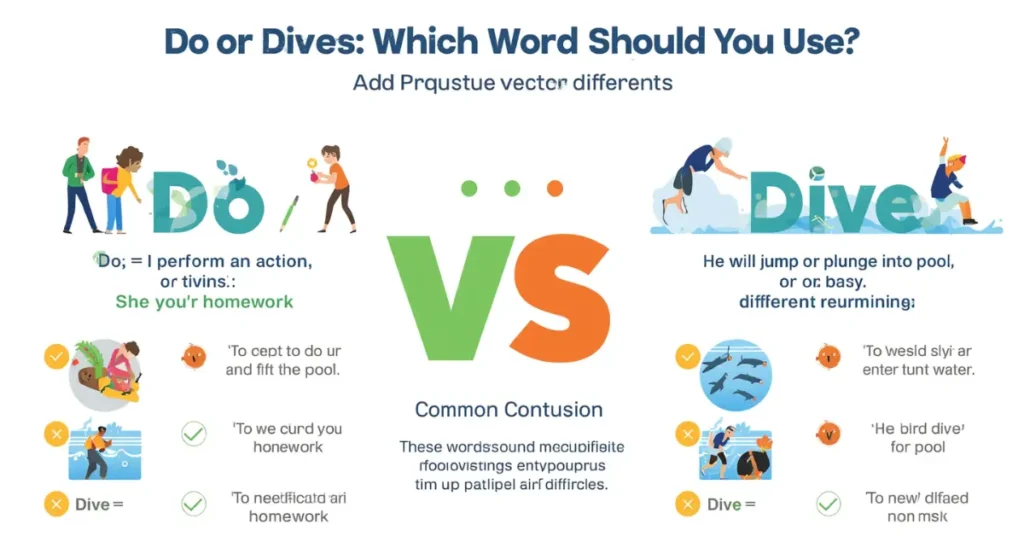
- Do means to perform an action.
- Dive means to jump or plunge into water or move downward quickly.
- Do or die means a situation where success is necessary and failure is not an option.
Examples
✅ We are in a do-or-die match tonight.
✅ She decided to dive into the pool.
✅ I need to do my homework.
❌ We are in a do-or-dive situation.
The Origin of Do or Dive
The confusion comes from the famous phrase “do or die.”
Origin of “Do”
The word do comes from Old English don, meaning “to perform” or “to act.” It has been used in English for over a thousand years.
Origin of “Dive”
The word dive comes from Old English and Germanic roots meaning “to plunge” or “go underwater.”
Origin of “Do or Die”
The expression “do or die” dates back centuries and became widely known through military, political, and motivational speeches. It describes a critical situation where a person must succeed or face serious consequences.
Because dive sounds somewhat similar to die, people occasionally replace one with the other by mistake.
British English vs American English Spelling
Unlike many spelling debates, do and dive are spelled the same in both British and American English.
The confusion is not regional. Instead, it comes from mixing up the phrase “do or die” with the unrelated word “dive.”
Comparison Table
| Term | Meaning | British English | American English |
| Do | Perform an action | Do | Do |
| Dive | Jump into water or move downward | Dive | Dive |
| Do or Die | Success is essential | Do or Die | Do or Die |
| Do or Dive | Usually an error | Incorrect | Incorrect |
Examples
| Correct Usage | Example |
| Do | I need to do my work. |
| Dive | The swimmer will dive into the pool. |
| Do or Die | This is a do-or-die game. |
Which Spelling Should You Use?
The correct choice depends on what you want to say.
Use “Do” When:
- Talking about performing actions.
- Giving instructions.
- Discussing tasks or work.
Example: Please do your assignment today.
Use “Dive” When:
- Talking about swimming.
- Describing a sudden movement downward.
- Referring to exploring a topic deeply.
Example: Let’s dive into the details.
Use “Do or Die” When:
- Describing a critical situation.
- Talking about high-stakes decisions.
- Writing about sports, business, or motivation.
Example: The team faces a do-or-die match.
Audience-Based Advice
| Audience | Recommended Usage |
| US Readers | Do, Dive, and Do or Die |
| UK Readers | Do, Dive, and Do or Die |
| Commonwealth Countries | Same usage |
| Global Audience | Use the standard phrase “Do or Die” |
Common Mistakes with Do or Dive
Many writers accidentally use the wrong term.
Mistake #1: Writing “Do or Dive”
❌ This project is do or dive.
✅ This project is do or die.
Mistake #2: Using Dive Instead of Do
❌ I need to dive my homework.
✅ I need to do my homework.
Mistake #3: Using Do Instead of Dive
❌ The swimmer will do into the water.
✅ The swimmer will dive into the water.
Mistake #4: Confusing the Idiom
❌ It was a do-or-dive moment.
✅ It was a do-or-die moment.
Do or Dive in Everyday Examples
In Emails
Correct:
“Please do the required updates before Friday.”
In News Articles
“The championship game became a do-or-die battle for the team.”
On Social Media
“I’m ready to dive into this new project!”
In Formal Writing
“The company faced a do-or-die decision during the economic crisis.”
In Conversation
“Let’s dive into the topic.”
“I have a lot of work to do today.”
Do or Dive – Google Trends & Usage Data
Search interest in do or dive is usually driven by people checking whether the phrase is correct.
Usage Patterns
| Phrase | Popularity |
| Do | Extremely High |
| Dive | High |
| Do or Die | High |
| Do or Dive | Low |
Countries Where Searches Commonly Appear
- United States
- United Kingdom
- Canada
- Australia
- India
Most searches occur because users want to verify whether do or dive is a valid phrase or simply a typo.
Contexts of Use
| Term | Common Context |
| Do | Work, tasks, actions |
| Dive | Swimming, sports, learning |
| Do or Die | Competition, business, motivation |
| Do or Dive | Spelling confusion |
Comparison Table: Do vs Dive
| Feature | Do | Dive |
| Part of Speech | Verb | Verb |
| Main Meaning | Perform an action | Jump or plunge |
| Common Usage | Work, tasks, activities | Swimming, exploration |
| Used in Idiom | Yes (Do or Die) | No |
| Frequently Confused? | Yes | Yes |
Frequently Asked Questions (FAQs)
1. Is “do or dive” a real phrase?
No. In most cases, it is a mistake for the phrase “do or die.”
2. What does “do or die” mean?
It means success is essential and failure is not acceptable.
3. What does “dive” mean?
Dive means to jump into water or move downward quickly.
4. Is “do or dive” correct in American English?
No. American English uses “do or die.”
5. Is “do or dive” correct in British English?
No. British English also uses “do or die.”
6. Why do people confuse do or dive?
The words sound somewhat similar, and typing mistakes are common.
7. Can I use “dive” metaphorically?
Yes. For example: “Let’s dive into the details.”
Conclusion
The confusion between do or dive is easy to understand because both words are common English verbs. However, they have very different meanings. Do means to perform an action, while dive means to plunge into water or move downward. When people write “do or dive,” they are usually trying to use the well-known expression “do or die.”
The phrase do or die is accepted in both British and American English and is widely used in sports, business, politics, and everyday conversation. Meanwhile, do and dive should be used according to their individual meanings.
If you’re writing for a professional audience, always double-check that you’ve used the correct word. A small spelling mistake can change the meaning of a sentence and confuse readers. Remember the simple rule: use do for actions, dive for plunging or exploring, and do or die for critical situations where success is essential.

Hi, I’m Henry William, the author of GrammarTribe.com. I’m passionate about the English language and have dedicated my career to helping people master grammar, spelling, and effective writing. Over the years, I’ve guided learners, writers, and professionals in understanding common mistakes, tricky rules, and nuances of English grammar in a simple and easy-to-follow way.
Through GrammarTribe.com, I aim to make grammar approachable and enjoyable for everyone. My work focuses on providing clear explanations, practical tips, and examples that readers can apply in everyday writing, whether it’s emails, essays, social media, or professional documents. I believe that strong grammar skills empower people to communicate confidently and professionally.
When I’m not writing or researching grammar, I enjoy reading, exploring language trends, and creating educational content that simplifies complex concepts. I’m committed to helping my audience write better, understand English deeply, and avoid common pitfalls, all while making learning grammar a fun and rewarding journey.