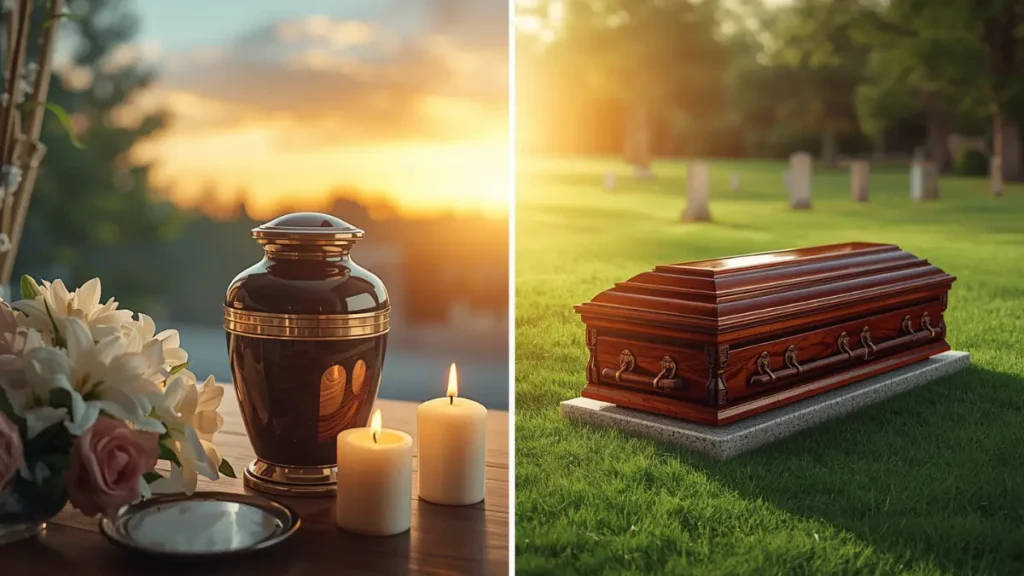
Choosing between cremation or burial is one of the biggest decisions families face after a loved one dies. Many people search for “cremation or burial” because they want to understand the differences, costs, traditions, and personal meanings behind each option. Some people also feel confused about religious views, environmental impact, or what each process involves.
Cremation and burial are both common ways to handle a person’s remains after death. Burial places the body in the ground, usually in a cemetery. Cremation uses heat to turn the body into ashes. Both choices have emotional, cultural, and financial factors.
In many countries, cremation is becoming more popular because it is often less expensive and more flexible. Burial, however, remains important for families who value tradition, religion, or having a physical grave to visit.
This guide explains cremation or burial in simple terms. You will learn the meaning, history, spelling differences, common mistakes, examples, trends, and practical advice. By the end, you will better understand which option may fit your family, beliefs, and budget.
Cremation or Burial – Quick Answer
Cremation and burial are two different ways to handle a person’s remains after death.
| Option | Meaning | Example |
| Cremation | The body is reduced to ashes using heat | Ashes kept in an urn |
| Burial | The body is placed in a grave or tomb | Coffin buried in a cemetery |
Simple Explanation
- Cremation is often cheaper and allows families to keep or scatter ashes.
- Burial gives families a permanent grave site for visits and memorials.
Examples
- “The family chose cremation because it cost less.”
- “Her grandparents preferred a traditional burial.”
The Origin of Cremation or Burial
The word cremation comes from the Latin word cremare, which means “to burn.”
The word burial comes from the Old English word byrgan, meaning “to bury” or “to hide in the ground.”
History of Cremation
Cremation has existed for thousands of years. Ancient Greeks and Romans used cremation for honoring the dead. In modern times, cremation became popular because of lower costs and changing traditions.
History of Burial
Burial is one of the oldest funeral practices in the world. Ancient civilizations buried people with personal items, believing they would need them in the afterlife.
Why the Differences Exist
The choice between cremation or burial often depends on:
- Religion
- Family traditions
- Culture
- Cost
- Environmental concerns
- Personal wishes
British English vs American English Spelling
The terms cremation and burial are spelled the same in both British English and American English.
However, related funeral words can differ slightly.
| British English | American English | Meaning |
| Funeral parlour | Funeral parlor | Funeral business |
| Crematorium | Crematory | Place for cremation |
| Memorialisation | Memorialization | Remembering the dead |
Examples
- UK: “The crematorium service starts at noon.”
- US: “The crematory is located downtown.”
Even though some related words change spelling, cremation and burial stay the same worldwide.
Which Spelling Should You Use?
Since cremation and burial are universal spellings, you can safely use them in all English-speaking countries.
Best Choice by Audience
| Audience | Recommended Usage |
| United States | Cremation, burial |
| United Kingdom | Cremation, burial |
| Canada | Cremation, burial |
| Australia | Cremation, burial |
| Global Audience | Cremation, burial |
Professional Advice
Use clear and respectful language when discussing funeral topics. Avoid slang or casual jokes in formal writing.
Common Mistakes with Cremation or Burial
People sometimes confuse funeral terms or use incorrect wording.
| Incorrect Phrase | Correct Phrase |
| “Burning funeral” | Cremation |
| “Ground funeral” | Burial |
| “Ash funeral” | Cremation service |
| “Body planting” | Burial |
Frequent Errors
1. Mixing Up Funeral and Burial
A funeral is a ceremony. Burial is the act of placing the body in the ground.
2. Thinking Cremation Means No Ceremony
Many families still hold memorial services after cremation.
3. Assuming Burial Is Always Religious
Some burials are non-religious and simple.
Cremation or Burial in Everyday Examples
Email Example
“After discussing costs and family wishes, we decided on cremation.”
News Example
“More families are choosing cremation over burial because of rising cemetery prices.”
Social Media Example
“My grandmother wanted burial beside her parents.”
Formal Writing Example
“The deceased requested cremation in their final wishes.”
Family Conversation Example
“We are deciding between cremation or burial for our father.”
Cremation or Burial – Google Trends & Usage Data
Search interest for cremation has grown in many countries over the past decade.
Countries Where Cremation Is Popular
| Country | More Common Choice |
| Japan | Cremation |
| United Kingdom | Cremation |
| Canada | Cremation |
| United States | Cremation growing rapidly |
| India | Cremation in many religions |
Countries Where Burial Remains Common
| Country | More Common Choice |
| Saudi Arabia | Burial |
| Egypt | Burial |
| Pakistan | Burial |
| Israel | Burial |
Why Cremation Is Growing
People often choose cremation because:
- Lower funeral costs
- Smaller living spaces
- Easier memorial options
- Less cemetery space needed
Why Burial Remains Important
Burial remains popular because:
- Religious beliefs
- Family traditions
- Permanent memorial sites
- Cultural expectations
Cremation or Burial Comparison Table
| Feature | Cremation | Burial |
| Cost | Usually lower | Usually higher |
| Grave Needed | No | Yes |
| Religious Tradition | Depends on religion | Common in many religions |
| Environmental Impact | Lower land use | Uses cemetery land |
| Memorial Options | Flexible | Permanent grave |
| Popularity | Increasing | Traditional choice |
FAQs About Cremation or Burial
1. Is cremation cheaper than burial?
Yes. Cremation is usually less expensive because it avoids cemetery and coffin costs.
2. Which religions allow cremation?
Hinduism strongly supports cremation. Some Christian groups allow it. Islam and Judaism usually prefer burial.
3. Can families still hold a funeral after cremation?
Yes. Many families hold memorial services before or after cremation.
4. Is burial better for tradition?
Many cultures and religions view burial as a traditional practice.
5. Which option is more environmentally friendly?
Cremation uses less land, but both methods have environmental effects.
6. Can ashes be buried after cremation?
Yes. Ashes can be buried, scattered, or stored in an urn.
7. Is cremation becoming more popular?
Yes. Cremation rates continue to rise in many countries because of cost and convenience.
Conclusion
The choice between cremation or burial is personal and emotional. Both options honor a loved one in different ways. Cremation offers flexibility, lower costs, and modern memorial choices. Burial provides tradition, a physical resting place, and comfort for families who value cemetery visits.
There is no single correct answer. The best choice depends on religion, culture, family wishes, budget, and personal beliefs. Some families prefer cremation because it is simple and affordable. Others choose burial because it connects with family traditions and spiritual practices.
When deciding between cremation or burial, it helps to discuss wishes early with family members. Planning ahead can reduce stress and avoid confusion later. It is also wise to compare funeral costs and understand local customs.
No matter which option you choose, the most important thing is honoring the memory of the person with respect, love, and care.

I am James Wilson, an author at GrammarTribe.com, specializing in English grammar and clear communication.
I create expert, reliable content to help learners write with confidence and accuracy.