

Have you ever written a sentence like “He trys his best” and then stopped to wonder if it’s correct? You’re not alone. The keyword “trys or tries” is searched thousands of times because English verb forms can be confusing especially when letters suddenly change.
People search for trys or tries because both spellings look possible. The base verb is try, so it feels natural to just add “s” and write trys. But English has special spelling rules for verbs that end in -y, and this is where the confusion starts.
This article clears that confusion in a simple way. You’ll get a quick answer, learn the origin of the word, understand British vs American rules, and see real-life examples you can use with confidence. Whether you’re a student, blogger, or professional writer, this guide will help you choose the correct spelling every time.
Trys or Tries – Quick Answer
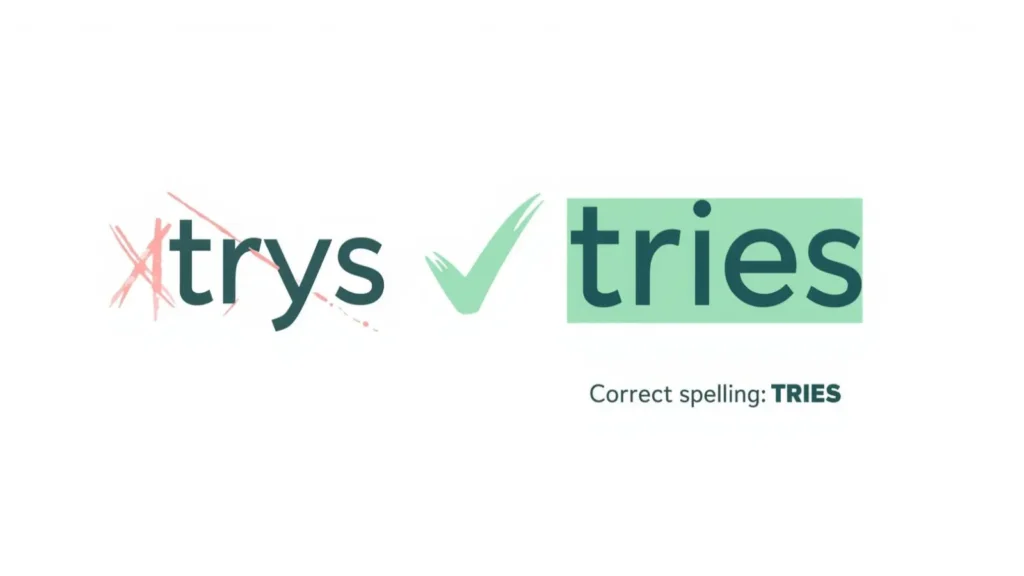
✅ Correct spelling: Tries
❌ Incorrect spelling: Trys
Tries is the correct third-person singular form of the verb try.
Examples:
- He tries his best every day.
- She tries to learn something new.
❌ He trys again. (Incorrect)
The Origin of Try or Tries
The verb try comes from Old French trier, meaning to test or attempt. Over time, English developed spelling rules to make words easier to read and pronounce.
When a verb ends in -y after a consonant, English changes y → i before adding -es. That’s why:
- try → tries
- cry → cries
- fly → flies
There was never a correct form called trys. It exists only because people apply the wrong rule.
British English vs American English Spelling
Good news: there is no difference between British and American English here.
| English Type | Correct | Incorrect |
| American English | Tries | Trys |
| British English | Tries | Trys |
| Australian English | Tries | Trys |
| Canadian English | Tries | Trys |
The rule stays the same everywhere.
Which Spelling Should You Use?
- US audience: Use tries
- UK & Commonwealth: Use tries
- Global writing & SEO: Always tries
💡 Easy rule to remember:
Consonant + Y → change Y to I + ES
Common Mistakes with Trys or Tries
❌ Wrong:
- He trys hard at work.
- She trys to help everyone.
✅ Correct:
- He tries hard at work.
- She tries to help everyone.
Tip: The base form is try, but the correct verb form is tries.
Tries in Everyday Examples
He tries to reply within 24 hours.
📰 News
The team tries to improve performance each season.
📱 Social Media
She tries her best, and that’s enough.
🧾 Formal Writing
The organization tries to maintain high standards.
Trys / Tries – Google Trends & Usage Data
- Tries appears in books, articles, and professional writing.
- Trys appears mainly as a grammar mistake in searches.
- Google often autocorrects trys to tries.
- High search volume comes from:
- Students learning verb forms
- ESL learners
- Grammar checks for writing and exams
This shows users want confirmation of the correct form, not alternatives.
Comparison Table: Trys vs Tries
| Feature | Trys | Tries |
| Grammatically correct | ❌ No | ✅ Yes |
| Dictionary listed | ❌ No | ✅ Yes |
| US English | ❌ | ✅ |
| British English | ❌ | ✅ |
| Formal writing | ❌ | ✅ |
FAQs: Trys or Tries
1. Is “trys” ever correct?
No. It is never correct in standard English.
2. Why does try change to tries?
Because verbs ending in consonant + y change y to i before adding -es.
3. Is “tries” past tense?
No. It is present tense (he/she/it tries).
4. What is the past tense of try?
The past tense is tried.
5. Does British English allow “trys”?
No. British English also uses tries.
6. Can using “trys” hurt SEO or writing quality?
Yes. It reduces trust and looks unprofessional.
Conclusion
The confusion between trys or tries is common, but the rule behind it is simple. Tries is the only correct spelling when talking about he, she, or it in the present tense. The form trys may look logical, but it breaks a basic English spelling rule.
Knowing this rule helps you avoid mistakes not just with try, but also with similar verbs like cries, flies, and tries. Correct spelling improves clarity, credibility, and SEO performance, especially in formal or professional writing.
If you remember one thing, remember this:
Consonant + Y changes to I + ES.
Once you learn that, you’ll never write trys again and your writing will instantly look more confident and polished.