Many pet owners search for the term “spay or neuter” when they hear it from veterinarians, animal shelters, or adoption centers. But confusion often arises: What exactly does it mean? Is it a medical term, a spelling variation, or two different procedures?
This keyword is important because it relates to responsible pet care and animal population control. People want to understand when and why these procedures are done, what they involve, and whether they are safe for their pets. At the same time, some users are unsure about the spelling, usage, or difference between “spay” and “neuter.”
In simple terms, spaying and neutering are surgical procedures used to sterilize pets. However, the words are often used together, which creates search confusion.
This article will clearly explain the meaning, origin, correct usage, and common mistakes related to the keyword “spay or neuter.” You will also learn how it is used in different regions, real-life examples, and why it matters for pet health and population control. Everything is explained in simple, easy English.
Spay or Neuter – Quick Answer
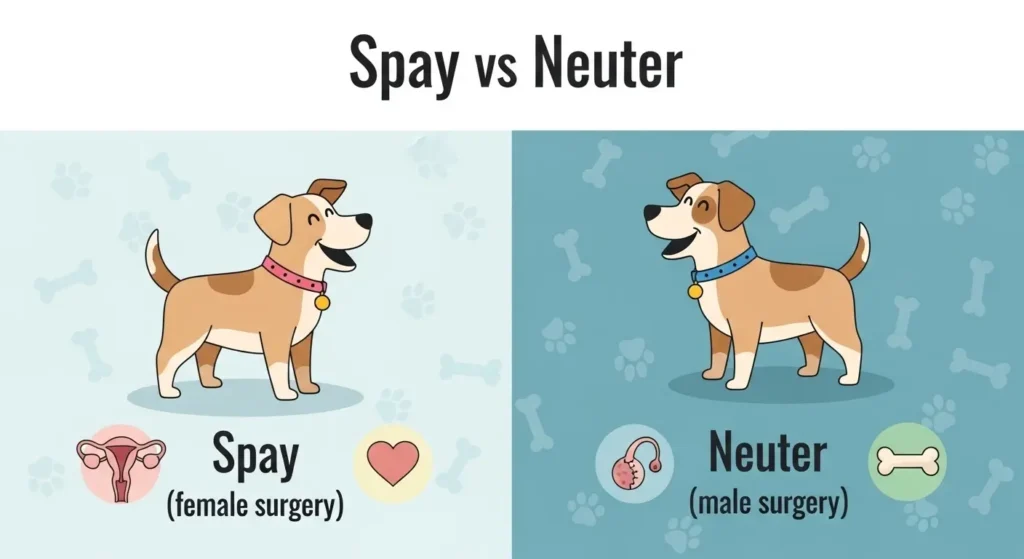
Spay or neuter refers to sterilization procedures for pets to prevent them from reproducing.
- Spay = Female animals (removal of ovaries/uterus)
- Neuter = Male animals (removal of testicles)
Examples:
- A female cat is spayed to prevent pregnancy.
- A male dog is neutered to reduce unwanted breeding behavior.
👉 In short: spay = female, neuter = male
The Origin of Spay or Neuter
Monkeys or Monkies: Which Spelling Is Correct?
The word “spay” comes from Old French “espeier”, meaning to remove reproductive organs. It became part of the English veterinary language centuries ago.
The word “neuter” comes from Latin “neuter”, meaning “neither.” It was used in biology to describe organisms that cannot reproduce.
Over time, veterinarians began using both terms together as “spay or neuter” to describe sterilization procedures for all pets, regardless of gender.
This combined usage became standard in animal welfare campaigns, especially in shelters and veterinary medicine.
British English vs American English Spelling
Guns or Butter: Meaning, Trade-Off, and Economic Importance
Unlike many words, “spay or neuter” does not have major spelling differences between British and American English.
However, related terms do show variation:
| Concept | American English | British English |
| Spay | spay | spay |
| Neuter | neuter | neuter |
| Sterilization | sterilization | sterilisation |
| Animal shelter | animal shelter | animal rehoming centre |
| Veterinary clinic | veterinary clinic | vet surgery |
Key point:
- The phrase “spay or neuter” is universal
- Differences appear only in related medical or formal terms
Which Spelling Should You Use?
Your spelling depends on your audience:
- United States: Use “sterilization,” “spay or neuter”
- United Kingdom & Commonwealth: Prefer “sterilisation,” but still use “spay or neuter”
- Global audience (blogs, SEO, websites): Use “spay or neuter” (most widely searched)
👉 For SEO content, always choose American spelling + universal phrase usage because it has higher search volume.
Common Mistakes with Spay or Neuter
Many people misunderstand or misuse the term:
1. Thinking both are the same procedure
❌ Wrong: Spay and neuter are identical
✔ Correct: Spay = female, neuter = male
2. Using the wrong gender term
❌ “Neutering a female dog”
✔ “Spaying a female dog”
3. Believing it is harmful without reason
❌ “It always harms pets”
✔ “It is a safe, routine veterinary procedure”
4. Confusing sterilization with castration only
✔ Spaying is for females, neutering is for males
5. Spelling confusion
❌ “spey or nueter”
✔ “spay or neuter”
Spay or Neuter in Everyday Examples
1. Veterinary advice
- “We recommend you spay or neuter your pet at 6 months of age.”
2. Animal shelter notice
- “All adopted pets must be spayed or neutered before going home.”
3. Social media post
- “Spay or neuter your pets to help reduce the stray population.”
4. Email communication
- “Please schedule a spay or neuter appointment for your dog.”
5. News article
- “The city launches a free spay or neuter program for stray animals.”
Spay or Neuter – Google Trends & Usage Data
Search behavior shows strong global interest in this keyword:
- United States: Highest search volume (animal welfare campaigns)
- United Kingdom: Moderate interest (more “sterilisation” searches)
- Canada & Australia: High awareness due to pet adoption programs
- South Asia (including Pakistan & India): Growing search trend
Why people search it:
- Pet adoption guidance
- Veterinary cost information
- Animal behavior concerns
- Stray population control awareness
👉 Trend insight: Searches peak during animal adoption drives and awareness campaigns.
Comparison Table: Spay vs Neuter vs Sterilization
| Term | Meaning | Used For | Region Usage |
| Spay | Female sterilization | Female pets | Global |
| Neuter | Male sterilization | Male pets | Global |
| Sterilization | General term | Both genders | Formal writing |
| Spaying | Verb form | Females | Global |
| Neutering | Verb form | Males | Global |
FAQs About Spay or Neuter
1. What is spay or neuter?
It is a surgical procedure to prevent pets from reproducing.
2. Is spaying or neutering safe?
Yes, it is a routine and safe veterinary procedure.
3. At what age should pets be spayed or neutered?
Usually between 5–6 months, depending on veterinary advice.
4. Does neutering change a pet’s behavior?
It may reduce aggression, roaming, and mating instincts.
5. Is spaying painful for animals?
The procedure is done under anesthesia, so pets do not feel pain during surgery.
6. Can a neutered pet still mate?
Yes, but it cannot produce offspring.
7. Why is spay or neuter important?
It helps control stray populations and improves pet health.
Conclusion
The keyword “spay or neuter” is widely used in veterinary care and animal welfare discussions. It refers to simple but important surgical procedures that prevent pets from reproducing. Spaying is done for female animals, while neutering is for male animals.
Understanding this term is essential for responsible pet ownership. Many people search for it because they want to care for their pets properly, reduce stray animal populations, or prepare for adoption requirements. Although the phrase itself does not change in British or American English, related medical terms like “sterilization” may vary in spelling.
Using the correct term helps avoid confusion when speaking with veterinarians, reading pet care guides, or searching online. It also ensures better communication in adoption centers and animal welfare programs.
In short, spay or neuter is not just a medical term it is a responsible action that improves animal health and helps communities manage pet populations effectively. Knowing when and how to use the term correctly empowers pet owners to make informed and compassionate decisions.

I am James Wilson, an author at GrammarTribe.com, specializing in English grammar and clear communication.
I create expert, reliable content to help learners write with confidence and accuracy.