Many people get confused when writing about winter sports and ask a simple question: should it be “skied” or “skiied”? This confusion is very common, especially for learners of English and casual writers.
The word comes from the sport “ski,” and when we turn it into the past tense, the spelling does not follow the usual pattern people expect. Some assume we double the “i” and write “skiied,” while others write “skied.” This leads to spelling mistakes in essays, emails, blogs, and social media posts.
People search for this keyword because English spelling rules can feel unclear. Many verbs change form in tricky ways, especially short vowel words ending in “i.” The good news is that only one form is correct in modern English. Understanding this difference helps you write confidently and avoid common grammar errors. In this article, you will learn the correct spelling, the history behind it, and how to use it properly in real-life writing.
Skied or Skiied – Quick Answer
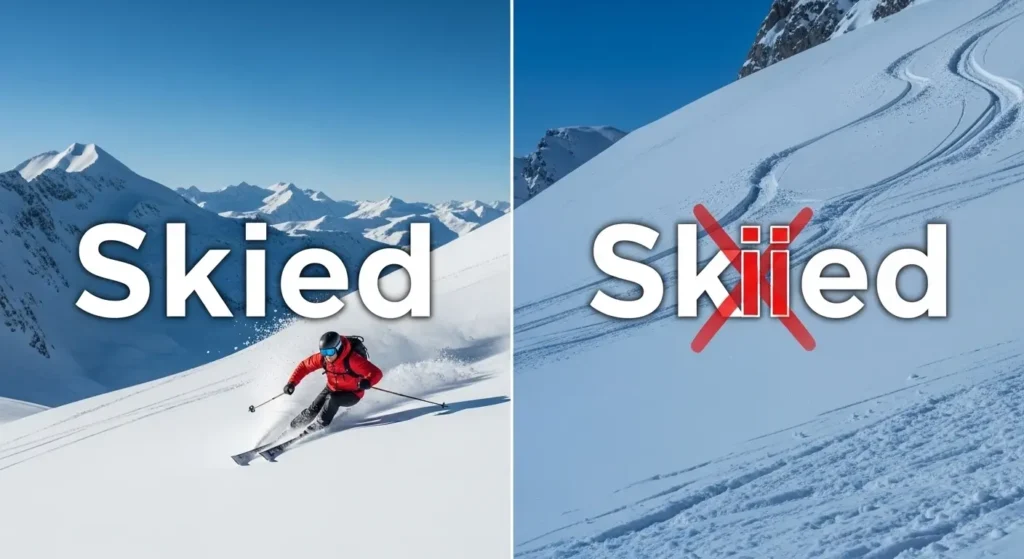
The correct spelling is “skied.”
The word “skiied” is incorrect and should not be used.
Examples:
- Correct: I skied down the mountain yesterday.
- Correct: She has skied in Switzerland many times.
- Incorrect: I skiied down the slope. ❌
The rule is simple: the word “ski” becomes “skied,” just like “try → tried.”
The Origin of Skied
The word “ski” comes from the Norwegian word “skí”, meaning a split piece of wood used for traveling on snow. English borrowed the word in the 19th century when skiing became popular in Europe.
When English forms the past tense of words ending in a vowel + “i,” it usually does not double the vowel. Instead, it simply adds “-ed.”
So:
- ski → skied
- agree → agreed
- play → played
The spelling “skiied” likely comes from confusion with words like “died” or “tried,” but English rules do not support doubling the “i” in this case.
British English vs American English Spelling
Good news: British and American English agree on this word. There is no difference in spelling.
Both use:
- skied (correct in UK English)
- skied (correct in US English)
Comparison Table
| Form Type | Correct Spelling | Incorrect Spelling |
| Past tense | skied | skiied |
| Past participle | skied | skiied |
| Usage | UK & US English | Not used |
Unlike words like “colour/color,” this one is consistent across all English varieties.
Which Spelling Should You Use?
- US English: Use skied
- UK English: Use skied
- Canada, Australia, global English: Use skied
👉 No matter where you are, “skied” is always correct.
If you are writing for school, exams, blogs, or business, always choose “skied” to stay correct and professional.
Common Mistakes with Skied
Here are frequent errors people make:
- ❌ skiied → Correct: skied
- ❌ skiiing → Correct: skiing
- ❌ skiing (past tense mistake) → Correct: skied
- ❌ confusing “ski” forms in past and present
- ❌ overthinking double vowels
👉 Simple rule: never double the “i.”
Skied in Everyday Examples
Emails:
- “Last winter, I skied in the Alps during my vacation.”
News:
- “The athlete skied at record speed during the competition.”
Social Media:
- “Just skied for the first time! What an amazing experience!”
Formal Writing:
- “The participants skied across the mountain trail under supervision.”
Skied – Google Trends & Usage Data
Search behavior shows that many users type “skiied” by mistake, especially in non-native English regions. However:
- “skied” dominates globally
- “skiied” appears mainly in spelling-error searches
- Highest confusion comes from students and new English learners
Across Google data patterns:
- US: high correct usage (“skied”)
- UK: stable correct usage
- South Asia & global ESL users: higher error rate with “skiied”
This shows the importance of learning the correct spelling early.
Comparison Table: Skied vs Skiied
| Feature | Skied | Skiied |
| Correctness | Correct ✔ | Incorrect ❌ |
| Usage | Standard English | Not used |
| Grammar rule | ski + ed | Incorrect doubling |
| Dictionaries | Accepted | Not listed |
| Writing level | Formal & informal | Wrong spelling |
FAQs about Skied or Skiied
1. Is “skiied” ever correct?
No, “skiied” is always incorrect in modern English.
2. Why do people write “skiied”?
Because they wrongly think the “i” should be doubled like in “died” or “tried.”
3. What is the past tense of ski?
The past tense of ski is skied.
4. Is “skied” used in British English?
Yes, British English uses “skied.”
5. Is “skied” used in American English?
Yes, American English also uses “skied.”
6. What is the present participle of ski?
It is skiing.
7. How can I remember the correct spelling?
Remember: ski + ed = skied (no double i).
Conclusion
The confusion between “skied or skiied” is common, but the rule is simple. The correct spelling is always “skied.” The incorrect form “skiied” does not exist in standard English and should be avoided in all types of writing.
Both British and American English follow the same rule, making this word easy once you understand it. The mistake usually comes from overthinking vowel patterns, but English does not double the “i” in this case. By remembering the basic ruleski + ed = skiedyou can avoid errors in exams, emails, blogs, and professional writing.
Whether you are writing casually or formally, using the correct spelling helps you look more confident and accurate in English communication.

Hi, I’m Henry James, the author behind GrammarTribe.com. I’m passionate about the English language and specialize in grammar, helping readers understand complex rules in a simple, clear way. Over the years, I’ve dedicated myself to creating content that makes learning grammar practical, fun, and accessible for everyone. If you’re a student, professional, or language enthusiast.
Through GrammarTribe.com, I share tips, guides, and examples to help people write confidently and correctly. My goal is to make grammar less intimidating and more useful in everyday writing, emails, social media, and professional communication. Writing and teaching grammar isn’t just my profession — it’s my passion.
When I’m not writing, I enjoy reading, exploring language trends, and discovering new ways to make English learning engaging and easy. My mission is to empower readers to communicate clearly and confidently, one grammar tip at a time.