The keyword “pacient or patient” is one of the most common spelling confusions in English writing. Many people search for it because they are unsure which form is correct in medical writing, school assignments, emails, or online content. If you have ever typed “pacient” and seen it marked as incorrect, you are not alone.
This confusion usually happens because different languages (like Spanish, French, or Portuguese) use “paciente,” which looks similar to “pacient,” leading learners to assume it might also be correct in English.
The correct English spelling is “patient.” However, search interest in “pacient or patient” remains high globally because students, healthcare workers, and non-native English speakers often mix them up.
This article will clearly explain the difference, origin, spelling rules, and proper usage. It will also show why “pacient” is incorrect in English and how “patient” is used in medical, academic, and everyday communication. By the end, you will confidently understand when and how to use the correct form without hesitation.
Patient or Pacient – Quick Answer
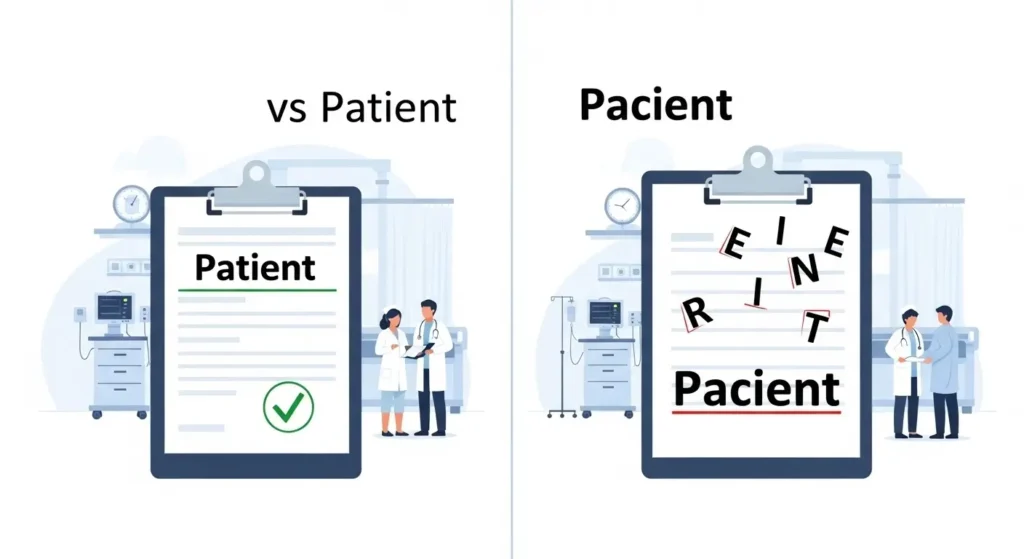
The correct spelling is patient.
“Pacient” is incorrect in English and is a common misspelling.
Examples:
- Correct: The patient is recovering in the hospital.
- Incorrect: The pacient is recovering in the hospital.
“Patient” can mean:
- A person receiving medical care
- A calm or tolerant person (adjective)
The Origin of Patient
The word patient comes from the Latin word patiens, meaning “to suffer” or “to endure.” It entered English through Old French pacient and later evolved into the modern spelling “patient.”
Why confusion happens:
- Romance languages (Spanish: paciente, French: patient) look similar
- Some learners incorrectly assume “pacient” is English spelling
- Pronunciation does not clearly show spelling difference
Over time, English standardized the spelling as patient, dropping the “c” in modern usage.
British English vs American English Spelling
Good news: both British and American English use the same spelling — “patient.”
There is no spelling variation between regions for this word.
Examples:
- UK English: The patient was admitted to hospital.
- US English: The patient was admitted to the hospital.
Comparison Table
| Feature | British English | American English |
| Spelling | patient | patient |
| Meaning | same | same |
| Usage | medical + adjective | medical + adjective |
| Variation | none | none |
Which Spelling Should You Use?
You should always use “patient” in all contexts:
- US English users: Use “patient” in hospitals, reports, and writing
- UK/Commonwealth users: Same spelling applies
- Global English users: “patient” is the only accepted standard form
If you are writing blogs, medical notes, academic papers, or SEO content, always avoid “pacient.” It is considered a spelling error in professional English.
Common Mistakes with Patient
1. Wrong spelling
- ❌ pacient is sick
- ✔ patient is sick
2. Confusing adjective and noun
- ❌ He is a patience man
- ✔ He is a patient man
3. Using plural incorrectly
- ❌ The patients is waiting
- ✔ The patients are waiting
4. Mixing languages
- ❌ El pacient is here
- ✔ The patient is here
5. Typing errors in medical notes
- ❌ pacient record updated
- ✔ patient record updated
Patient in Everyday Examples
Medical writing:
- The patient was given medication for fever.
- The doctor checked the patient’s blood pressure.
Emails:
- Please update the patient report before 5 PM.
News:
- The patient survived after emergency surgery.
Social media:
- Praying for the patient’s quick recovery 🙏
Formal writing:
- Each patient must complete the consent form.
Patient – Google Trends & Usage Data
Search data shows that:
- “patient” has very high global usage
- “pacient or patient” is mostly searched by:
- Students
- ESL learners
- Healthcare trainees
- Countries with higher confusion:
- India
- Pakistan
- Brazil
- Spain (due to “paciente” influence)
In contrast, “patient” dominates all professional and medical databases, journals, and healthcare systems worldwide.
Comparison Table: Patient vs Pacient
| Feature | Patient | Pacient |
| Correctness | Correct English | Incorrect |
| Usage | Medical + general | Not used |
| Dictionary status | Valid | Not recognized |
| Origin influence | Latin/French | Misspelling influence |
| Professional use | Yes | No |
FAQs
1. Is “pacient” correct in English?
No, “pacient” is incorrect. The correct spelling is “patient.”
2. Why do people write “pacient”?
Because of influence from other languages like Spanish and French.
3. Is “patient” used in both UK and US English?
Yes, both use the same spelling.
4. Can “patient” be an adjective?
Yes, it means calm or tolerant.
5. What is the plural of patient?
The plural is “patients.”
6. Is “pacient” found in dictionaries?
No, it is not recognized as a correct English word.
7. How can I remember the correct spelling?
Remember: “patient” = “pa + tient” (no “c” in English).
Conclusion
The confusion between “pacient or patient” is common, especially among English learners. However, the correct and only accepted spelling in English is “patient.” The incorrect form “pacient” comes from influence of other languages and is not valid in English dictionaries or professional writing.
If you are writing medical reports, academic essays, or everyday messages, using the correct spelling is important for clarity and credibility.
Understanding this difference helps improve your English accuracy and prevents common spelling mistakes. Remember that both British and American English use the same form: “patient.” With practice, this confusion disappears quickly. Always double-check your writing, especially in formal or medical contexts, to ensure you are using the correct spelling.

Hi, I’m Henry James, the author behind GrammarTribe.com. I’m passionate about the English language and specialize in grammar, helping readers understand complex rules in a simple, clear way. Over the years, I’ve dedicated myself to creating content that makes learning grammar practical, fun, and accessible for everyone. If you’re a student, professional, or language enthusiast.
Through GrammarTribe.com, I share tips, guides, and examples to help people write confidently and correctly. My goal is to make grammar less intimidating and more useful in everyday writing, emails, social media, and professional communication. Writing and teaching grammar isn’t just my profession — it’s my passion.
When I’m not writing, I enjoy reading, exploring language trends, and discovering new ways to make English learning engaging and easy. My mission is to empower readers to communicate clearly and confidently, one grammar tip at a time.