Many people stop while writing and ask a simple question: is it offense or offence? You may see both spellings in books, news articles, and online posts. Both look right. Both are used by native English speakers. So why does this confusion exist?
The reason is American English vs British English spelling. English is a global language, but spelling rules are not the same everywhere. Words like offense / offence change spelling based on region, not meaning. For students, bloggers, SEO writers, and professionals, using the wrong spelling can look careless or confuse readers.
People search for “offense or offence” because they want a quick, clear answer, plus guidance on which spelling fits their audience. This article solves that problem step by step. You’ll learn the correct usage, the word’s origin, regional spelling rules, real-life examples, and SEO-friendly advice. By the end, you’ll confidently choose the right spelling every time without second-guessing.
Offense or Offence – Quick Answer
Both spellings are correct.
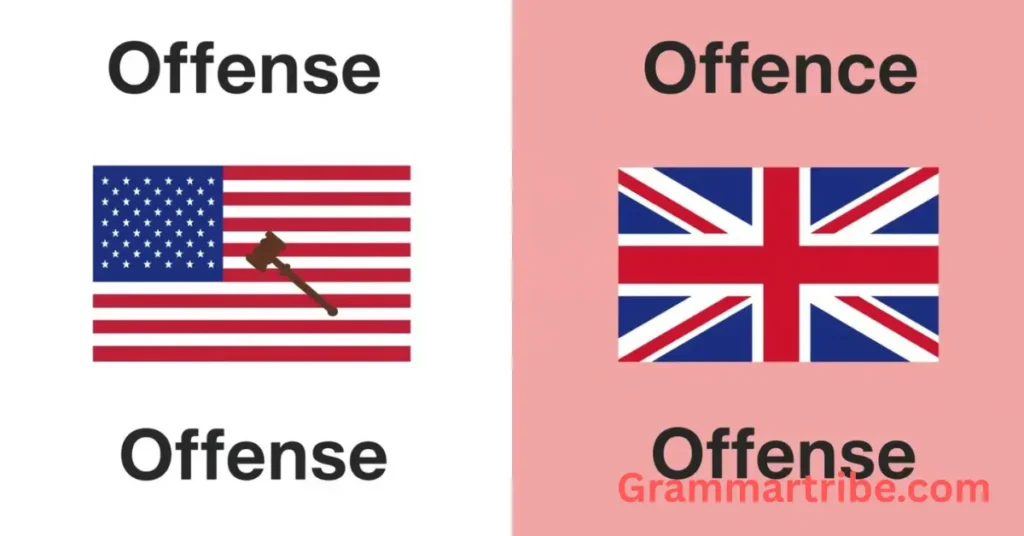
- Offense → American English
- Offence → British English
The meaning is the same in both cases.
Examples:
- US: The crime was a serious offense.
- UK: He meant no offence by his comment.
Read more: Flavor or Flavour – Which Spelling Is Correct?
The Origin of Offense / Offence
The word comes from Latin “offendere”, meaning to strike against or to wrong. It passed into Old French as offense and later into English.
In early English, spelling was not fixed. Over time:
- British English kept the -ce ending (offence)
- American English, led by Noah Webster, simplified many spellings to -se (offense)
This same pattern appears in:
- defence / defense
- licence / license (noun)
Read more: Aluminum or Aluminium – Which Spelling Is Correct?
British English vs American English Spelling
Simple Rule
- British English → -ce
- American English → -se
Examples
- British: The remark caused great offence.
- American: The law defines the offense clearly.
Comparison Table
| Feature | Offense | Offence |
| English Type | American | British |
| Common Regions | USA | UK, Pakistan, India, Australia |
| Meaning | Crime or insult | Crime or insult |
| SEO (US) | ✅ Best choice | ❌ Not ideal |
| SEO (UK) | ❌ Not ideal | ✅ Best choice |
Which Spelling Should You Use?
Choose based on your audience:
- US audience / US SEO → Offense
- UK audience → Offence
- Pakistan, India, Australia → Offence
- Global audience → Pick one spelling and stay consistent (often offense for tech and SEO)
Consistency is more important than preference.
Common Mistakes with Offense / Offence
❌ Mixing both spellings in one article
✔️ Use only one spelling
❌ Thinking one spelling is wrong
✔️ Both are correct
❌ Using UK spelling for US clients
✔️ Match spelling to audience
❌ Keyword stuffing both spellings
✔️ Optimize for one main keyword
Offense / Offence in Everyday Examples
Emails
- Please accept my apology if this causes offense.
- No offence was intended.
News
- The court listed the offense as a felony.
- The offence carries a heavy fine.
Social Media
- I meant no offense.
- Don’t take offence, it was a joke.
Formal Writing
- The offense violated federal law.
- The offence breached company policy.
Offense or Offence – Google Trends & Usage Data
- Offense is most searched in the United States
- Offence dominates searches in the UK and Commonwealth countries
- Globally, offense appears slightly more due to American media and SEO influence
Search engines understand both spellings, but matching user location improves relevance.
Keyword Comparison Table
| Variation | Correct | Region |
| offense | ✅ | American English |
| offence | ✅ | British English |
| offance | ❌ | Incorrect |
| offanse | ❌ | Incorrect |
FAQs – Offense or Offence
1. Is it offensive to use American English?
Yes.
2. Is it British English?
Yes.
3. Do they mean the same thing?
Yes, exactly the same.
4. Which spelling is better for SEO?
Use the one your audience searches for.
5. Can I use both in one document?
No, stay consistent.
6. Is offence wrong in the US?
It’s understood, but not preferred.
7. Which spelling should students use?
Follow school or country guidelines.
Conclusion :
The choice between offense or offence is not about right or wrong, it’s about where your audience is. Both spellings share the same meaning and history. The difference exists only because of regional spelling rules. American English prefers offense, while British and Commonwealth English use offence.
For writers, students, and SEO professionals, the key is consistency and audience awareness. Using the correct regional spelling builds trust, improves readability, and supports better search performance. If your readers are in the United States, offense is the safer choice. If they are in the UK, Pakistan, or Australia, offence is more natural.
Once you know this rule, the confusion disappears. Choose the spelling that fits your audience, stick with it throughout your content, and write with confidence.

I am James Wilson, an author at GrammarTribe.com, specializing in English grammar and clear communication.
I create expert, reliable content to help learners write with confidence and accuracy.