The keyword labour or labor is one of the most commonly searched spelling confusion topics in English. People often see both versions in books, news articles, job ads, and political discussions and wonder which one is correct.
This confusion usually appears when readers switch between British and American content. For example, someone reading a UK news article might see “labour party,” but in a US document, the same word appears as “labor union.” This raises questions: Are they different words? Do they mean different things? Or is it just spelling variation?
The truth is simple, but the confusion is very real. Many students, writers, job seekers, and professionals search labour or labor to understand which spelling they should use in exams, emails, formal writing, and online content.
The keyword labour or labor becomes especially important in academic writing and SEO content because using the wrong spelling can affect clarity and audience trust. The keyword labour or labor mainly refers to human work, workforce, or effort but spelling depends on region.
Understanding labour or labor helps avoid mistakes, improves writing accuracy, and ensures your content matches your target audience’s expectations.
Labour or Labor – Quick Answer
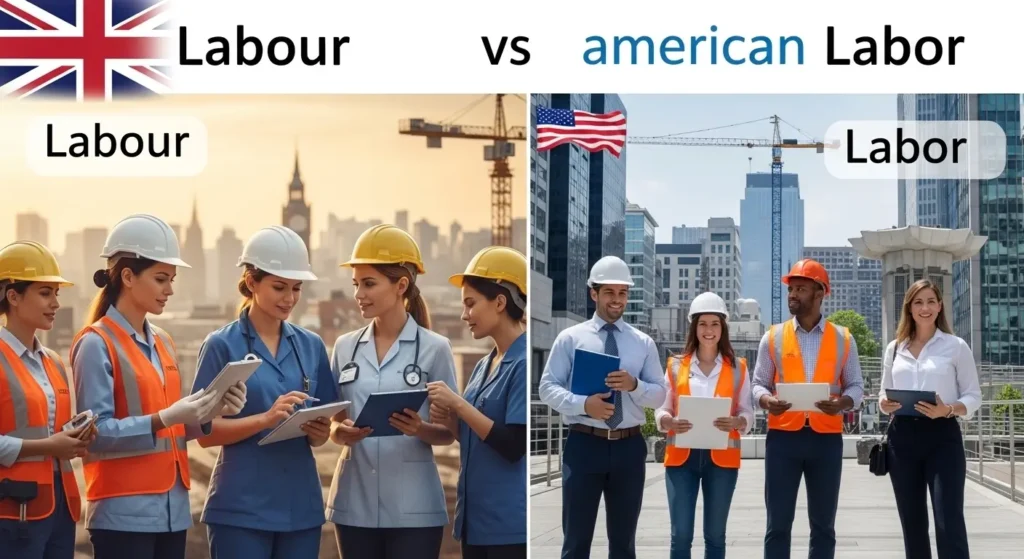
Labour (British English) and Labor (American English) mean the same thing: work, effort, or workforce.
Examples:
- UK: “The government announced new labour laws.”
- US: “The company improved labor conditions.”
The Origin of Labour or Labor
The word comes from the Latin “labor”, meaning effort, hardship, or work.
- Old French influenced English spelling as “labour”
- American English later simplified it to “labor”
- The spelling split became standard after English reform movements in the 18th–19th century
So, the meaning stayed the same, but spelling evolved based on region.
British English vs American English Spelling
The main difference between labour or labor is spelling style, not meaning.
Key Rules:
- British English keeps the “u” → labour
- American English removes the “u” → labor
Comparison Table:
| British English | American English | Meaning |
| labour | labor | work/effort |
| colour | color | same pattern |
| favour | favor | same pattern |
| labourer | laborer | worker |
Which Spelling Should You Use?
Use “Labour” if:
- You are writing for UK, India, Pakistan, Australia, or Canada audiences
- You are writing academic essays in British English
- You follow Commonwealth English standards
Use “Labor” if:
- You are writing for US audience
- You are publishing on American websites
- You are using US academic or business style
Global Tip:
If your audience is international, choose one style and stay consistent.
Common Mistakes with Labour or Labor
- Mixing both spellings in one document
❌ “The labor department regulates labour laws”
✔ “The labour department regulates labour laws” (UK) - Using American spelling in UK exams
❌ “labor” in British essays
✔ “labour” - Confusing meaning with spelling
✔ Both mean the same thing
Labour or Labor in Everyday Examples
Emails:
- “We need extra labour for this project deadline.”
News:
- “New labor reforms were announced in the United States.”
Social Media:
- “Hard labour builds strong character 💪”
Formal Writing:
- “The ministry of labour released new employment guidelines.”
Labour or Labor – Google Trends & Usage Data
- “Labor” is more popular in the United States
- “Labour” is dominant in the UK, India, Australia, and other Commonwealth countries
- Global search volume is split based on regional spelling rules
- News media strongly follows regional spelling conventions
Comparison Table: Labour vs Labor
| Feature | Labour | Labor |
| Spelling Region | UK/Commonwealth | USA |
| Meaning | Work/effort | Work/effort |
| Usage | British English writing | American English writing |
| Examples | Labour party, labour law | Labor union, labor market |
FAQs
1. Are labour and labor different words?
No, they have the same meaning. Only spelling differs.
2. Which is correct: labour or labor?
Both are correct depending on the region.
3. Why does British English use “labour”?
It follows traditional French-influenced spelling.
4. Is labor American spelling?
Yes, “labor” is American English.
5. Can I mix both spellings?
No, you should stay consistent in one style.
6. Does meaning change with spelling?
No, meaning remains the same.
7. Which spelling is better for SEO?
Use the spelling your target audience prefers.
Conclusion
The difference between labour or labor is simple but important for clear and correct writing. Both words mean the same thing—work, effort, or workforce—but the spelling changes depending on whether you use British or American English. “Labour” is standard in the UK and Commonwealth countries, while “labor” is used in the United States. Understanding this difference helps writers avoid confusion, improve grammar accuracy, and create audience-friendly content.
If you are writing academic papers, business documents, or SEO articles, consistency is the key. Choose one style based on your target audience and stick with it throughout your writing. This small detail can improve your professionalism and make your content more trustworthy and readable.

Hi, I’m Henry James, the author behind GrammarTribe.com. I’m passionate about the English language and specialize in grammar, helping readers understand complex rules in a simple, clear way. Over the years, I’ve dedicated myself to creating content that makes learning grammar practical, fun, and accessible for everyone. If you’re a student, professional, or language enthusiast.
Through GrammarTribe.com, I share tips, guides, and examples to help people write confidently and correctly. My goal is to make grammar less intimidating and more useful in everyday writing, emails, social media, and professional communication. Writing and teaching grammar isn’t just my profession — it’s my passion.
When I’m not writing, I enjoy reading, exploring language trends, and discovering new ways to make English learning engaging and easy. My mission is to empower readers to communicate clearly and confidently, one grammar tip at a time.