
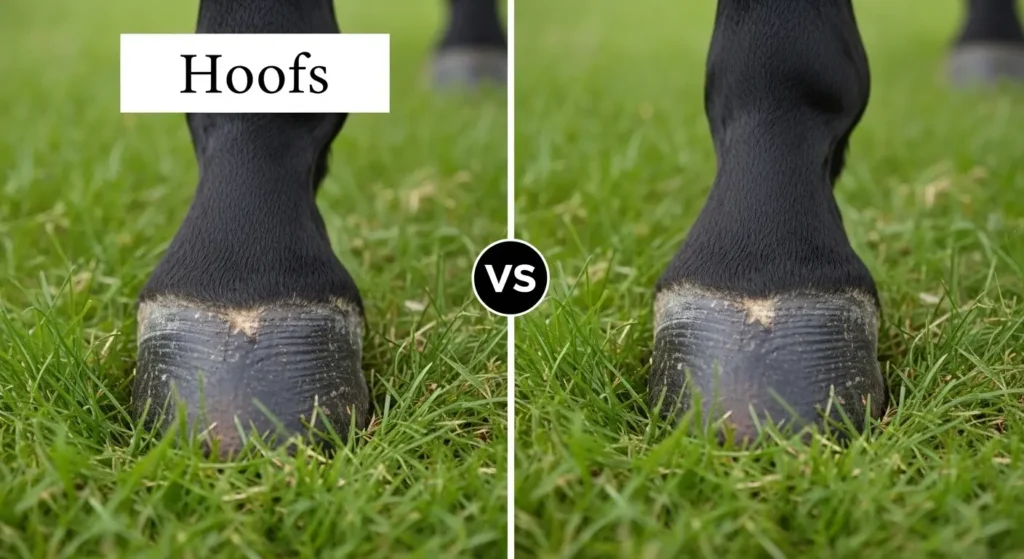
Many English learners and even native speakers get confused between “hoofs” and “hooves.” Both words look similar, and both come from the same idea the hard feet of animals like horses, goats, and deer. But only one form is widely accepted in modern English. This small spelling difference often creates doubt in writing, school work, blogging, and even professional communication.
People search this keyword because they want to know which spelling is correct, and whether both are acceptable in British and American English. Some also see both versions in old books, subtitles, or online posts, which adds more confusion.
This article clears that confusion in a very simple way. You will learn the correct modern usage, the history behind both forms, and when each spelling is used. We will also compare British and American English rules, show real examples, and explain common mistakes.
By the end, you will clearly understand whether to use “hoofs” or “hooves” in your writing with confidence and accuracy in any situation.
Hoofs or Hooves – Quick Answer
The correct modern plural form of “hoof” is hooves.
- Hooves → Standard and most widely accepted form
- Hoofs → Older or less common variant, rarely used today
Examples:
- The horse lifted its hooves from the muddy ground.
- Some old texts mention animal hoofs, but this is outdated.
👉 In modern English, “hooves” is preferred in almost all cases.
Hispanic or Latino: Meaning, Origin, Usage, and Key Differences?
The Origin of Hoofs or Hooves
The word “hoof” comes from Old English “hōf,” meaning the foot of a hoofed animal. Over time, English developed irregular plural forms.
In older English usage, both “hoofs” and “hooves” appeared. This happened because English often changes “f” to “v” in plural words, like:
- leaf → leaves
- wolf → wolves
- life → lives
So “hoof” naturally followed the same pattern, becoming “hooves.” The form “hoofs” stayed as a simplified version but slowly became less common.
Today, “hooves” is considered the standard modern plural in most dictionaries and style guides.
Salvadoran or Salvadorian: Which Spelling Is Correct ?
British English vs American English Spelling
Interestingly, this is not a strong UK vs US difference. Both British and American English prefer “hooves.”
However:
- British English: hooves (standard)
- American English: hooves (standard)
- Hoofs: rare in both, mostly historical or informal use
Comparison Table
| Singular | Old Plural | Modern Plural | Usage Today |
| hoof | hoofs | hooves | Standard |
| hoof | hooves | hooves | Standard |
Which Spelling Should You Use?
Your choice depends on your audience, but the rule is simple:
- Academic writing: Use hooves
- Blogs & SEO content: Use hooves
- Professional writing: Use hooves
- Old literature or quotes: You may see hoofs
👉 In almost all modern cases, “hooves” is the correct and safe choice worldwide.
Common Mistakes with Hoofs or Hooves
Here are frequent errors people make:
❌ Using “hoofs” in formal writing
✔ Correct: hooves
❌ Thinking both forms are equally modern
✔ Only “hooves” is standard today
❌ Mixing spelling in the same document
✔ Always stay consistent: hooves
Hoofs or Hooves in Everyday Examples
Emails:
- The vet checked the horse’s hooves for injury.
News:
- The animal escaped, leaving deep prints from its hooves in the soil.
Social Media:
- Look at those strong horse hooves running on the field!
Formal Writing:
- The structure of the horse’s hooves helps it move efficiently on hard ground.
Hoofs or Hooves – Google Trends & Usage Data
Search behavior shows that:
- “hooves” is the dominant spelling globally
- “hoofs” appears mainly in older content or low-traffic searches
- Interest is higher in education, animal care, and writing correction topics
In modern digital content, “hooves” is used almost exclusively in publishing, SEO articles, and academic sources.
FAQ – Hoofs or Hooves
1. Which is correct: hoofs or hooves?
“Hooves” is the correct modern plural form.
2. Is “hoofs” wrong?
Not exactly wrong, but it is outdated and rarely used today.
3. Why do some people still write “hoofs”?
Because older English texts used it, and some informal writing still keeps it.
4. Is “hooves” used in both UK and US English?
Yes, both British and American English prefer “hooves.”
5. Can I use “hoofs” in academic writing?
No, always use “hooves” in academic or professional contexts.
6. What animals have hooves?
Horses, goats, deer, cows, and similar animals.
7. What is the singular form?
The singular form is “hoof.”
Conclusion
The confusion between “hoofs” and “hooves” is common, but the answer is simple. In modern English, “hooves” is the correct and standard plural form of “hoof.” The spelling “hoofs” appears in older texts and is now considered outdated in most writing contexts.
Both British and American English agree on using “hooves,” making it a safe choice for students, writers, bloggers, and professionals worldwide. If you want clear, correct, and natural English, always choose “hooves” in your sentences.
Understanding this small spelling rule improves your writing accuracy and helps you avoid common grammar mistakes. Whether you are writing an essay, blog, or email, using the correct form shows clarity and confidence in English communication.

I am James Wilson, an author at GrammarTribe.com, specializing in English grammar and clear communication.
I create expert, reliable content to help learners write with confidence and accuracy.