Have you ever typed “emaculate” and wondered if it was correct? Many people search for “emaculate or immaculate” because the two words sound almost the same when spoken. This often leads to spelling mistakes in emails, essays, social media posts, and even professional writing.
English spelling can be tricky. Sometimes a small missing letter changes a word completely. In this case, “emaculate” is actually a misspelling, while “immaculate” is the correct word used in English dictionaries.
People usually search for this keyword when they want to confirm the correct spelling or learn how to use the word properly. They may also want to know whether the spelling changes in British English or American English.
This guide clears the confusion. You will learn the correct spelling, the origin of the word, common mistakes, and how to use it in real-life writing. By the end, you will know exactly when and how to use immaculate with confidence.
Emaculate or Immaculate – Quick Answer
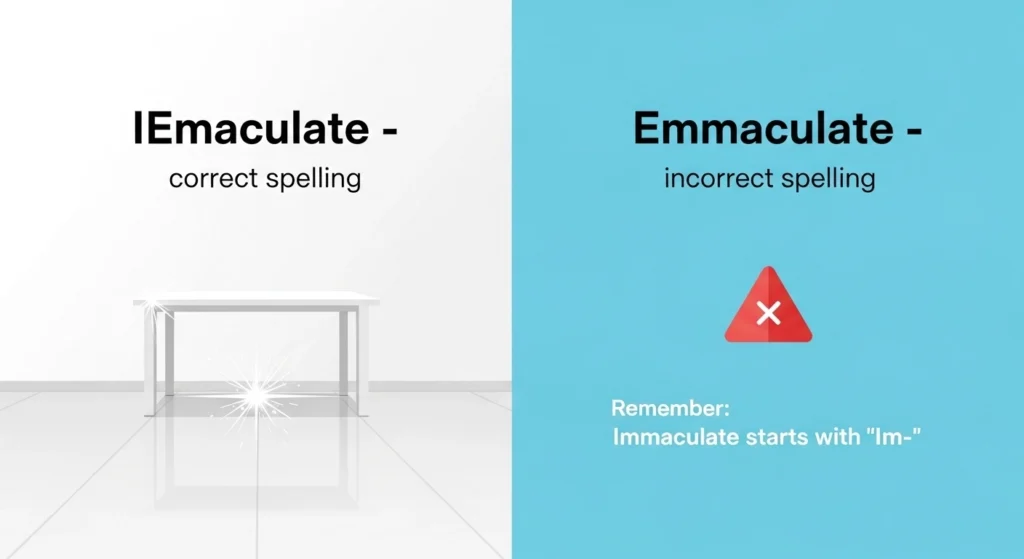
The correct spelling is immaculate.
Emaculate is a common misspelling and is not recognized as a standard English word.
Immaculate means:
- perfectly clean
- flawless
- without mistakes
Examples
- Her house was immaculate before the guests arrived.
- The athlete gave an immaculate performance.
- His white shirt looked immaculate.
Quick rule:
If you mean perfect or spotless, the correct spelling is immaculate.
The Origin of Emaculate or Immaculate
The word immaculate comes from the Latin word “immaculatus.”
Meaning in Latin:
- im = not
- macula = stain or spot
So the word literally means “without a stain.”
It entered the English language in the 14th century. At first, it was used mainly in religious contexts, especially in the phrase “Immaculate Conception.” Over time, its meaning expanded to describe anything perfectly clean or flawless.
Why “Emaculate” Appears
The spelling emaculate happens because of pronunciation confusion. When people say immaculate, the first syllable can sound like “em.” As a result, some writers spell it the way they hear it.
However, dictionaries only recognize immaculate.
British English vs American English Spelling
Many English words change spelling between British and American English. Examples include:
| American English | British English |
| color | colour |
| center | centre |
| organize | organise |
However, immaculate does NOT change spelling in British or American English.
Both use the same form.
Comparison Table
| Word | American English | British English | Correct? |
| emaculate | ❌ Incorrect | ❌ Incorrect | No |
| immaculate | ✅ Correct | ✅ Correct | Yes |
So regardless of where you live, immaculate is always the correct spelling.
Which Spelling Should You Use?
The answer is simple: always use “immaculate.”
For U.S. audiences
Use immaculate. It is the only correct spelling in American English.
For UK or Commonwealth audiences
Use immaculate as well. British English uses the same spelling.
For global writing
If you write blogs, emails, or articles for international readers, immaculate is still the correct choice.
There is no situation where “emaculate” should be used.
Common Mistakes with Emaculate or Immaculate
Many people make spelling mistakes with this word. Here are the most common ones.
| Incorrect Spelling | Correct Spelling |
| emaculate | immaculate |
| imaculate | immaculate |
| immaclate | immaculate |
| immaculite | immaculate |
Example Corrections
❌ Her room was emaculate.
✅ Her room was immaculate.
❌ He keeps his car imaculate.
✅ He keeps his car immaculate.
Tip: Remember the word has two “m” letters.
Emaculate or Immaculate in Everyday Examples
Here are examples showing how the word is used in real life.
In Emails
“The office looked immaculate before the client meeting.”
In News Writing
“The museum keeps its historic halls immaculate.”
On Social Media
“Just cleaned my room. It finally looks immaculate!”
In Formal Writing
“The hotel staff maintained immaculate standards of cleanliness.”
The word is commonly used to describe:
- clean spaces
- perfect performances
- flawless appearance
Emaculate or Immaculate – Google Trends & Usage Data
Search data shows that “immaculate” is the dominant spelling worldwide.
However, many users still search for “emaculate” because of spelling confusion.
Popular regions searching this keyword
- United States
- United Kingdom
- India
- Pakistan
- Canada
In most cases, people search the incorrect spelling when:
- learning English
- checking grammar
- writing academic papers
Search engines usually redirect results to immaculate, confirming it as the correct form.
Keyword Comparison Table
| Variation | Meaning | Correct Usage |
| emaculate | misspelling | ❌ No |
| immaculate | perfectly clean or flawless | ✅ Yes |
FAQs
1. Is emaculate a real word?
No. Emaculate is a misspelling. The correct word is immaculate.
2. What does immaculate mean?
It means perfectly clean, flawless, or without mistakes.
3. Is immaculate spelled differently in British English?
No. Both British and American English use the same spelling.
4. Why do people write emaculate?
Because of pronunciation. When spoken quickly, immaculate may sound like emaculate.
5. How do you remember the correct spelling?
Remember that immaculate has two “m” letters.
6. Can immaculate describe people?
Yes. It can describe appearance, behavior, or performance.
Example:
“She gave an immaculate presentation.”
7. Is immaculate a formal word?
It can be used in both formal and casual writing.
Conclusion
The confusion between emaculate or immaculate comes from pronunciation and typing mistakes. While the two words may sound similar, only immaculate is correct in English.
The word comes from Latin and originally meant “without a stain.” Today it describes anything perfectly clean, flawless, or well-maintained. Importantly, the spelling does not change between British English and American English, making it simple for writers around the world.
If you ever see the spelling emaculate, remember that it is simply an error. Dictionaries, grammar guides, and professional writing standards all confirm that immaculate is the correct form.
Using the correct spelling improves clarity and credibility in your writing. Whether you are sending emails, writing articles, or posting online, choosing immaculate ensures your message looks polished and professional.
So the next time you wonder about emaculate or immaculate, the answer is clear: always use immaculate.

Hi, I’m Henry William, the author of GrammarTribe.com. I’m passionate about the English language and have dedicated my career to helping people master grammar, spelling, and effective writing. Over the years, I’ve guided learners, writers, and professionals in understanding common mistakes, tricky rules, and nuances of English grammar in a simple and easy-to-follow way.
Through GrammarTribe.com, I aim to make grammar approachable and enjoyable for everyone. My work focuses on providing clear explanations, practical tips, and examples that readers can apply in everyday writing, whether it’s emails, essays, social media, or professional documents. I believe that strong grammar skills empower people to communicate confidently and professionally.
When I’m not writing or researching grammar, I enjoy reading, exploring language trends, and creating educational content that simplifies complex concepts. I’m committed to helping my audience write better, understand English deeply, and avoid common pitfalls, all while making learning grammar a fun and rewarding journey.