Do you often wonder whether the flakes on your scalp are dandruff or lice? Many people confuse these two common hair issues because both involve the scalp and can cause itching.
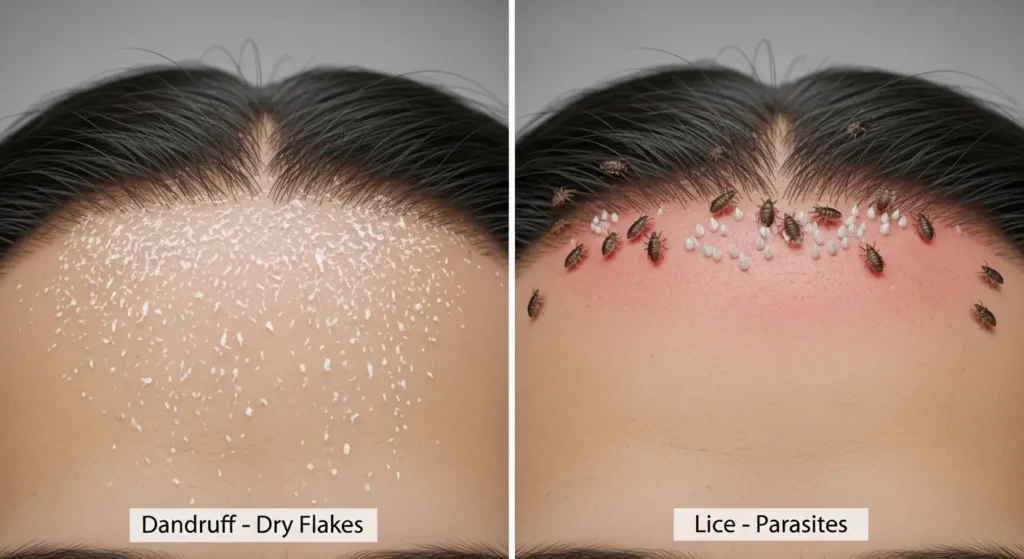
Understanding the difference is important for proper treatment and prevention. Dandruff is usually a harmless condition caused by dry skin or a yeast infection on the scalp, while lice are tiny parasites that live on hair and feed on blood.
People search for “dandruff or lice” to identify their condition, choose the right remedies, and avoid embarrassment. This article clears up the confusion and guides you on proper usage, spelling, and understanding. By the end, you’ll know the difference, how to describe it correctly, and how to communicate it clearly in writing.
Dandruff or Lice – Quick Answer
Dandruff: White or yellow flakes on the scalp. Itchy but not contagious.
Lice: Small insects that attach to hair. Very itchy and contagious.
Example:
- Dandruff: “My scalp is itchy, and I see white flakes on my shoulders.”
- Lice: “My child has lice after school; we need a lice comb and treatment.”
The Origin of Dandruff or Lice
- Dandruff comes from Middle English dandre, meaning flakes of skin.
- Lice comes from Old English lūs, referring to the parasitic insect.
Both terms are centuries old and have maintained their basic meaning, but modern confusion arises because both conditions involve scalp irritation.
British English vs American English Spelling
The spelling for “dandruff” and “lice” is the same in both British and American English, but the context or associated terms can differ slightly.
| Term | British English | American English | Notes |
| Dandruff | dandruff | dandruff | Same spelling; common term globally |
| Lice | lice | lice | Same spelling; plural used even for a single infestation |
| Head lice treatment | head-lice treatment | head lice treatment | Hyphenation differs slightly |
| Anti-dandruff shampoo | anti-dandruff shampoo | anti-dandruff shampoo | Identical |
Which Spelling Should You Use?
Since dandruff and lice are spelled the same in the US and UK, there’s no risk of incorrect spelling. Focus instead on clarity:
- US audience: “head lice treatment” and “anti-dandruff shampoo” are commonly searched.
- UK/Commonwealth: “head-lice treatment” and “anti-dandruff shampoo” are widely understood.
- Global: Use clear phrases like “dandruff flakes” or “lice infestation” to avoid confusion.
Common Mistakes with Dandruff or Lice
- Confusing lice with dandruff – they look similar but are different.
- Using “louse” for more than one insect – correct plural is lice.
- Misspelling dandruff as “dandruf” or “dandruf.”
- Mislabeling a shampoo as “lice shampoo” when it’s anti-dandruff.
- Overusing informal phrases like “hair bugs” instead of lice.
Dandruff or Lice in Everyday Examples
Emails:
- “I think my child has lice; please check before school tomorrow.”
News:
- “Local schools report a rise in head lice cases among students.”
Social Media:
- “Tips to get rid of dandruff naturally in winter.”
Formal Writing:
- “Patients with scalp psoriasis may experience dandruff-like symptoms, distinct from lice infestations.”
Dandruff or Lice – Google Trends & Usage Data
- Searches for dandruff peak in winter months due to dry skin.
- Searches for lice spike during school terms when children interact closely.
- Countries with higher internet awareness of health terms (US, UK, Canada, Australia) show consistent interest in both terms.
Comparison Table (Keyword Variations):
| Variation | Usage Example | Audience |
| Dandruff | Anti-dandruff shampoo | Adults, general |
| Lice | Head lice treatment | Parents, schools |
| Head lice | Comb for head lice | Parents, healthcare |
| Dandruff flakes | Visible flakes on shoulders | Adults, teens |
| Louse | Rare, singular | Formal/medical writing |
FAQs
1. Can dandruff turn into lice?
No, dandruff is skin flakes, while lice are insects. One does not cause the other.
2. How can I tell if it’s dandruff or lice?
Dandruff flakes easily and are white/yellow. Lice are tiny moving insects, often attached to hair.
3. Are lice contagious?
Yes, lice spread through close contact or sharing combs, hats, or pillows.
4. Can dandruff be treated at home?
Yes, anti-dandruff shampoos and moisturizing the scalp help control flakes.
5. Is “lice” singular or plural?
“Lice” is plural. The singular form is “louse.”
6. Can adults get lice?
Yes, anyone with hair can get lice, though it’s more common in children.
7. Is dandruff harmful?
Dandruff is not harmful but can cause itching and embarrassment if severe.
Conclusion
Understanding the difference between dandruff or lice is essential for proper care, communication, and treatment. Dandruff is a harmless scalp condition, while lice are parasitic insects requiring careful removal. The spelling is consistent across British and American English, but clarity in context matters.
Use descriptive terms like “head lice” or “anti-dandruff shampoo” to avoid confusion. Regular scalp care, awareness of symptoms, and timely treatment can prevent misdiagnosis. Whether writing for emails, news, or social media, using the correct term ensures professionalism and understanding. By knowing these differences and common mistakes, you can confidently identify and discuss scalp issues without worry.

Hi, I’m Henry William, the author of GrammarTribe.com. I’m passionate about the English language and have dedicated my career to helping people master grammar, spelling, and effective writing. Over the years, I’ve guided learners, writers, and professionals in understanding common mistakes, tricky rules, and nuances of English grammar in a simple and easy-to-follow way.
Through GrammarTribe.com, I aim to make grammar approachable and enjoyable for everyone. My work focuses on providing clear explanations, practical tips, and examples that readers can apply in everyday writing, whether it’s emails, essays, social media, or professional documents. I believe that strong grammar skills empower people to communicate confidently and professionally.
When I’m not writing or researching grammar, I enjoy reading, exploring language trends, and creating educational content that simplifies complex concepts. I’m committed to helping my audience write better, understand English deeply, and avoid common pitfalls, all while making learning grammar a fun and rewarding journey.