People often get confused when they type or hear the expression “dammit” or “damnit” in frustration. Both versions appear in social media posts, movie subtitles, memes, and casual writing, which makes it hard to know which one is actually correct. This confusion is especially common among English learners and even native speakers who want to sound natural but avoid spelling mistakes.
The phrase is used to express anger, frustration, or surprise, and it comes up frequently in informal writing. However, when people search “dammit or damnit,” they are usually trying to find the correct spelling, understand if both are acceptable, and learn when each version should be used.
In reality, both forms exist, but one is more widely accepted in modern English. The difference is not about grammar rules but about usage, style, and historical variation. This article will clearly explain the correct spelling, origin, regional differences, and real-life usage so you never feel confused again when writing or speaking this common expression.
Dammit or Damnit – Quick Answer
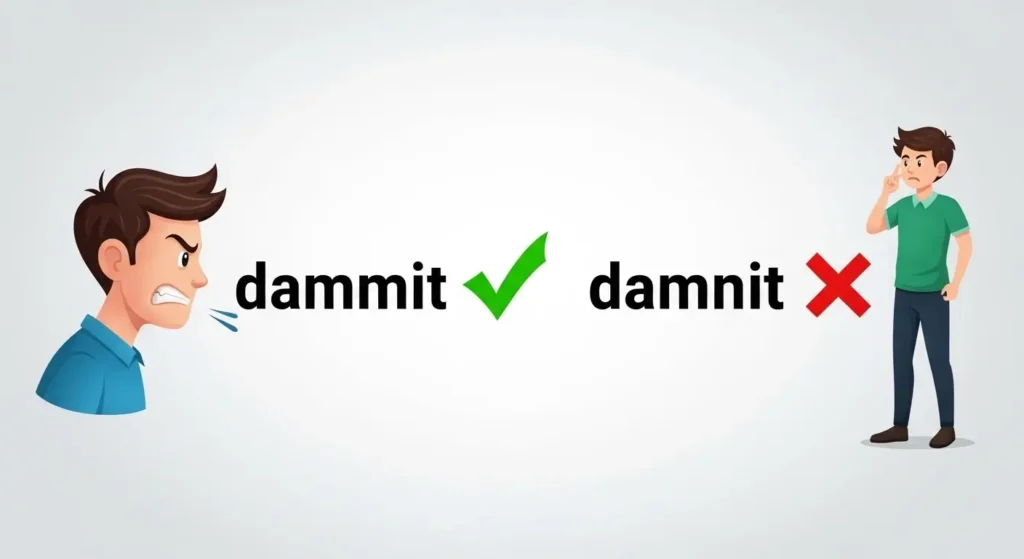
“Dammit” is the standard and most widely accepted spelling. “Damnit” is a less common informal variant.
Both are used to express frustration or anger, but “dammit” appears more often in dictionaries, subtitles, and formalized informal writing.
Examples:
- Dammit, I missed the bus again!
- Dammit, this file won’t open.
- I typed it too fast, damnit, and made a mistake. (less standard)
👉 Key point: If you are unsure, always choose “dammit.”
Separate or Seperate: Which Spelling Is Correct ?
The Origin of Dammit or Damnit
The word comes from the phrase “damn it,” which dates back to English religious and emotional expressions in the 17th–18th centuries. Over time, spoken English compressed the phrase into a single word for quick emotional expression.
- “Damn it” → original phrase
- “Dammit” → phonetic contraction (most accepted form)
- “Damnit” → spelling influenced by pronunciation and typing habits
The variation “damnit” likely appeared because people write it the way it sounds quickly in speech. However, linguistically, “dammit” better reflects how the phrase naturally contracts in American and British English usage.
Salvadoran or Salvadorian: Which Spelling Is Correct ?
British English vs American English Spelling
Interestingly, this word is not a strong UK vs US spelling difference. Both regions mostly use “dammit.” However, informal internet writing has increased the use of “damnit” globally.
Comparison Table
| Form | Usage Level | Region Preference | Formal Acceptability |
| dammit | Standard | US/UK/global | High (informal) |
| damnit | Non-standard | Internet slang | Low |
| damn it | Original phrase | All regions | High (formal-safe) |
👉 Note: “damn it” is the only fully formal version.
Which Spelling Should You Use?
Your choice depends on context:
- US English: Use dammit
- UK/Commonwealth English: Use dammit or avoid both in formal writing
- Global informal writing (social media, chats): Either is seen, but dammit looks more correct
- Formal writing (essays, emails, news): Avoid both; use “damn it”
👉 Simple rule:
- Casual = dammit
- Formal = damn it
Common Mistakes with Dammit or Damnit
Here are frequent errors people make:
❌ Using “damnit” in formal writing
✔ Use “dammit” or “damn it” instead
❌ Mixing spellings in the same text
✔ Stay consistent
❌ Thinking “damnit” is the official dictionary form
✔ It is not the standard form
❌ Using it in professional emails
✔ Avoid entirely in professional communication
Dammit or Damnit in Everyday Examples
Emails (informal):
- “Dammit, I forgot to attach the file.” (not recommended for work emails)
Social Media:
- “Dammit, this game update is too big!”
News Headlines (rare, informal quotes only):
- “Actor says, ‘Dammit, I missed my cue!’”
Text Messages:
- “Dammit, I’m running late.”
👉 Most natural use is in casual speech, texting, and entertainment contexts.
Dammit or Damnit – Google Trends & Usage Data
Search trends show that:
- “dammit” is significantly more popular globally
- “damnit” spikes mainly in meme culture and informal typing
- “damn it” remains dominant in formal dictionaries and writing guides
Usage Insight:
- Social media: dammit dominates
- Academic writing: damn it only
- Entertainment subtitles: dammit commonly used
👉 Overall, “dammit” is the most recognized modern spelling worldwide.
Comparison Table: Dammit vs Damnit vs Damn it
| Version | Type | Correctness | Usage Context | Formal Use |
| dammit | contraction | Standard | Casual/informal | No |
| damnit | slang | Non-standard | Internet/chat only | No |
| damn it | phrase | Correct | Formal + informal | Yes |
FAQs
1. Is “dammit” a real word?
Yes, it is a recognized informal contraction of “damn it.”
2. Is “damnit” grammatically correct?
No, it is considered a misspelling or slang variation.
3. What is the correct spelling in English?
“Dammit” is the most accepted informal spelling; “damn it” is the formal phrase.
4. Can I use “dammit” in writing?
Yes, but only in informal writing like stories, dialogue, or social media.
5. Why do people write “damnit”?
Because it matches the fast pronunciation in speech.
6. Is “dammit” offensive?
It is mild profanity and generally considered informal, not highly offensive.
7. Which one should I use in exams or formal essays?
Avoid both; use “damn it” only if necessary.
Conclusion
The confusion between “dammit” and “damnit” is common, but the answer is simple. “Dammit” is the widely accepted informal spelling used in modern English, while “damnit” is mostly an internet-based variant that is not considered standard. The original phrase “damn it” remains the only fully correct form for formal writing.
When choosing which to use, context matters more than strict grammar rules. In casual speech, texting, and storytelling, “dammit” fits naturally and is widely understood. However, in professional, academic, or formal communication, it is better to avoid both contractions and stick with “damn it.”
Understanding these differences helps you write more clearly and confidently. It also prevents small spelling mistakes that can affect tone and readability. Whether you are writing dialogue, chatting online, or learning English, knowing when to use each form ensures your expression sounds natural and correct in every situation.

Hi, I’m Henry James, the author behind GrammarTribe.com. I’m passionate about the English language and specialize in grammar, helping readers understand complex rules in a simple, clear way. Over the years, I’ve dedicated myself to creating content that makes learning grammar practical, fun, and accessible for everyone. If you’re a student, professional, or language enthusiast.
Through GrammarTribe.com, I share tips, guides, and examples to help people write confidently and correctly. My goal is to make grammar less intimidating and more useful in everyday writing, emails, social media, and professional communication. Writing and teaching grammar isn’t just my profession — it’s my passion.
When I’m not writing, I enjoy reading, exploring language trends, and discovering new ways to make English learning engaging and easy. My mission is to empower readers to communicate clearly and confidently, one grammar tip at a time.