Have you ever stopped while writing and wondered: is it “color” or “colour”? You’re not alone. This is one of the most searched spelling questions in English. Students, writers, bloggers, and even professionals often pause at this word because both spellings are correct, yet used differently.
The confusion happens because English has more than one standard form. American English prefers simpler spellings, while British English keeps older, traditional forms. As English spread around the world, these differences stayed. That’s why you’ll see color on US websites and colour on UK, Canadian, and Australian pages.
People search for “color or colour” to avoid mistakes in exams, SEO content, emails, branding, and formal writing. Using the wrong spelling can make content look inconsistent or unprofessional for the wrong audience.
This guide solves that confusion clearly. You’ll get a quick answer, real examples, history, comparison tables, common mistakes, and expert advice on which spelling you should use—so you never hesitate again.
Color or Colour – Quick Answer
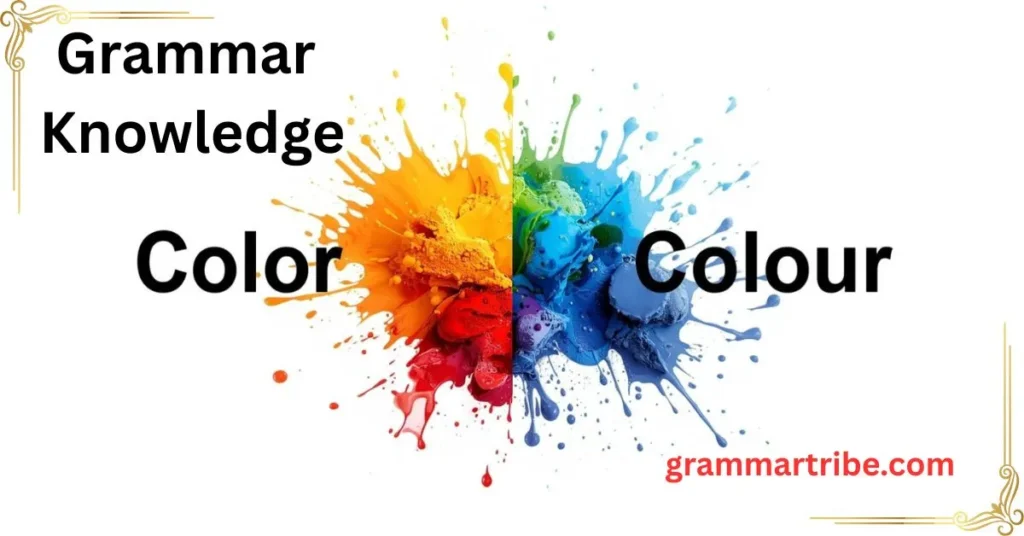
Both “color” and “colour” are correct.
The difference depends on where your audience is from.
- Color → American English (USA)
Example: The wall color looks bright. - Colour → British English (UK, Canada, Australia)
Example: The wall colour looks bright.
Same meaning. Same pronunciation. Different spelling only.
The Origin of Color or Colour
The word comes from the Latin word color, meaning appearance or hue.
It entered English through Old French (colour) after the Norman Conquest.
In the 1800s, American lexicographer Noah Webster simplified many spellings to make English easier. He removed the extra “u” from words like:
- colour → color
- favour → favor
- honour → honor
Britain kept the original spellings, while the US adopted the shorter forms. That’s why both versions exist today.
British English vs American English Spelling
Key Differences
| Aspect | American English | British English |
| Spelling | color | colour |
| Extra “u” | ❌ No | ✅ Yes |
| Usage | USA-based content | UK & Commonwealth |
| Meaning | Same | Same |
Both spellings are correct—only the region changes.
Which Spelling Should You Use?
Choose based on your audience:
- Use “color” if your audience is:
- United States
- American companies
- US-based SEO websites
- Use “colour” if your audience is:
- United Kingdom
- Canada
- Australia
- New Zealand
- For global audiences:
- Pick one spelling
- Stay consistent across the content
Tip: Check the language setting (US or UK English) in your editor.
Common Mistakes with Color or Colour
❌ Mixing spellings in one document
✔️ Choose one and stick to it
❌ Thinking one spelling is wrong
✔️ Both are correct
❌ Changing spelling without changing audience
✔️ Match spelling to reader location
❌ Using spell-check blindly
✔️ Set correct language (US or UK)
Color or Colour in Everyday Examples
- Email (US):
Please update the brand color. - Email (UK):
Please update the brand colour. - News:
The city changed the color/colour of street signs. - Social Media:
Love this color palette!
Love this colour palette! - Formal Writing:
The color/colour scheme affects the user mood.
Color or Colour – Google Trends & Usage Data
- “Color” is most popular in:
- United States
- Philippines
- Parts of Latin America (US English users)
- “Colour” dominates in:
- United Kingdom
- Canada
- Australia
- South Asia (UK English influence)
Search engines do not penalize either spelling. They understand both forms and often show the same results.
Color vs Colour – Comparison Table
| Feature | Color | Colour |
| Correct spelling | ✅ Yes | ✅ Yes |
| American English | ✅ | ❌ |
| British English | ❌ | ✅ |
| Meaning | Hue, shade | Hue, shade |
| Pronunciation | Same | Same |
FAQs about Color or Colour
1. Is color or colour correct?
Both are correct. It depends on the region.
2. Which spelling is used in the USA?
Color.
3. Which spelling is used in the UK?
Colour.
4. Is colour wrong in American English?
Not wrong, but uncommon.
5. Can I use both in one article?
No. Use one spelling consistently.
6. Which is better for SEO?
Use the spelling your audience searches for.
7. Do exams accept both spellings?
Usually yes, if used consistently.
Conclusion
The debate between color or colour is not about right or wrong—it’s about audience and consistency. Both spellings have the same meaning, pronunciation, and usage. The difference comes from history, not grammar rules.
If you’re writing for an American audience, use color. If your readers are in the UK, Canada, or Australia, use colour. For global content, pick one style and apply it everywhere to keep your writing professional and clear.
Understanding this difference helps in exams, content writing, branding, SEO, and daily communication. Once you know who you’re writing for, the choice becomes simple.
So next time you pause at this word, remember:
Same word. Same meaning. Different regions.

I am James Wilson, an author at GrammarTribe.com, specializing in English grammar and clear communication.
I create expert, reliable content to help learners write with confidence and accuracy.