
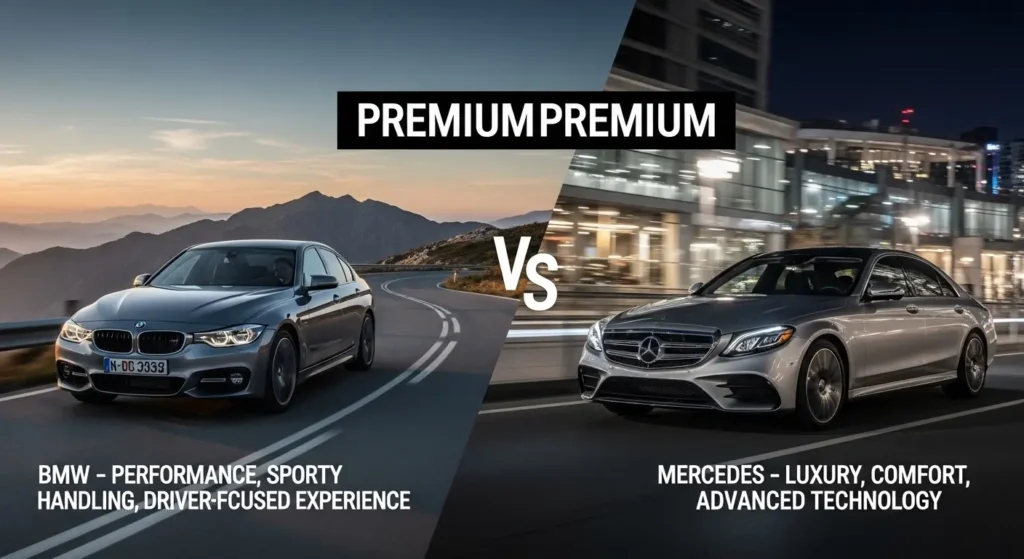
When shopping for a luxury car, many buyers pause at one big question: BMW or Mercedes? Both brands represent prestige, performance, and advanced engineering. Yet they feel very different once you sit behind the wheel. This is why people search for this keyword BMW or Mercedes before making a costly, long-term decision.
The confusion usually comes from overlapping features. Both brands offer sleek sedans, powerful SUVs, electric models, and cutting-edge technology. On paper, they look similar. In real life, they serve slightly different driving personalities and lifestyles. Some drivers want sporty handling and sharp steering. Others want comfort, elegance, and a smooth ride.
This article solves that confusion clearly and simply. You’ll get a quick answer, real-world examples, brand history, regional usage differences, common mistakes, and trend insights. By the end, you’ll know which brand fits your needs, your location, and your driving style without marketing hype or technical overload.
BMW or Mercedes – Quick Answer
BMW is best for drivers who enjoy sporty handling and performance.
Mercedes is better for those who value comfort, luxury, and smooth rides.
Examples:
- Love fast cornering and driver control? → BMW
- Prefer quiet cabins and premium comfort? → Mercedes
The Origin of BMW or Mercedes
The phrase “BMW or Mercedes” comes from decades of rivalry between two German luxury giants.
- BMW stands for Bayerische Motoren Werke (founded in 1916).
- Mercedes-Benz traces back to Karl Benz’s first automobile in 1886.
There are no spelling differences here. The “or” reflects a choice, not grammar confusion. Over time, the phrase became popular in car reviews, forums, and buyer guides worldwide.
British English vs American English Usage
While spelling stays the same, terms and preferences differ.
| Aspect | British English | American English |
| Car type | Saloon | Sedan |
| Popular brand | Mercedes | BMW |
| Focus | Comfort | Performance |
| Review style | Luxury-driven | Speed-driven |
Which One Should You Choose?
Your choice depends on audience and location:
- USA → BMW is often preferred for sporty driving.
- UK & Europe → Mercedes is common for executive comfort.
- Global buyers → Choose based on lifestyle, not trends.
Common Mistakes with BMW or Mercedes
- Thinking they are the same → They are not.
- Choosing brand over driving needs → Test drive first.
- Ignoring maintenance costs → Mercedes repairs often cost more.
- Assuming newer means better → Older models still compete well.
BMW or Mercedes in Everyday Examples
- Email: “Should we lease a BMW or Mercedes for executives?”
- News: “BMW or Mercedes dominates the luxury EV market.”
- Social Media: “BMW or Mercedes? I chose comfort over speed.”
- Formal Writing: “The BMW or Mercedes debate reflects consumer priorities.”
BMW or Mercedes – Google Trends & Usage Data
Globally, searches for BMW or Mercedes spike during:
- New model launches
- Auto shows
- Economic recovery periods
BMW trends higher in the US and Asia, while Mercedes leads in Europe and the Middle East. The keyword is often used in comparison and buying intent searches.
BMW vs Mercedes Comparison Table
| Feature | BMW | Mercedes |
| Driving feel | Sporty | Smooth |
| Interior style | Modern | Elegant |
| Brand image | Performance | Luxury |
| Best for | Drivers | Passengers |
FAQs: BMW or Mercedes
1. Is BMW more reliable than Mercedes?
BMW often scores slightly higher in reliability surveys.
2. Which brand is more expensive to maintain?
Mercedes usually costs more long-term.
3. Is BMW sportier than Mercedes?
Yes, BMW focuses more on performance.
4. Is Mercedes more luxurious?
Yes, Mercedes emphasizes comfort and refinement.
5. Which is better for families?
Mercedes SUVs are often more family-friendly.
6. Which brand has better resale value?
BMW often holds value better in the US.
7. Are electric models equal?
Both are competitive, with Mercedes leaning premium.
Conclusion
Choosing BMW or Mercedes is not about which brand is better it’s about which brand is better for you. BMW appeals to drivers who enjoy control, speed, and a connected driving feel. Mercedes attracts those who want elegance, quiet rides, and top-tier comfort.
If you drive daily and enjoy the road, BMW may suit you more. If you value relaxation, status, and smooth travel, Mercedes could be the smarter choice. Location also matters. American buyers often lean toward BMW, while European and UK drivers prefer Mercedes for executive use.
The smartest move is simple: test drive both, compare ownership costs, and think about how you actually drive. When you align your needs with the brand’s strengths, the BMW or Mercedes decision becomes clear.

Hi, I’m Henry James, the author behind GrammarTribe.com. I’m passionate about the English language and specialize in grammar, helping readers understand complex rules in a simple, clear way. Over the years, I’ve dedicated myself to creating content that makes learning grammar practical, fun, and accessible for everyone. If you’re a student, professional, or language enthusiast.
Through GrammarTribe.com, I share tips, guides, and examples to help people write confidently and correctly. My goal is to make grammar less intimidating and more useful in everyday writing, emails, social media, and professional communication. Writing and teaching grammar isn’t just my profession — it’s my passion.
When I’m not writing, I enjoy reading, exploring language trends, and discovering new ways to make English learning engaging and easy. My mission is to empower readers to communicate clearly and confidently, one grammar tip at a time.