
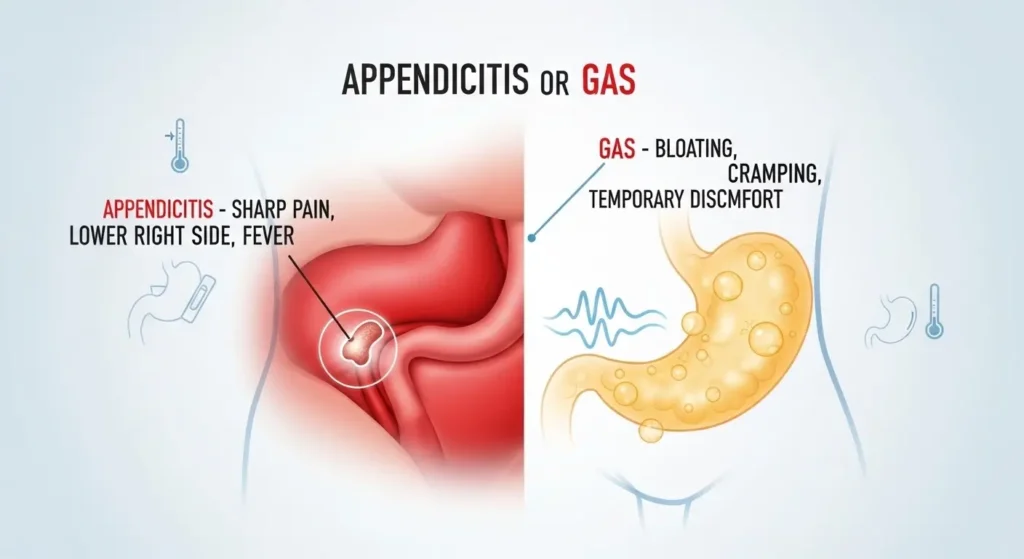
When you experience sudden stomach pain, the first question that comes to mind is: “Is it appendicitis or gas?” Both can cause abdominal discomfort, bloating, and cramps, but one requires urgent medical attention while the other is usually harmless.
Many people search for this keyword because they want to understand the difference between a dangerous condition and something temporary, avoiding unnecessary panic or delays in treatment.
This article will help you identify the key symptoms, understand common mistakes, and learn when to see a doctor. We’ll also compare how the terms are used in everyday language and show trends in Google searches. Whether you’re writing about it, reading health blogs, or just curious, this guide clears up the confusion and gives clear advice.
Appendicitis or Gas – Quick Answer
Quick Answer:
- Appendicitis: Sharp pain, usually starting near the navel and moving to the lower right abdomen. Often accompanied by fever, nausea, or vomiting. Requires immediate medical care.
- Gas: Bloated, crampy pain that comes and goes. Usually relieved by passing gas or a bowel movement. No fever or severe nausea.
Example:
Jane felt sudden lower right abdominal pain. Her doctor confirmed it was appendicitis, not just gas.
The Origin of Appendicitis and Gas
- Appendicitis comes from the word appendix, a small organ attached to the large intestine. The suffix -itis means inflammation. First described medically in the late 19th century.
- Gas comes from the Greek word khaos meaning “empty space” and was historically used to describe stomach bloating or air in the intestines.
Understanding the origins helps remember that appendicitis is a medical condition, while gas is a common digestive issue.
British English vs American English Spelling
Both appendicitis and gas are spelled the same in British and American English. However, note that medical documents may sometimes use abbreviations or local terms.
| Term | US English | UK English | Notes |
| Appendicitis | Appendicitis | Appendicitis | Same spelling, universal |
| Gas (stomach) | Gas | Wind | UK often uses “wind” for gas |
Which Term Should You Use?
- US Audience: Use appendicitis and gas.
- UK/Commonwealth Audience: Appendicitis stays the same, but for gas, consider using wind in casual writing.
- Global: Appendicitis is universal; “gas” is widely understood but may need clarification in formal health contexts.
Common Mistakes with Appendicitis or Gas
- Confusing mild cramps with appendicitis → Always check location and severity.
- Ignoring fever or vomiting → These often indicate appendicitis.
- Self-medicating with gas remedies → Can delay proper diagnosis.
- Using slang in formal writing → Avoid “tummy ache” in medical blogs.
Appendicitis or Gas in Everyday Examples
- Email: “I had to leave work early because of severe abdominal pain, possibly appendicitis.”
- News: “Local hospital treated 20 cases of suspected appendicitis last week.”
- Social Media: “Ugh, too much beans last night—so much gas this morning!”
- Formal Writing: “Differentiating appendicitis from gas is crucial in emergency medicine.”
Appendicitis or Gas – Google Trends & Usage Data
- US searches peak during summer months and holiday seasons, likely due to diet changes.
- UK searches often use “wind pain” instead of “gas pain.”
- Global searches show high interest in quick symptom guides.
Comparison Table – Variations Side by Side
| Symptom | Appendicitis | Gas / Wind |
| Pain Location | Lower right abdomen | Upper or lower abdomen, generalized |
| Onset | Sudden | Gradual, intermittent |
| Relief | Rarely relieved naturally | Relieved after passing gas |
| Associated Symptoms | Fever, nausea, vomiting | Rarely serious symptoms |
FAQs
1. Can gas pain be confused with appendicitis?
Yes, but appendicitis usually comes with severe, localized pain and systemic symptoms.
2. How long does gas pain last?
Typically a few hours; appendicitis pain worsens over time.
3. Is nausea common in both?
Appendicitis often causes vomiting, gas usually does not.
4. Should I go to the ER for stomach pain?
If pain is sharp, persistent, or with fever, see a doctor immediately.
5. Can diet prevent gas?
Yes, avoiding gas-producing foods can help; appendicitis cannot be prevented by diet.
6. Are there home remedies for appendicitis?
No. Only surgery can treat appendicitis safely.
7. Is appendicitis more common in children or adults?
It can occur at any age but is most common in teens and young adults.
Conclusion
Knowing if it’s appendicitis or gas can save lives and prevent unnecessary worry. Appendicitis is a medical emergency with sharp, localized pain, fever, and nausea, while gas causes temporary bloating and cramps that pass naturally. Understanding symptoms, avoiding common mistakes, and using the correct terminology ensures clarity in everyday communication, whether you’re reading health guides, writing emails, or posting on social media.
Always prioritize your health: if in doubt, consult a healthcare professional. Using the correct term for your audience helps both clarity and credibility. Remember, gas can be uncomfortable but appendicitis requires immediate attention. Stay informed, notice symptoms early, and communicate clearly

I am James Wilson, an author at GrammarTribe.com, specializing in English grammar and clear communication.
I create expert, reliable content to help learners write with confidence and accuracy.