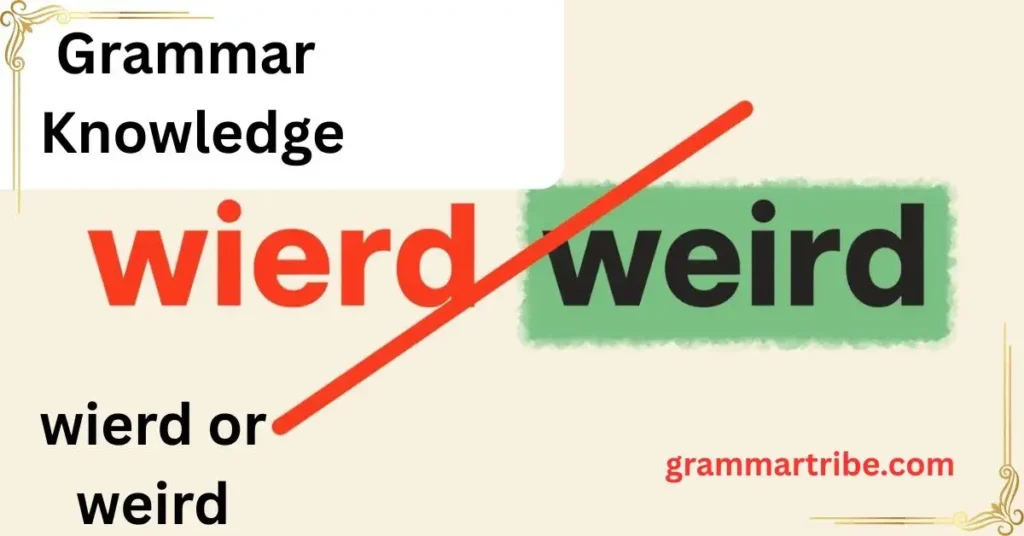
Many people type “wierd or weird” into Google because they are unsure which spelling is correct. You may have seen both forms online, in social media posts, or even in informal writing.
This confusion is very common, especially for English learners and even native speakers. English spelling rules are not always logical, and words like this break expectations.
People often remember the rule “i before e”, so they assume wierd must be right. But English has many exceptions, and this word is one of them. Using the wrong spelling can make your writing look unprofessional, whether it’s an email, a blog post, a school assignment, or a social media caption.
This article solves that confusion once and for all. You’ll get a quick answer, learn the origin of the word, see British vs American usage, explore common mistakes, and view real-life examples. By the end, you’ll know exactly which spelling to use, where to use it, and how to avoid errors in the future.
Wierd or Weird – Quick Answer
✅ Correct spelling: Weird
❌ Incorrect spelling: Wierd
Examples:
- This movie is really weird.
- He told me a weird story last night.
- That sound felt weird and scary.
Wierd is always a spelling mistake.
Read more: Studder or Stutter – Which Spelling Is Correct? in (2026)
The Origin of Weird
The word weird comes from Old English “wyrd”, which meant fate or destiny. Over time, its meaning changed from destiny to something strange or unusual.
The spelling “weird” does not follow the common “i before e” rule. That rule has many exceptions, and weird is one of the most famous ones. Because of this, people often misspell it as wierd.
Read more: Vaccum or Vacuum – Which Spelling Is Correct? for (2026)
British English vs American English Spelling
Good news: there is no difference here.
Both British English and American English use the same spelling.
| English Type | Correct Spelling | Example |
| American | Weird | That’s a weird idea. |
| British | Weird | The weather is weird today. |
❌ Wierd is wrong in all forms of English.
Which Spelling Should You Use?
Always use weird, no matter your audience:
- US audience: Weird
- UK audience: Weird
- Australia / Canada: Weird
- Global audience: Weird
There is no situation where wierd is correct.
Common Mistakes with Wierd or Weird
Here are frequent errors people make:
- ❌ That’s a wierd sound.
✅ That’s a weird sound. - ❌ He has a wierd habit.
✅ He has a weird habit. - ❌ Mixing both spellings in one article
✅ Stay consistent with weird
Tip: Remember: We are weird → “we” comes before “ird”
Wierd or Weird in Everyday Examples
Emails:
- That was a weird issue in the report.
News:
- Scientists discovered a weird signal from space.
Social Media:
- This filter looks weird
Formal Writing:
- The results showed a weird pattern in behavior.
Wierd or Weird – Google Trends & Usage Data
Search data shows that “wierd or weird” is a popular query worldwide.
- Weird is heavily used in the US, UK, Canada, and Australia.
- Wierd appears mostly because of spelling confusion, not correct usage.
Google trends clearly favor weird, while wierd spikes only in “which is correct” searches.
Spelling Comparison Table
| Variation | Correct | Used In | Notes |
| Weird | ✅ Yes | All English | Standard spelling |
| Wierd | ❌ No | None | Common mistake |
FAQs – Wierd or Weird
1. Is “wierd” ever correct?
No. Wierd is always wrong.
2. Why do people spell weird as wierd?
Because of the “i before e” rule, which does not apply here.
3. Is it weird to be American or British?
Both. It is used worldwide.
4. Is it weird and informal?
No. It works in both informal and formal writing.
5. Can Grammarly catch this mistake?
Yes, most grammar tools flag wierd as incorrect.
6. How can I remember the correct spelling?
Think: “We are weird” – we come first.
Conclusion
The confusion between wierd or weird is very common, but the rule is simple. Weird is the only correct spelling in all types of English. The word comes from Old English and does not follow the usual spelling rules, which is why people often get it wrong.
Whether you are writing an email, blog post, school assignment, or social media caption, using the correct spelling matters. It improves clarity, professionalism, and trust. Remember that wierd is never correct, even in British or informal English.
If you remember one thing, let it be this: Weird is weird because it breaks the rules. Use it with confidence, and your writing will instantly look cleaner and more professional.

Hi, I’m Henry James, the author behind GrammarTribe.com. I’m passionate about the English language and specialize in grammar, helping readers understand complex rules in a simple, clear way. Over the years, I’ve dedicated myself to creating content that makes learning grammar practical, fun, and accessible for everyone. If you’re a student, professional, or language enthusiast.
Through GrammarTribe.com, I share tips, guides, and examples to help people write confidently and correctly. My goal is to make grammar less intimidating and more useful in everyday writing, emails, social media, and professional communication. Writing and teaching grammar isn’t just my profession — it’s my passion.
When I’m not writing, I enjoy reading, exploring language trends, and discovering new ways to make English learning engaging and easy. My mission is to empower readers to communicate clearly and confidently, one grammar tip at a time.