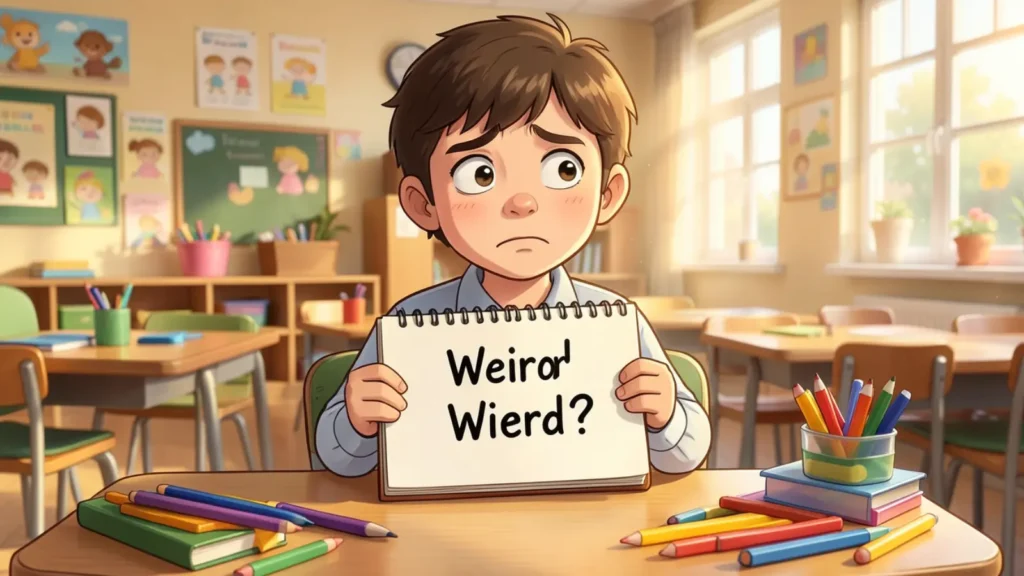
Have you ever typed “wierd” and your spellchecker instantly yelled at you? You’re not alone. The confusion between wierd vs weird is one of the most searched English spelling mistakes online.
People search for this keyword because both spellings look possible, sound the same, and often slip through fast typing especially in emails, social media posts, and exams.
The real problem? Using the wrong spelling can make your writing look unprofessional, hurt SEO rankings, or cost marks in academic and competitive exams. Many learners assume this confusion comes from British vs American English, but that’s not the case here which makes it even trickier.
This article clears up everything in one place. You’ll get a quick answer, the word’s origin, a clear comparison, real-life examples, common mistakes to avoid, and practical advice on which spelling you should always use. By the end, you’ll never hesitate again when choosing between wierd or weird.
Wierd or Weird – Quick Answer
✅ Correct spelling: Weird
❌ Incorrect spelling: Wierd
Examples:
- ✔ That movie was really weird.
- ❌ That movie was really wierd.
There is no situation where wierd is correct in standard English.
The Origin of Weird
The word weird comes from Old English “wyrd”, meaning fate or destiny. Over time, its meaning shifted to describe something strange, unusual, or abnormal.
English spelling rules are messy, but weird is a famous exception to the “I before E” rule.
That’s why people often misspell it as wierd they’re following a rule that doesn’t apply here.
British English vs American English Spelling
Here’s the good news:
👉 Both British and American English use the same spelling.
| English Variant | Correct Spelling |
| American English | Weird |
| British English | Weird |
| Canadian English | Weird |
| Australian English | Weird |
There is no regional variation for this word.
Which Spelling Should You Use?
Always use weird, no matter your audience.
- 🇺🇸 US audience: Weird
- 🇬🇧 UK audience: Weird
- 🌍 Global / SEO content: Weird
If you use wierd, it will be treated as a spelling error by search engines and grammar tools.
Common Mistakes with Weird
Here are frequent errors people make:
- ❌ wierd feeling → ✔ weird feeling
- ❌ that’s so wierd → ✔ that’s so weird
- ❌ wierdest thing → ✔ weirdest thing
- ❌ wierdly enough → ✔ weirdly enough
Tip: Remember the phrase
👉 “We are weird.”
The word we come first in spelling.
Weird in Everyday Examples
Emails:
- “Sorry for the weird formatting in my last email.”
News:
- “Scientists discover a weird new deep-sea creature.”
Social Media:
- “This dream was so weird
Formal Writing:
- “The results showed a weird but consistent pattern.”
Weird – Google Trends & Usage Data
- “Weird” is searched globally and used in news, blogs, and academic writing.
- “Wierd” appears mostly in:
- Misspelled searches
- Typing errors
- Autocorrect mistakes
Search engines recognize wierd as an error and redirect users to weird.
Comparison Table: Wierd vs Weird
| Feature | Weird | Wierd |
| Correct spelling | ✅ Yes | ❌ No |
| Used in dictionaries | ✅ Yes | ❌ No |
| SEO-friendly | ✅ Yes | ❌ No |
| British & American English | ✅ Same | ❌ Incorrect |
| Accepted in exams | ✅ Yes | ❌ No |
FAQs
1. Is wierd ever correct?
No. Wierd is always incorrect in standard English.
2. Why do people spell weird as wierd?
Because of the “I before E” rule, which doesn’t apply to this word.
3. Is American or British English weird?
It is both American and British English.
4. Can I use weird in formal writing?
Yes, but use it carefully. It’s acceptable in formal contexts when appropriate.
5. What is the easiest way to remember the spelling?
Remember: “We are weird” → WE come first.
6. Does Google penalize the spelling wierd?
Yes. It’s treated as a spelling error in SEO content.
Conclusion
The confusion between wierd vs weird is common, but the rule is simple: only “weird” is correct. There is no British or American difference, no alternative spelling, and no context where wierd works.
The mistake happens because English spelling rules are inconsistent, not because the word itself is flexible.
For students, writers, bloggers, and SEO professionals, using the correct spelling is essential. It improves clarity, credibility, and search visibility.If you’re writing an email, a social post, or a professional article, choosing weird ensures your message looks polished and trustworthy.
If you remember just one thing, remember this:
👉 If it looks strange, it’s weird and it’s spelled W-E-I-R-D.

I am James Wilson, an author at GrammarTribe.com, specializing in English grammar and clear communication.
I create expert, reliable content to help learners write with confidence and accuracy.