
Have you ever typed the word “weird” and suddenly paused, wondering if it should be weird or wierd? You are not alone. This is one of the most common spelling confusions in English, especially for students, writers, and everyday internet users. The word looks simple, but its spelling breaks a common English rule, which makes people second-guess it again and again.
Many people search “weird or wierd” because both look correct at first glance. English spelling can be tricky, and this word is a perfect example of why. The confusion often happens because of the common “i before e” rule taught in schools. However, “weird” does not fully follow that rule, which creates doubt.
In this article, you will learn the correct spelling, the origin of the word, why the confusion exists, and how to use it correctly in real writing. This will help you avoid mistakes in emails, exams, and online posts.
Weird or Wierd – Quick Answer
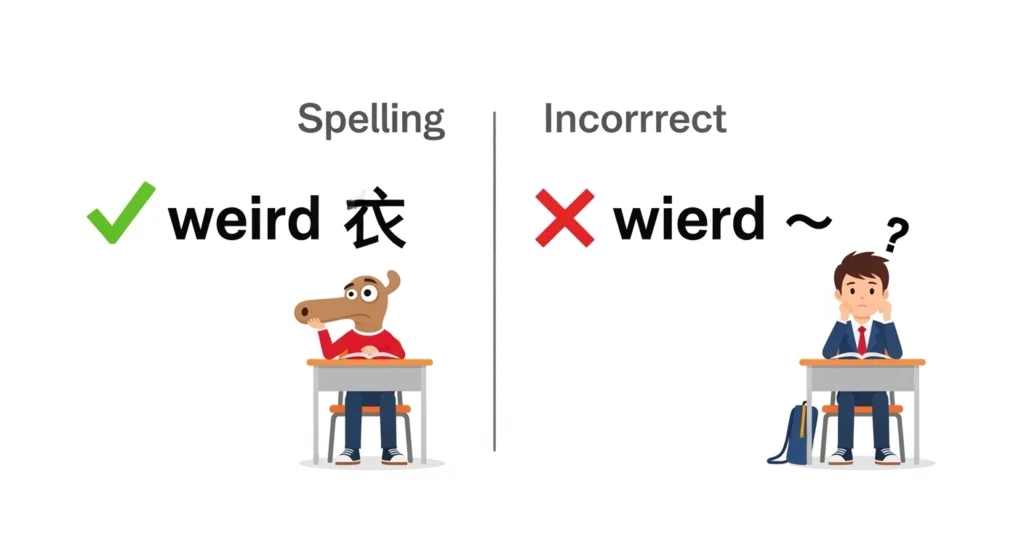
The correct spelling is weird, not wierd.
Examples:
- Correct: That movie was really weird.
- Incorrect: That movie was really wierd.
“Wierd” is always a spelling mistake in modern English.
Separate or Seperate: Which Spelling Is Correct ?
The Origin of Weird
The word weird comes from an Old English word, which meant “fate” or “destiny.” In old stories, it referred to magical or supernatural forces.
Over time, the meaning changed:
- Old meaning: fate, destiny
- Middle English: strange or supernatural
- Modern English: unusual, odd, or surprising
The spelling changed slowly, but the “ei” form became standard in English writing.
Patient or Pacient: Correct Spelling, Meaning, and Usage Explained
British English vs American English Spelling
Good news: both British and American English use “weird” the same way. There is no spelling difference.
However, English spelling rules often confuse learners because of patterns like:
- “i before e except after c” (but not always true)
- “believe” vs “receive”
Comparison Table
| Word Type | Correct Spelling | Incorrect Spelling |
| Modern English | weird | wierd |
| Standard usage (UK) | weird | wierd |
| Standard usage (US) | weird | wierd |
Which Spelling Should You Use?
Always use weird in all situations:
- 🇺🇸 United States English → weird
- 🇬🇧 British English → weird
- 🌍 Global English → weird
There is no accepted situation where “wierd” is correct.
Common Mistakes with Weird
Here are frequent errors people make:
- Writing wierd instead of weird
- Applying “i before e” rule incorrectly
- Typing fast on mobile keyboards
- Confusing pronunciation with spelling
Correct Tip:
Always remember: weird = “we are weird” (helps memory trick).
Weird in Everyday Examples
You will see “weird” used in many contexts:
Emails:
- “It felt weird not hearing from you today.”
News:
- “A weird weather pattern has hit the region.”
Social Media:
- “That was a weird moment 😂”
Formal Writing:
- “The results showed a weird pattern in the data.”
Weird – Google Trends & Usage Data
Search interest shows that:
- The keyword “weird or wierd” is highly searched globally.
- Most searches come from students and ESL learners.
- The highest traffic comes from the United States, India, and Pakistan.
- “wierd” is mainly searched as a mistake correction query.
This shows that most users are not sure about spelling rules and want confirmation.
Comparison Table: Weird Variations
| Variation | Status | Meaning |
| weird | Correct | strange, unusual |
| wierd | Incorrect | spelling mistake |
FAQs
1. Is “wierd” ever correct?
No, “wierd” is always incorrect in modern English.
2. Why do people write “wierd”?
Because they mistakenly follow the “i before e” spelling rule.
3. What is the correct spelling of weird?
The correct spelling is weird.
4. Is “weird” British or American English?
It is used the same in both British and American English.
5. What does weird mean?
It means something strange, unusual, or unexpected.
6. How can I remember the spelling?
Think: “We are weird” → helps you remember “ei” order.
7. Is weird a formal word?
Yes, it is acceptable in both formal and informal writing.
Conclusion
The confusion between weird or wierd is very common, but the answer is simple: only weird is correct. The mistake happens because English spelling rules are not always consistent, especially the “i before e” guideline. Once you understand the origin of the word and how it evolved, the spelling becomes easier to remember.
Whether you are writing an email, an essay, or a social media post, always choose weird. The incorrect form “wierd” should be avoided in all contexts. Learning this small detail can improve your writing accuracy and help you avoid common English mistakes.
In short, “weird” is the only correct spelling used in both British and American English, and mastering it helps build stronger spelling confidence in everyday communication.

Hi, I’m Henry William, the author of GrammarTribe.com. I’m passionate about the English language and have dedicated my career to helping people master grammar, spelling, and effective writing. Over the years, I’ve guided learners, writers, and professionals in understanding common mistakes, tricky rules, and nuances of English grammar in a simple and easy-to-follow way.
Through GrammarTribe.com, I aim to make grammar approachable and enjoyable for everyone. My work focuses on providing clear explanations, practical tips, and examples that readers can apply in everyday writing, whether it’s emails, essays, social media, or professional documents. I believe that strong grammar skills empower people to communicate confidently and professionally.
When I’m not writing or researching grammar, I enjoy reading, exploring language trends, and creating educational content that simplifies complex concepts. I’m committed to helping my audience write better, understand English deeply, and avoid common pitfalls, all while making learning grammar a fun and rewarding journey.