
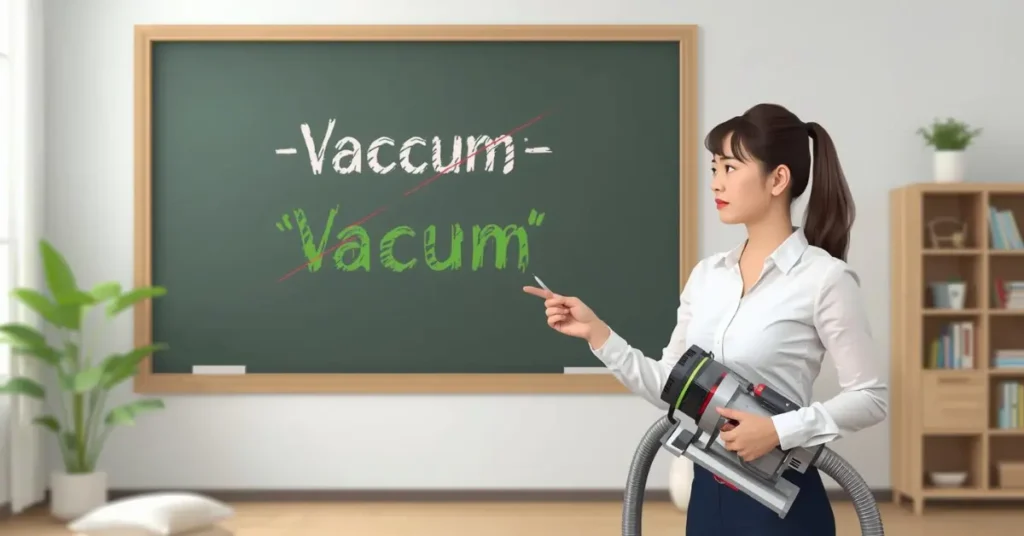
Many people type “vaccum” when they actually mean “vacuum.” This small spelling mistake is very common. It happens in emails, school papers, search engines, and even social media posts. The confusion comes from the unusual double “u” in the word vacuum, which many people forget when writing quickly.
If you have ever searched “vaccum or vacuum,” you are not alone. Thousands of users search this every month to check the correct spelling. The word appears in everyday situations. People talk about vacuum cleaners, vacuum sealing food, or even the vacuum of space in science. Because the word is used in different fields, correct spelling becomes important.
This guide explains the difference between vaccum and vacuum in a simple way. You will learn the correct spelling, the origin of the word, common mistakes, and when to use it properly. By the end, you will never confuse vaccum or vacuum again.
Vaccum or Vacuum – Quick Answer
The correct spelling is vacuum.
“Vaccum” is incorrect and considered a spelling mistake.
Examples
Correct:
- I bought a new vacuum cleaner yesterday.
- The experiment was done in a vacuum chamber.
- Space is a vacuum with almost no air.
Incorrect:
- I bought a new vaccum cleaner.
- The machine creates a vaccum inside the container.
Simple Tip
Remember: Vacuum has two “u” letters.
va + cu + um
The Origin of Vacuum or Vaccum
The word vacuum comes from the Latin word “vacuus.” It means empty or void.
In early science and philosophy, the term described empty space without matter. Later, the word became common in physics, engineering, and household products like vacuum cleaners.
The spelling vacuum kept the Latin structure, which is why it has two “u” letters. Many English learners simplify it to vaccum, but that form never became an accepted spelling.
Why the Mistake Happens
People write vaccum because:
- The double “u” looks unusual.
- English learners expect a simpler spelling.
- Fast typing causes missing letters.
But dictionaries only recognize vacuum as the correct form.
British English vs American English Spelling
Unlike many English words, vacuum is spelled the same in both British and American English.
There is no spelling difference between the two systems.
Comparison Table
| Type | Correct Spelling | Example |
| British English | Vacuum | The vacuum cleaner is broken. |
| American English | Vacuum | The lab created a vacuum chamber. |
| Incorrect Form | Vaccum | ❌ Not correct in any English version |
So whether you write in the UK, US, Canada, or Australia, the correct spelling is always vacuum.
Which Spelling Should You Use?
You should always use a vacuum.
For Different Audiences
United States
Use vacuum in all writing: school, business, or online content.
United Kingdom & Commonwealth
Use vacuum as well. British English follows the same spelling.
Global or Online Writing
Always choose vacuum because it is the standard spelling worldwide.
Professional Tip
If you write blogs, emails, or academic work, using vaccum can reduce credibility and look unprofessional.
Common Mistakes with Vaccum or Vacuum
Many writers make small errors with this word.
1. Missing the Double “U”
Incorrect: vaccum
Correct: vacuum
2. Typing Too Fast
People often skip one u when typing quickly.
3. Autocorrect Errors
Some keyboards may not correct vaccum, so the mistake stays.
4. Plural Form Confusion
Correct plural: vacuums
Example:
- The store sells many vacuums.
Vacuum in Everyday Examples
“Please use the vacuum cleaner after the meeting.”
News
“Scientists tested materials in a vacuum chamber.”
Social Media
“I finally bought a robot vacuum for my house!”
Formal Writing
“The experiment must occur in a vacuum environment.”
Vacuum – Google Trends & Usage Data
Search engines show strong interest in the query “vaccum or vacuum.”
Many users search this because they want to confirm spelling.
Usage Patterns
| Country | Common Search |
| United States | vacuum |
| United Kingdom | vacuum |
| India | vaccum vs vacuum |
| Pakistan | vaccum spelling |
| Canada | vacuum |
This shows that vacuum is widely used, while vaccum appears mainly in spelling checks.
Keyword Comparison Table
| Word | Correct or Incorrect | Meaning |
| Vacuum | ✅ Correct | Empty space or a cleaning device |
| Vaccum | ❌ Incorrect | Misspelling of vacuum |
FAQs About Vaccum or Vacuum
1. Is “vaccum” a real word?
No. Vaccum is a spelling mistake. The correct word is vacuum.
2. Why does vacuum have two “u” letters?
The word comes from Latin “vacuus,” which kept the double vowel in English spelling.
3. Do British and American English spell vacuum differently?
No. Both use vacuum.
4. What is the plural of vacuum?
The plural form is vacuums.
Example:
“The shop sells different vacuums.”
5. What does vacuum mean in science?
In science, a vacuum is a space with little or no matter.
6. Is vacuum used only for cleaning machines?
No. It also appears in physics, engineering, and food packaging.
7. Why do people search “vaccum or vacuum”?
People search it to confirm the correct spelling.
Conclusion
The confusion between vaccum or vacuum is very common, but the answer is simple. The correct spelling is vacuum, and vaccum is only a mistake. This error happens because the word contains two “u” letters, which many writers forget when typing quickly.
The word vacuum comes from the Latin term vacuus, meaning empty space. Over time, it became an important term in science and everyday life. Today, it describes many things, from vacuum cleaners to vacuum chambers in laboratories.
Another helpful point is that British and American English use the same spelling. Unlike many other words, there is no variation here. Whether you write for the United States, the United Kingdom, or an international audience, the correct form remains vacuum.
To avoid mistakes, remember this simple rule: vacuum always has two “u” letters. Using the correct spelling improves clarity and professionalism in emails, blogs, and academic writing.

I am James Wilson, an author at GrammarTribe.com, specializing in English grammar and clear communication.
I create expert, reliable content to help learners write with confidence and accuracy.